Inicio > Humanidades > Filosofía > Ética y filosofía moral > The Philosophical Diseases of Medicine and their Cure
The Philosophical Diseases of Medicine and their Cure

The Philosophical Diseases of Medicine and their Cure

Josef Seifert

267,08 €
IVA incluido
Consulta disponibilidad
Editorial:
Springer Nature B.V.
Año de edición:
2004
Materia
Ética y filosofía moral
ISBN:
9781402028700

Selecciona una librería:

  • Librería Samer Atenea
  • Librería Aciertas (Toledo)
  • Kálamo Books
  • Librería Perelló (Valencia)
  • Librería Elías (Asturias)
  • Donde los libros
  • Librería Kolima (Madrid)
  • Librería Proteo (Málaga)

At all times physicians were bound to pursue not only medical tasks, but to reflect also on the many anthropological and metaphysical aspects of their discipline, such as on the nature of life and death, of health and sickness, and above all on the vital ethical dimensions of their practice. For centuries, almost for two millennia, how­ ever, those who practiced medicine lived in a relatively clearly defined ethical and implicitly philosophical or religious ’world-order’ within which they could safely turn to medical practice, knowing right from wrong, or at least being told what to do and what not to do. Today, however, the situation has radically changed, mainly due to three quite different reasons: First and most obviously, physicians today are faced with a tremendous development of new possibilities and techniques which allow previously unheard of medical interventions (such as cloning, cryo-conservation, ge­ netic interference, etc. ) which call out for ethical reflection and wise judgment but regarding which there is no legal and medical ethical tradition. Traditional medical education did not prepare physicians for coping with this new brave world of mod­ em medicine. Secondly, there are the deep philosophical crises and the philosophical diseases of medicine mentioned in the preface that lead to a break-down of firm and formative legal and ethical norms for medical actions.


Artículos relacionados

  • Ka Ab Ba Building The Lighted Temple
    Dr Terri R. Nelson / Dr Terri RNelson
    The book KaAbBa Building The Lighted Temple/Metaphysical Keys to the Tree of Life draws a circle that is inclusive of the Afrikan origin of the Ancient Kemetic/Egyptian wisdom. It reveals the undeniable root and link of Ancient Africa to all the religious systems that would develop worldwide. This book is explosive in its power to convey the meaning of KaAbBa, the Medu Neter  (...
    Disponible

    37,41 €

  • Technoethics and the Evolving Knowledge Society
    Rocci Luppicini
    Recently, there has been a major push to rediscover the ethical dimension of technology across the sciences, social sciences, and humanities. Technoethics and the Evolving Knowledge Society: Ethical Issues in Technological Design, Research, Development, and Innovation examines human processes and practices connected to technology embedded within social, political, and moral sph...
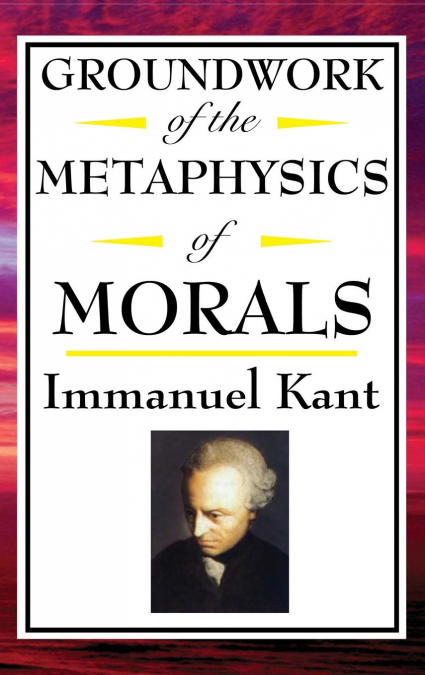
  • Kant
    Immanuel Kant
    Kant’s Groundwork of the Metaphysics of Morals is one of the most important works in modern moral philosophy. It belongs beside Plato, Aristotle, Machiavelli, and Hobbes. Here Kant sets out to articulate and defend the Categorical Imperative - the fundamental principle that underlies moral reasoning - and to lay the foundation for a comprehensive account of justice and human vi...
  • On the Duty of Civil Disobedience
    HENRY DAVID THOREAU
    Civil Disobedience argues that citizens should not permit their governments to overrule their consciences, and that they have a duty to avoid allowing their acquiescence to enable the government to make them the agents of injustice. Thoreau was motivated in part by his disgust with slavery and the Mexican-American War, but the sentiments he expresses here are just as pertinent ...
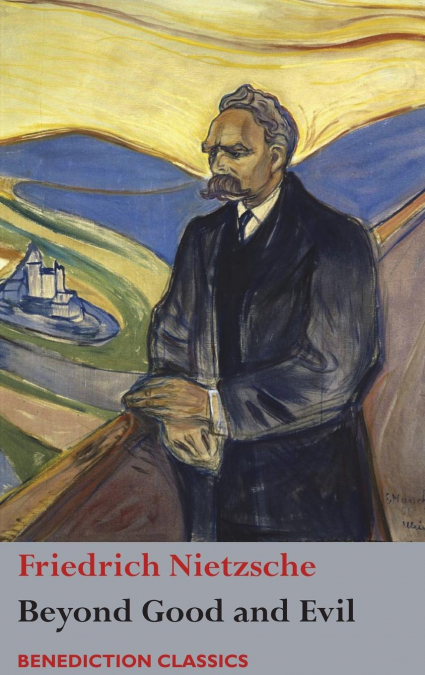
  • Beyond Good and Evil
    Friedrich Nietzsche
    Nietzsche, though primarily a philosopher, wrote widely on art, philology, history, religion, tragedy, culture, and science.  In 1886, at the height of his powers, he published Beyond Good and Evil.  Here he examines much of the best of human thought--dogmatic philosophy, Judeo-Christian morality, science and democracy – and finds it lacking.  Rejecting “slave-morality” he pres...
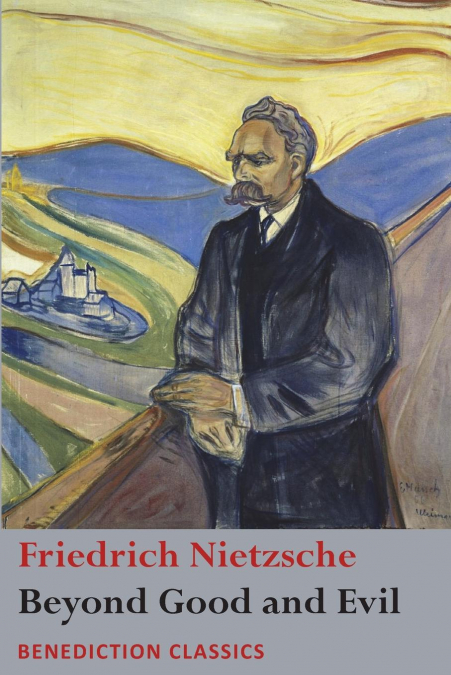
  • Beyond Good and Evil
    Friedrich Nietzsche
    Nietzsche, though primarily a philosopher, wrote widely on art, philology, history, religion, tragedy, culture, and science.  In 1886, at the height of his powers, he published Beyond Good and Evil.  Here he examines much of the best of human thought--dogmatic philosophy, Judeo-Christian morality, science and democracy – and finds it lacking.  Rejecting “slave-morality” he pres...
    Disponible

    9,99 €

Otros libros del autor

  • Back to ’Things in Themselves’
    Josef Seifert
    In an enlightening dialogue with Descartes, Kant, Husserl and Gadamer, Professor Seifert argues that the original inspiration of phenomenology was nothing other than the primordial insight of philosophy itself, the foundation of philosophia perennis. His radical rethinking of the phenomenological method results in a universal, objectivist philosophy in direct continuity with Pl...
    Disponible

    90,18 €

  • The Philosophical Diseases of Medicine and their Cure
    Josef Seifert
    At all times physicians were bound to pursue not only medical tasks, but to reflect also on the many anthropological and metaphysical aspects of their discipline, such as on the nature of life and death, of health and sickness, and above all on the vital ethical dimensions of their practice. For centuries, almost for two millennia, how­ ever, those wh...
    Disponible

    268,46 €