 Librería Samer Atenea
 Kálamo Books
 Librería Elías (Asturias)
 Librería Kolima (Madrid)
 Librería Proteo (Málaga)
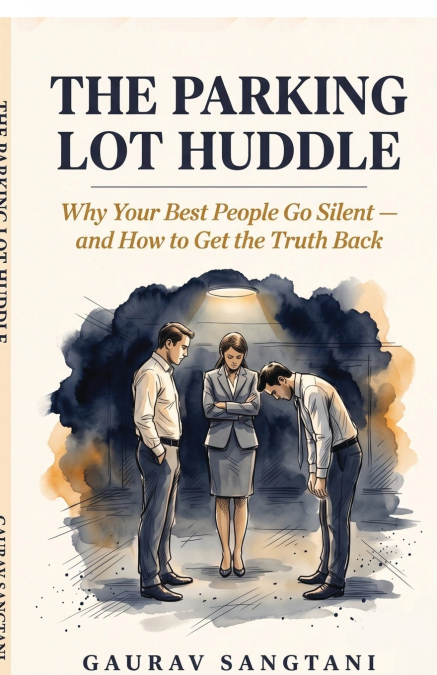
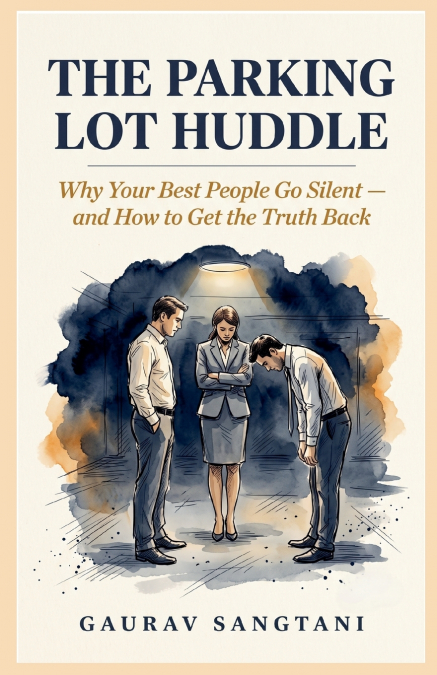
The meeting was perfect. That was the problem.Every leader has sat in a meeting like the one that opens The Parking Lot Huddle: the timeline is aggressive, the team nods, someone says 'we can make it work,' and everyone leaves feeling like they just watched a company move as one. Alex Thorne, CEO of a health-tech startup racing to beat a well-funded competitor to market, has built his entire leadership style around getting that room.Then a security guard named George - who has spent thirty-one years reading rooms for a living - points him at a monitor. In the parking garage below, three of his most senior people are standing in a tight triangle, having the argument they didn’t have upstairs.The Parking Lot Huddle is what happens next.This is a story about the distance between compliance and alignment, and about a leader who has to learn, the hard way, that silence in a meeting is not the same thing as agreement. When Alex tries to force honesty by mandating dissent, he swaps one dysfunction for another - a culture so committed to finding objections that his team stops shipping product, and the deadline they were racing to protect starts slipping away underneath them.Told through a health-tech company building an AI diagnostic platform, a rival racing to beat them to market, and a piece of buried data that could either save the company or sink it, The Parking Lot Huddle moves like a thriller and reads like a case study - because it’s built to be both. Each chapter closes with the Key Learnings a leadership team would pull from it: a short set of core insights and a central question designed for teams to discuss together, not just read alone.The book ends with The Leadership Dialogue Mirror, a practical appendix that gives readers the exact language to trade a culture of silence - or a culture of noise - for one built on genuine, structured dialogue: the questions that replace 'does everyone agree,' the scripts that keep dissent focused on the problem instead of the person, and a 30-day plan for moving a team toward it.This book is for:Founders and executives who suspect their meetings are more polite than honestManagers who’ve tried 'radical candor' and gotten chaos insteadAnyone who has ever found out what their team really thought - after the meeting, not during it