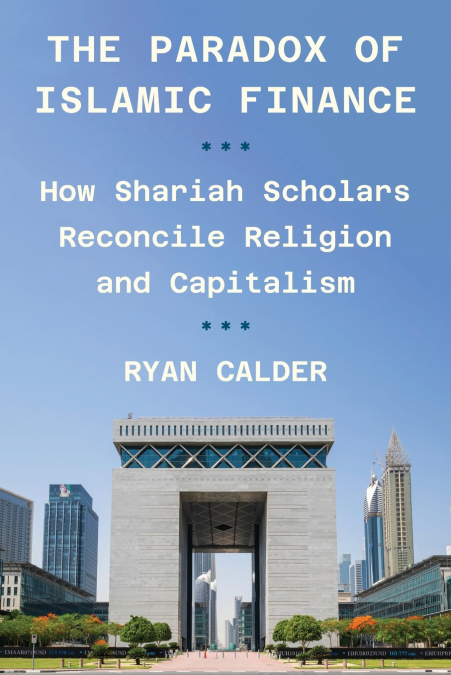

The Paradox of Islamic Finance

The Paradox of Islamic Finance

Ryan Calder

46,48 €
IVA incluido
Disponible
Editorial:
Princeton University Press
Año de edición:
2024
Materia
Estudios de género, grupos de género
ISBN:
9780691258300
46,48 €
IVA incluido
Disponible

Selecciona una librería:

  • Librería Samer Atenea

  • Kálamo Books
  • Librería Elías (Asturias)
  • Librería Kolima (Madrid)
  • Librería Proteo (Málaga)

How the booming Islamic finance industry became an ultramodern hybrid of religion and marketsIn just fifty years, Islamic finance has grown from a tiny experiment operated from a Volkswagen van to a thriving global industry worth more than the entire financial sector of India, South America, or Eastern Europe. You can now shop with an Islamic credit card, invest in Islamic bonds, and buy Islamic derivatives. But how has this spectacular growth been possible, given Islam’s strictures against interest? In The Paradox of Islamic Finance, Ryan Calder examines the Islamic finance boom, arguing that shariah scholars—experts in Islamic law who certify financial products as truly Islamic—have made the industry a profitable, if controversial, hybrid of religion and markets.Critics say Islamic finance merely reproduces conventional interest-based finance, with the shariah scholars’ blessing. From an economic perspective, they are right: the most popular Islamic products act like conventional interest-bearing ones, earning healthy profits for Islamic banks and global financial heavyweights like Deutsche Bank and Goldman Sachs. Yet as Calder shows by delving into the shariah scholars’ day-to-day work, what seem like high-tech work-arounds to outsiders carry deep and nuanced meaning to the scholars—and to the hundreds of millions of Muslims who respect their expertise. He argues that shariah scholars’ conception of Islamic finance is perfectly suited to the age of financialization and the global efflorescence of shariah-minded Islam.
Artículos relacionados

  • Contemporary Global Perspectives on Gender Economics
    Susanne Moore
    The rise of women in the workforce has led to many campaigns for wage equality and the impartial treatment of both sexes as they pursue careers previously designated as either a man’s or a woman’s job. The impact of these campaigns has been felt, but a sense of gender stereotyping still affects not only the social and cultural well-being of the modern organization, but the driv...
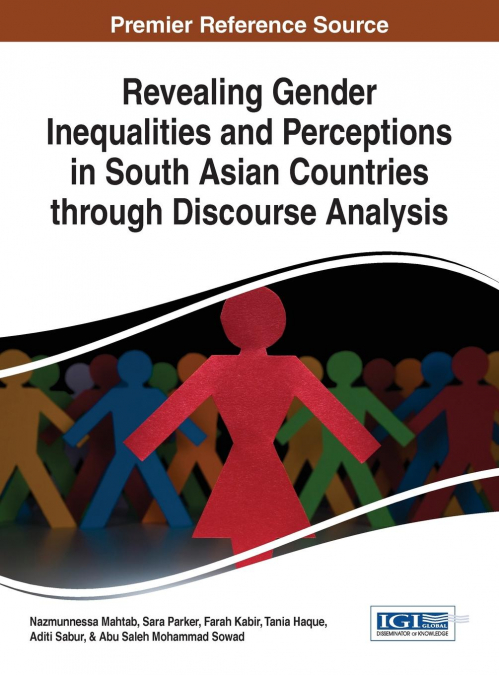
  • Revealing Gender Inequalities and Perceptions in South Asian Countries through Discourse Analysis
    Misconceptions regarding gender identity and issues of inequality that women around the world face have become a predominant concern for not only the citizens impacted, but global political leaders, administrators, and human rights activists. Revealing Gender Inequalities and Perceptions in South Asian Countries through Discourse Analysis explores how an analysis of language us...
  • Reconstruire la Féminité et la Masculinité
    François Tshionyi Kazadi
    Qui aurait raison d’imaginer une humanité exclusivement masculine ou exclusivement féminine ? Pareille tendance serait contre-nature et contredirait à coup sûr l’optimisme originaire selon lequel le Créateur, après la création de la femme, aux côtés de l’homme, vit que tout était très bon. Le débat contemporain sur l’identité humaine ou l’identité sexuelle est tellement provoca...
  • Naksalvaad unmoolan police prashasan aur vartmaan paridrishya
    Dr vinod kumar tandon
    NA ...
    Disponible

    24,10 €

  • La familia ante la revolución posmoderna. Política, género, libertad
    Diogo Morais Sarmiento Madureira
    Diogo Morais Sarmento Madureira invita a un apasionante viaje intelectual al debate político contemporáneo sobre la familia, arrojando luz sobre factores históricos y antropológicos que refuerzan el valor de los lazos familiares y la necesidad de protegerlos.Este libro desentraña las complejas influencias filosóficas y políticas que frecuentemente conllevan el desprecio por asp...
    Disponible

    23,87 €

  • Intimacy and injury
    Both India and South Africa have shared the infamy of being labelled the world’s ’rape capitals’, with high levels of everyday gender-based and sexual violence. At the same time, both boast long histories of resisting such violence and its location in wider cultures of patriarchy, settler colonialism and class and caste privilege.Through the lens of the #MeToo moment, the book ...
    Disponible

    49,00 €