 Librería Samer Atenea
 Kálamo Books
 Librería Elías (Asturias)
 Librería Kolima (Madrid)
 Librería Proteo (Málaga)
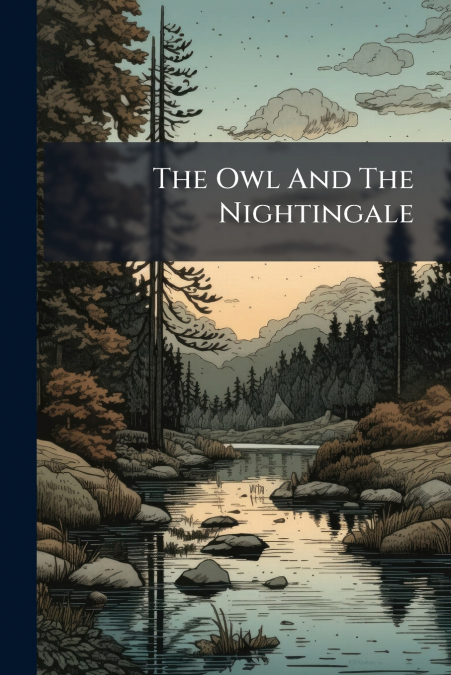
'The Owl and the Nightingale' is a Middle English poem dating from the late twelfth or early thirteenth century. Presented as a lively debate between an owl and a nightingale, the poem explores themes of beauty, morality, and the nature of human existence. Each bird defends its own virtues and criticizes the other’s flaws, offering insights into medieval perspectives on aesthetics, music, and the roles of different creatures in the natural world.This edition, now first printed from manuscripts in the Cottonian Library and at Jesus College Oxford, provides an accessible introduction to the text, along with a glossary to aid modern readers in understanding the language of the period. 'The Owl and the Nightingale' stands as a significant example of early English literature, offering a window into the intellectual and cultural landscape of medieval England and continuing to engage readers with its wit and wisdom.This work has been selected by scholars as being culturally important, and is part of the knowledge base of civilization as we know it. This work was reproduced from the original artifact, and remains as true to the original work as possible. Therefore, you will see the original copyright references, library stamps (as most of these works have been housed in our most important libraries around the world), and other notations in the work.This work is in the public domain in the United States of America, and possibly other nations. Within the United States, you may freely copy and distribute this work, as no entity (individual or corporate) has a copyright on the body of the work.As a reproduction of a historical artifact, this work may contain missing or blurred pages, poor pictures, errant marks, etc. Scholars believe, and we concur, that this work is important enough to be preserved, reproduced, and made generally available to the public. We appreciate your support of the preservation process, and thank you for being an important part of keeping this knowledge alive and relevant.