
The Ottoman legacy in the Balkans

The Ottoman legacy in the Balkans

Gisela Spreitzhofer

23,04 €
IVA incluido
Disponible
Editorial:
GRIN Verlag
Año de edición:
2007
Materia
Diplomacia
ISBN:
9783638873369
23,04 €
IVA incluido
Disponible

Selecciona una librería:

  • Librería Samer Atenea
  • Librería Aciertas (Toledo)
  • Kálamo Books
  • Librería Perelló (Valencia)
  • Librería Elías (Asturias)
  • Donde los libros
  • Librería Kolima (Madrid)
  • Librería Proteo (Málaga)

Seminar paper from the year 2007 in the subject Politics - Region: Southeastern Europe, grade: A, School of Advanced Internatl. Studies (School of Advanced International Studies (SAIS)), course: The Balkans - From Fragmentation to What?, language: English, abstract: 500 years of Ottoman sovereignty have undoubtedly left significant imprints on the Balkans. Monumental edifices and everyday words spoken in different languages are, amongst others, living testimonies of the imperial past. However, there are opposing interpretations of the Ottoman legacy. The prevailing view describes the Ottomans as alien intruders, blaming them for the Balkans’ perceived backwardness, whereas others see the era more as a period of combining Turkish, Islamic, and Byzantine/Balkan traditions.In order to avoid overgeneralizations and -simplifications, the notion of an 'Ottoman legacy' has to be taken with caution for a couple of reasons. Firstly, the Ottoman empire was preceded by the Byzantine empire, which itself was the successor of the Roman empire. Consequently, some traditions wrongly ascribed to the Ottomans can be traced back as far as to the Romans. Secondly, a distinction has to be made between what of this legacy is Islamic and what Ottoman. Without any doubt, many Ottoman institutions were inherited from earlier Islamic models, but the Ottomans made their own particular contributions in many fields. Thirdly, significant regional differences within the empire need to be taken into account. Finally, in some instances the question of an Ottoman inheritance has to be extended to the broader question of imperial inheritances because particularly at the end of the Ottoman era, the Balkans were also subject to influences from the Austro-Hungarian and the Russian empire.This paper is structured in the following manner. I would like to start by presenting two different interpretations of the Ottoman legacy. Next, I will describe some continuities from the Ottoman period that ha

Artículos relacionados

  • How Statesmen Think
    Robert Jervis
    Robert Jervis has been a pioneering leader in the study of the psychology of international politics for more than four decades. How Statesmen Think presents his most important ideas on the subject from across his career. This collection of revised and updated essays applies, elaborates, and modifies his pathbreaking work. The result is an indispensable book for students and sch...
    Disponible

    43,09 €

  • Tower of Babble
    Dore Gold
    ...
    Disponible

    16,40 €

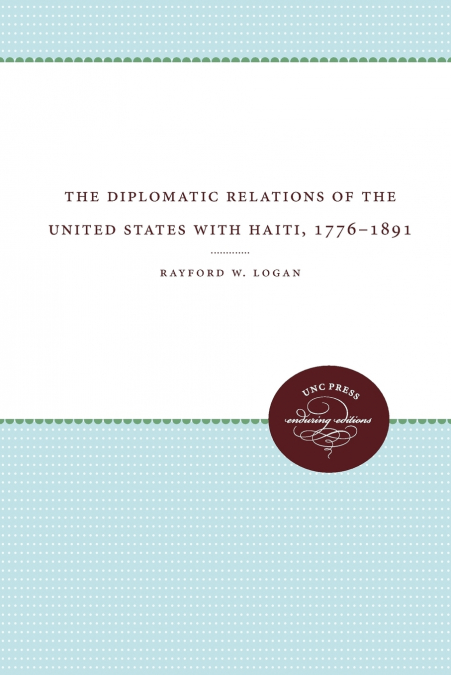
  • The Diplomatic Relations of the United States with Haiti, 1776-1891
    Rayford W. Logan
    The relations of the United States with Haiti have been different from American relations with any other nation; they have been vital and at times even dramatic. They climaxed in 1891 when the United States failed to make Haiti lease her Mole St. Nicolas. This failure constitutes an amazing episode in American diplomatic hostory. Recounting the story of Haiti’s struggle for ind...
    Disponible

    76,25 €

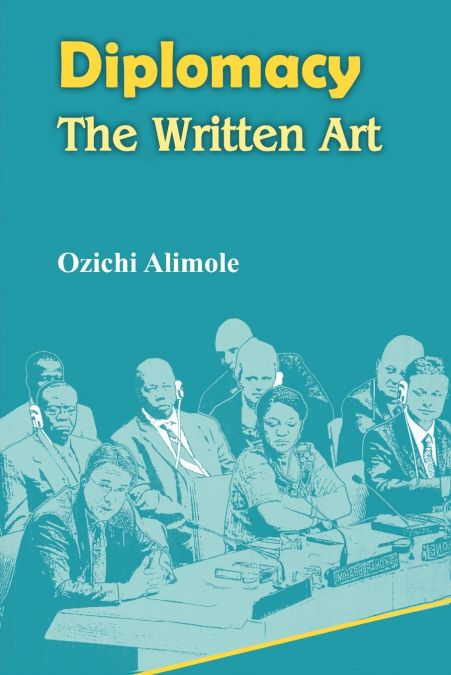
  • Diplomacy. the Written Art
    Ozichi Alimole
    The author seeks to redefine written diplomacy in its true meaning: the art of learning to write in a particular kind of language and mood. He seeks to refocus attention on the significance of diplomatic communication as one of the defining characteristics of diplomacy. A wide variety of correspondence encountered by diplomats is explained, with an analysis of each form of corr...
    Disponible

    57,94 €

  • West Africa’s Trouble Spots and the Impe
    Osita Agbu
    This monograph highlights the necessity for taking preventive measures in the form of peace-building as a sustainable and long-term solution to conflicts in West Africa, with a special focus on the Mano River Union countries. Apart from the Mano River Union countries, efforts at resolving other conflicts in say, Guinea Bissau, Senegal, Côte d’Ivoire and Nigeria, have suffered f...
    Disponible

    58,17 €

  • The Evolution Of UAE Foreign Policy
    GEW Intelligence Unit
    The research background of this book focuses on the historical evolution and strategic development of the United Arab Emirates’ (UAE) foreign policy from its formation to the present day.u2029The research methodology proposed in this book includes a historical analysis of the UAE’s foreign policy, examining key events and strategies that have shaped its current principles and g...
    Disponible

    28,96 €

Otros libros del autor

  • Turkey’s quest for EU membership
    Gisela Spreitzhofer
    Seminar paper from the year 2007 in the subject Politics - International Politics - Topic: European Union, grade: A- (Gut), School of Advanced Internatl. Studies (School of Advanced International Studies (SAIS)), course: Europe and Islam, language: English, abstract: Until the formal opening of accession negotiations on 3 October 2005, the long history of EU-Turkey relations se...
    Disponible

    19,53 €