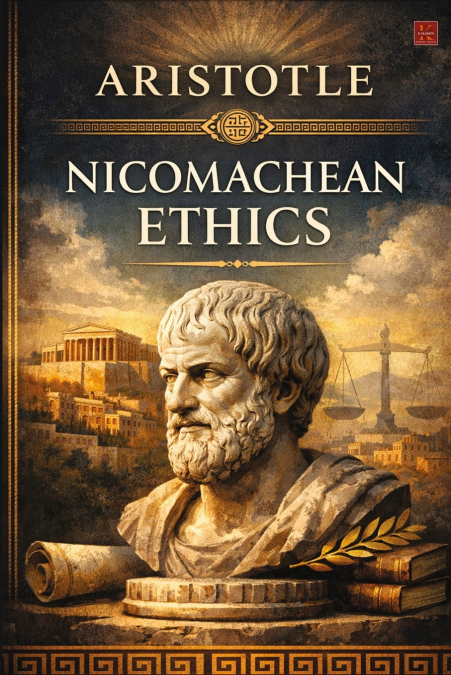
The Nicomachean Ethics

The Nicomachean Ethics

Aristotle

21,11 €
IVA incluido
Disponible
Editorial:
Bibliotech Press
Año de edición:
2023
Materia
Ética y filosofía moral
ISBN:
9798888304365
21,11 €
IVA incluido
Disponible

Selecciona una librería:

  • Librería Samer Atenea

  • Kálamo Books
  • Librería Elías (Asturias)
  • Librería Kolima (Madrid)
  • Librería Proteo (Málaga)

 The Nicomachean Ethics is Aristotle’s best-known work on ethics, the science of the good for human life, which is the goal or end at which all our actions aim.  The aim of the inquiry is political science and the master art of politics. It consists of ten books or scrolls, understood to be based on notes from his lectures at the Lyceum. The title is often assumed to refer to his son Nicomachus, to whom the work was dedicated or who may have edited it (although his young age makes this less likely). Alternatively, the work may have been dedicated to his father, who was also called Nicomachus. The work plays a pre-eminent role in explaining Aristotelian ethics.The theme of the work is a Socratic question previously explored in the works of Plato, Aristotle’s friend and teacher, about how men should best live. In his Metaphysics, Aristotle describes how Socrates, the friend and teacher of Plato, had turned philosophy to human questions, whereas pre-Socratic philosophy had only been theoretical. Ethics, as now separated out for discussion by Aristotle, is practical rather than theoretical, in the original Aristotelian senses of these terms. In other words, it is not only a contemplation about good living, because it also aims to create good living. It is therefore connected to Aristotle’s other practical work, Politics, which similarly aims at people becoming good. Ethics is about how individuals should best live, while the study of politics is from the perspective of a law-giver, looking at the good of a whole community.The Nicomachean Ethics is widely considered one of the most historically important philosophical works and had an important influence on the European Middle Ages, becoming one of the core works of medieval philosophy. Therefore, it indirectly became of great significance in the development of all modern philosophy as well as European law and theology. Many parts of the Nicomachean Ethics are well known in their own right, within different fields. While various philosophers influenced Christendom since its earliest times, in Western Europe, Aristotle became 'the Philosopher'. In the Middle Ages, a synthesis between Aristotelian ethics and Christian theology became widespread in Europe, as introduced by Albertus Magnus. The most important version of this synthesis was that of Thomas Aquinas. Other more 'Averroist' Aristotelians such as Marsilius of Padua were controversial but also influential. (Marsilius is for example sometimes said to have influenced the controversial English political reformer Thomas Cromwell.)Until well into the seventeenth century, the Nicomachean Ethics was still widely regarded as the main authority for the discipline of ethics at Protestant universities, with over fifty Protestant commentaries published on the Nicomachean Ethics before 1682. During the seventeenth century, however, several authors such as Francis Bacon and Thomas Hobbes argued forcefully and largely successfully that the medieval and Renaissance Aristotelian tradition in practical thinking had become a great impediment to philosophy in their time. In more recent generations, however, Aristotle’s original works (if not those of his medieval followers) have once again become an important source. More recent philosophers influenced by this work include Alasdair MacIntyre, G. E. M. Anscombe, Mortimer Adler, Hans-Georg Gadamer, and Martha Nussbaum. (wikipedia.org)
Artículos relacionados

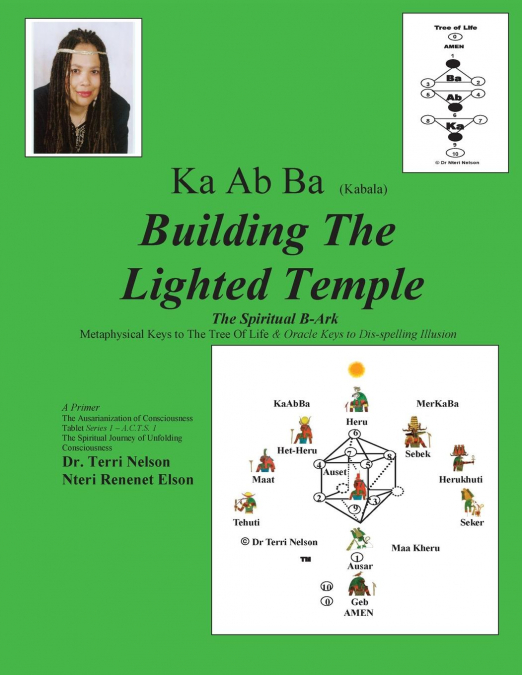
  • Ka Ab Ba Building The Lighted Temple
    Dr Terri R. Nelson / Dr Terri RNelson
    The book KaAbBa Building The Lighted Temple/Metaphysical Keys to the Tree of Life draws a circle that is inclusive of the Afrikan origin of the Ancient Kemetic/Egyptian wisdom. It reveals the undeniable root and link of Ancient Africa to all the religious systems that would develop worldwide. This book is explosive in its power to convey the meaning of KaAbBa, the Medu Neter  (...
    Disponible

    37,41 €

  • Technoethics and the Evolving Knowledge Society
    Rocci Luppicini
    Recently, there has been a major push to rediscover the ethical dimension of technology across the sciences, social sciences, and humanities. Technoethics and the Evolving Knowledge Society: Ethical Issues in Technological Design, Research, Development, and Innovation examines human processes and practices connected to technology embedded within social, political, and moral sph...
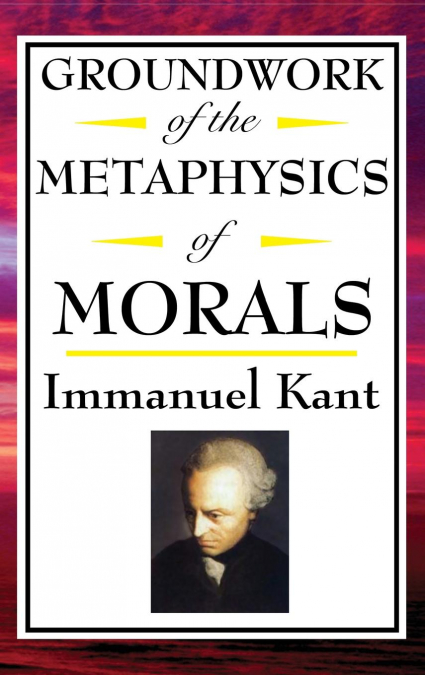
  • Kant
    Immanuel Kant
    Kant’s Groundwork of the Metaphysics of Morals is one of the most important works in modern moral philosophy. It belongs beside Plato, Aristotle, Machiavelli, and Hobbes. Here Kant sets out to articulate and defend the Categorical Imperative - the fundamental principle that underlies moral reasoning - and to lay the foundation for a comprehensive account of justice and human vi...
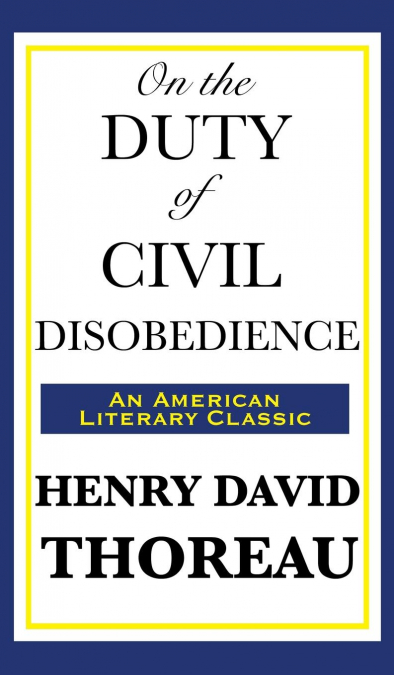
  • On the Duty of Civil Disobedience
    HENRY DAVID THOREAU
    Civil Disobedience argues that citizens should not permit their governments to overrule their consciences, and that they have a duty to avoid allowing their acquiescence to enable the government to make them the agents of injustice. Thoreau was motivated in part by his disgust with slavery and the Mexican-American War, but the sentiments he expresses here are just as pertinent ...
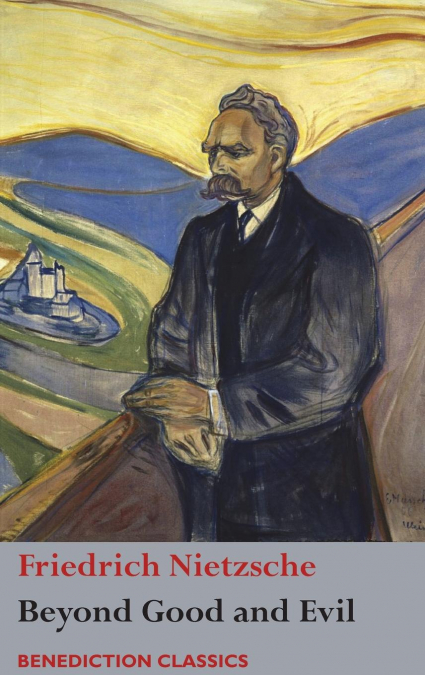
  • Beyond Good and Evil
    Friedrich Nietzsche
    Nietzsche, though primarily a philosopher, wrote widely on art, philology, history, religion, tragedy, culture, and science.  In 1886, at the height of his powers, he published Beyond Good and Evil.  Here he examines much of the best of human thought--dogmatic philosophy, Judeo-Christian morality, science and democracy – and finds it lacking.  Rejecting “slave-morality” he pres...
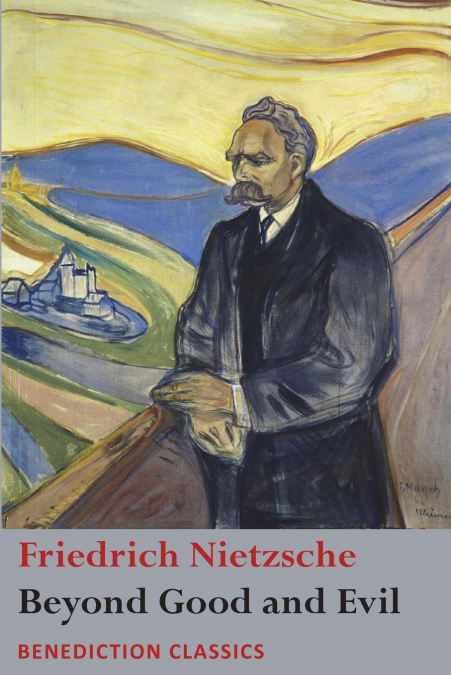
  • Beyond Good and Evil
    Friedrich Nietzsche
    Nietzsche, though primarily a philosopher, wrote widely on art, philology, history, religion, tragedy, culture, and science.  In 1886, at the height of his powers, he published Beyond Good and Evil.  Here he examines much of the best of human thought--dogmatic philosophy, Judeo-Christian morality, science and democracy – and finds it lacking.  Rejecting “slave-morality” he pres...
    Disponible

    9,99 €

Otros libros del autor

  • The Republic
    Aristotle
    ’The Republic’ by Plato is a timeless philosophical masterpiece that delves into the intricate workings of an ideal state and explores fundamental questions about justice, morality, and governance. Written in the form of a dialogue between Socrates and his contemporaries, this influential work presents a compelling vision of a just society.Plato’s ’The Republic’ invites readers...
    Disponible

    42,59 €

  • The Poetics of Aristotle
    Aristotle
    A hush settles over the amphitheatre as the chorus enters, and with it, the foundations of Western literary criticism are quietly laid. At the heart of ancient Greek philosophy, this enduring work examines the origins of drama and the intricate machinery of poetry, tracing the lineage of storytelling from sacred ritual to the grandeur of Greek tragedy. Each page unfolds the pri...
    Disponible

    16,18 €

  • Politics A Treatise on Government
    Aristotle
    Politics: A Treatise on Government by Aristotle is one of the most influential works in the history of political philosophy and a cornerstone of Western political thought. Written in the 4th century BCE, this classical masterpiece examines the nature of the state, the purpose of government, the role of citizenship, and the principles of justice and constitutional rule. Aristotl...
    Disponible

    28,57 €

  • The Ethics of Aristotle
    Aristotle
    The Ethics of Aristotle by Aristotle is a seminal work of moral philosophy that explores the principles of virtue, ethical conduct, and human flourishing. Aristotle examines the nature of the good life, the development of character, and the balance between reason and desire in achieving moral excellence. The text introduces concepts such as the Golden Mean, practical wisdom (ph...
    Disponible

    31,76 €

  • The Nicomachean Ethics of Aristotle (Cram Edition)
    Aristotle
    This XpressRead Cram Edition of The Nicomachean Ethics of Aristotle pairs the complete original text with carefully prepared study materials, designed for deeper engagement with this classic.Explore the foundations of moral philosophy with Aristotle’s 'Ethics,' a cornerstone of Western thought. This timeless work delves into the nature of virtue (arete) and the cultivation of m...
    Disponible

    32,68 €

  • Nicomachean Ethics
    Aristotle
    What does it really mean to live a good life? In Nicomachean Ethics, Aristotle tackles this timeless question with clarity and practicality. Instead of chasing abstract ideals, he focuses on character, habits, and balance. His famous idea of the 'golden mean' teaches that virtue lies between extremes-courage between recklessness and cowardice, generosity between wastefulness an...
    Disponible

    20,08 €