

 Librería Samer Atenea
 Kálamo Books
 Librería Elías (Asturias)
 Librería Kolima (Madrid)
 Librería Proteo (Málaga)
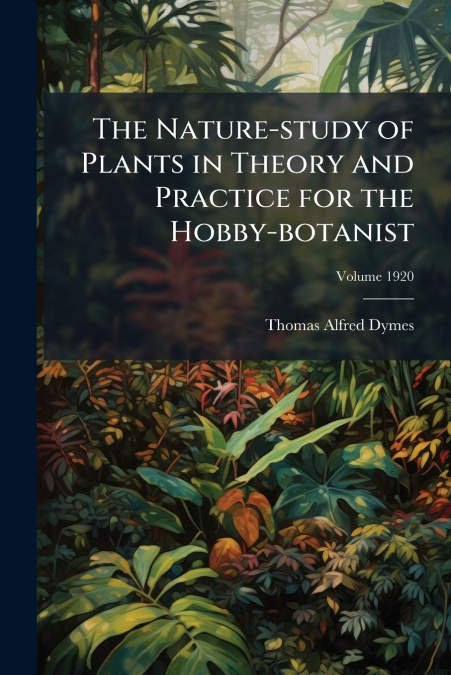
'The Nature-Study of Plants in Theory and Practice for the Hobby-Botanist' (Volume 1920) by Thomas Alfred Dymes offers a comprehensive guide to understanding plant life through direct observation and practical experimentation. Designed for amateur botanists and educators alike, this volume explores various aspects of plant morphology, physiology, and ecology. Dymes emphasizes the importance of hands-on learning and encourages readers to engage with nature directly, fostering a deeper appreciation for the intricate details of the plant kingdom.This book is an invaluable resource for anyone seeking to enhance their knowledge of botany, whether for personal enrichment or as a teaching aid. With clear explanations and practical exercises, Dymes provides a solid foundation for understanding the science of plants, making it an enduring contribution to the field of nature study.This work has been selected by scholars as being culturally important, and is part of the knowledge base of civilization as we know it. This work was reproduced from the original artifact, and remains as true to the original work as possible. Therefore, you will see the original copyright references, library stamps (as most of these works have been housed in our most important libraries around the world), and other notations in the work.This work is in the public domain in the United States of America, and possibly other nations. Within the United States, you may freely copy and distribute this work, as no entity (individual or corporate) has a copyright on the body of the work.As a reproduction of a historical artifact, this work may contain missing or blurred pages, poor pictures, errant marks, etc. Scholars believe, and we concur, that this work is important enough to be preserved, reproduced, and made generally available to the public. We appreciate your support of the preservation process, and thank you for being an important part of keeping this knowledge alive and relevant.





