Inicio > Estilo de vida, deporte y ocio > Historia natural > The Morphometric Affinities Of The Qafzeh And Skhul Hominans
The Morphometric Affinities Of The Qafzeh And Skhul Hominans

The Morphometric Affinities Of The Qafzeh And Skhul Hominans

The Morphometric Affinities Of The Qafzeh And Skhul Hominans

Conrad B. Quintyn / Conrad BQuintyn

20,00 €
IVA incluido
Disponible
Editorial:
AuthorHouse
Año de edición:
2006
Materia
Historia natural
ISBN:
9781425958497
20,00 €
IVA incluido
Disponible

Selecciona una librería:

  • Librería Samer Atenea
  • Librería Aciertas (Toledo)
  • Kálamo Books
  • Librería Perelló (Valencia)
  • Librería Elías (Asturias)
  • Donde los libros
  • Librería Kolima (Madrid)
  • Librería Proteo (Málaga)

In the arguments on modern human origins the Qafzeh-Skhul hominans, based on skeletal analyses, are accepted as 'anatomically modern' and given the lofty title of 'Proto-Cro-Magnons.' However, their modernity has been questioned in the literature. In this research, 42 dimensions were measured on the craniofacial bones of Qafzeh, Skhul, Cro-Magnons, Neanderthals, and other archaic, early, and recent modern samples from Africa, Western Asia, Europe, and East Asia (total crania, N=400) to test the null hypothesis that the Qafzeh-Skhul hominans are ’Proto-Cro-Magnons.’ An alternate hypothesis was also tested: the Qafzeh and Skhul hominan samples have morphometric affinities to one, some or none of the regional sample groups in this research. Canonical variate analysis based on log size/shape and shape D2 for male and female craniofacial data show quite clearly that the Qafzeh and Skhul hominan samples are distant from the Cro-Magnons but closer to African and Levantine (Middle Eastern) sample groups. Hierarchical cluster analysis presented similar results. Based on the data in this research, the hypothesis stating that the Qafzeh and Skhul hominans are 'Proto-Cro-Magnons' is rejected. Instead, the alternate hypothesis is accepted: the Qafzeh and Skhul hominans have strong morphometric affinities to archaic and early modern Africans and Levantines. Together, the Qafzeh-Skhul skeletal sample shows strong evidence of mosaic evolution. In essence, are the Qafzeh and Skhul hominans descendants of 'the' modern African population that left the continent 200,000 to 150,000 years ago according to the mitochrondrial DNA genetic evidence? This is certainly possible. Are the Qafzeh and Skhul hominans ancestors of the later Cro-Magnons who, supposedly, 'replaced' all existing, well-adapted populations in the Old World--even the remarkable Neanderthals--by 30,000 years ago? According to the craniofacial data in this research, the answer is no.

Artículos relacionados

  • Florida
    Kathryn Abbey Hanna
    This colorful and exciting of Florida is in two parts: the historical land of Spanish galleons, Seminole Indians, and the Confederacy; second, the modern state with its land booms, resorts, and tourist attractions. This revised edition contains information on flood control and other contemporary problems.Originally published in 1941.A UNC Press Enduring Edition -- UNC Press End...
    Disponible

    76,46 €

  • Social Life in the Insect World
    J. Henri Fabre / JHenri Fabre
    Fabre had many scholarly achievements. He was a popular teacher, physicist, chemist and botanist. However, he is probably best known for his findings in the field of entomology, the study of insects, and is considered by many to be the father of modern entomology. Much of his enduring popularity is due to his marvelous teaching ability and his manner of writing about the lives ...
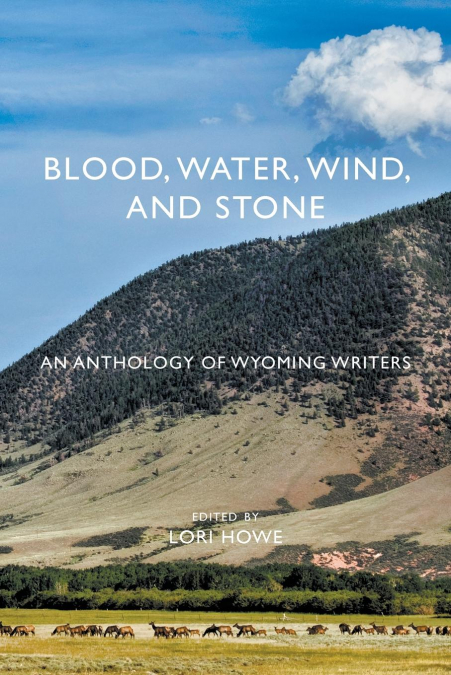
  • Blood, Water, Wind, and Stone
    Lori Howe
    Wyoming is the least-populated state in America, and it is filled with long, silent stretches of prairie, mountains that see snowfall every month of the year, and a red desert filled with sand dunes and the fossilized past. It is perhaps this vastness and isolation which urge us to stop and contemplate our place in this landscape—and what we have to offer to its care.While Wyom...
    Disponible

    18,51 €

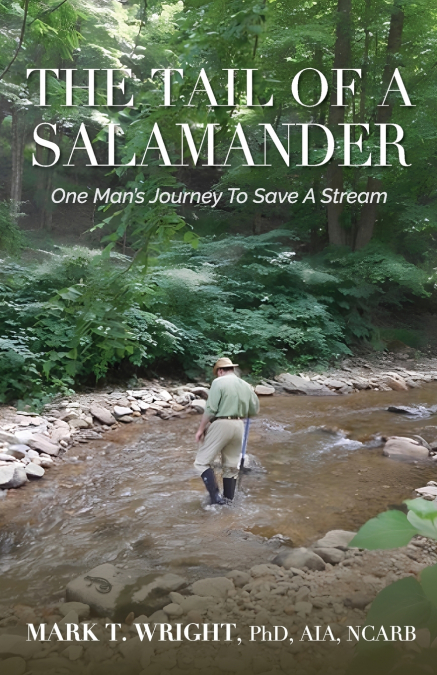
  • The Tail of the Salamander
    Mark T Wright
    A heartwarming, true story of accomplished architect and urban planner Mark T. Wright’s quest to restore and preserve a North Carolina stream. Along the way, he experiences unexpected personal growth, transformation and revelation about the things most important in life. It is a compelling story of hope for the future, a father’s respect of nature, and love for his children. ...
    Disponible

    23,99 €

  • Calling Wild Places Home
    Laura Waterman
    Poignant and vulnerable essays that weave together seemingly disparate themes of wild places and mountain stewardship, books and reading, and building a new life after loss.'This is some of the finest writing in Laura Waterman’s long and distinguished career. Anyone who values the history of conservation, or the gnarled wilds of the Northeast, or the complexities of the human s...
    Disponible

    26,15 €

  • BEARS I HAVE MET-AND OTHERS
    Allen Kelly
    'Bears I Have Met-And Others' by using Allen Kelly unfolds as a charming exploration of nature, journey, and the profound connections between the human and animal worlds. Kelly, an amazing storyteller, weaves a tapestry of encounters with bears and other creatures, immersing readers inside the untamed beauty of the wild. In this literary masterpiece, Kelly goes past recounting ...
    Disponible

    12,26 €

Otros libros del autor

  • The Father of Man
    Conrad B. Quintyn / Conrad BQuintyn
    ...
    Disponible

    18,72 €

  • The Father of Man
    Conrad B. Quintyn / Conrad BQuintyn
    ...
  • The Morphometric Affinities of the Qafzeh and Skhul Hominans
    Conrad B. Quintyn / Conrad BQuintyn
    In the arguments on modern human origins the Qafzeh-Skhul hominans, based on skeletal analyses, are accepted as 'anatomically modern' and given the lofty title of 'Proto-Cro-Magnons.' However, their modernity has been questioned in the literature. In this research, 42 dimensions were measured on the craniofacial bones of Qafzeh, Skhul, Cro-Magnons, Neanderthals, and other arch...