 Librería Samer Atenea
 Kálamo Books
 Librería Elías (Asturias)
 Librería Kolima (Madrid)
 Librería Proteo (Málaga)
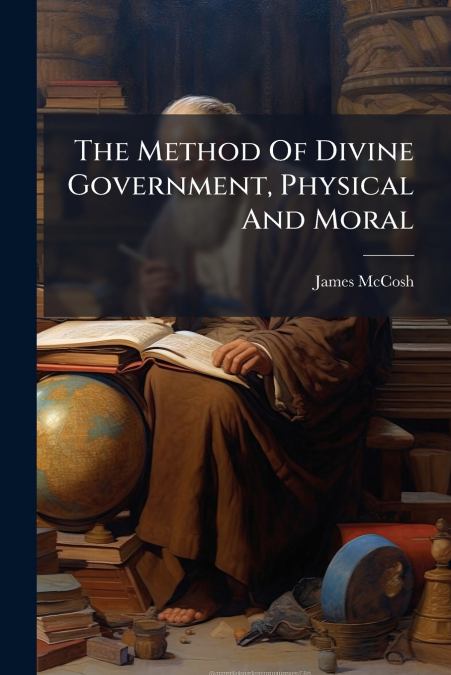
The Method Of Divine Government, Physical And Moral explores the intersection of religious belief and philosophical inquiry. James McCosh delves into the nature of divine governance, examining its manifestations in both the physical world and the realm of human morality. This work investigates the principles underlying the perceived order and regularity of the cosmos, as well as the ethical foundations of human behavior. McCosh contemplates the ways in which divine law operates within the natural world and how it informs our understanding of right and wrong. By analyzing the interplay between physical laws and moral imperatives, the book seeks to provide a comprehensive framework for understanding humanity’s place in the universe. This thought-provoking work offers a rich exploration of theological and philosophical concepts, inviting readers to consider the profound implications of a divinely ordered world.This work has been selected by scholars as being culturally important, and is part of the knowledge base of civilization as we know it. This work was reproduced from the original artifact, and remains as true to the original work as possible. Therefore, you will see the original copyright references, library stamps (as most of these works have been housed in our most important libraries around the world), and other notations in the work.This work is in the public domain in the United States of America, and possibly other nations. Within the United States, you may freely copy and distribute this work, as no entity (individual or corporate) has a copyright on the body of the work.As a reproduction of a historical artifact, this work may contain missing or blurred pages, poor pictures, errant marks, etc. Scholars believe, and we concur, that this work is important enough to be preserved, reproduced, and made generally available to the public. We appreciate your support of the preservation process, and thank you for being an important part of keeping this knowledge alive and relevant.