The Mathematics of Coordinated Inference

The Mathematics of Coordinated Inference

Alan D. Taylor / Christopher S. Hardin

67,08 €
IVA incluido
Disponible
Editorial:
Springer Nature B.V.
Año de edición:
2016
ISBN:
9783319376059
67,08 €
IVA incluido
Disponible

Selecciona una librería:

  • Librería Samer Atenea
  • Librería Aciertas (Toledo)
  • Kálamo Books
  • Librería Perelló (Valencia)
  • Librería Elías (Asturias)
  • Donde los libros
  • Librería Kolima (Madrid)
  • Librería Proteo (Málaga)

Two prisoners are told that they will be brought to a room and seated so that each can see the other. Hats will be placed on their heads; each hat is either red or green. The two prisoners must simultaneously submit a guess of their own hat color, and they both go free if at least one of them guesses correctly. While no communication is allowed once the hats have been placed, they will, however, be allowed to have a strategy session before being brought to the room. Is there a strategy ensuring their release? The answer turns out to be yes, and this is the simplest non-trivial example of a 'hat problem.' This book deals with the question of how successfully one can predict the value of an arbitrary function at one or more points of its domain based on some knowledge of its values at other points. Topics range from hat problems that are accessible to everyone willing to think hard, to some advanced topics in set theory and infinitary combinatorics. For example, there is a method of predicting the value f(a) of a function f mapping the reals to the reals, based only on knowledge of f’s values on the open interval (a - 1, a), and for every such function the prediction is incorrect only on a countable set that is nowhere dense. The monograph progresses from topics requiring fewer prerequisites to those requiring more, with most of the text being accessible to any graduate student in mathematics. The broad range of readership includes researchers, postdocs, and graduate students in the fields of set theory, mathematical logic, and combinatorics. The hope is that this book will bring together mathematicians from different areas to think about set theory via a very broad array of coordinated inference problems.

Artículos relacionados

  • M.C. Escher
    Özer Mumcu
    En este estudio, se examina la subestructura matemática de las obras del artista gráfico neerlandés M.C. Escher. Los efectos matemáticos en las obras de Escher pueden clasificarse en ciertos temas. Los más importantes pueden ordenarse como la división regular del plano, las paradojas visuales y las ficciones sobre la estructura de la perspectiva y la topología geométrica. Para ...
    Disponible

    34,09 €

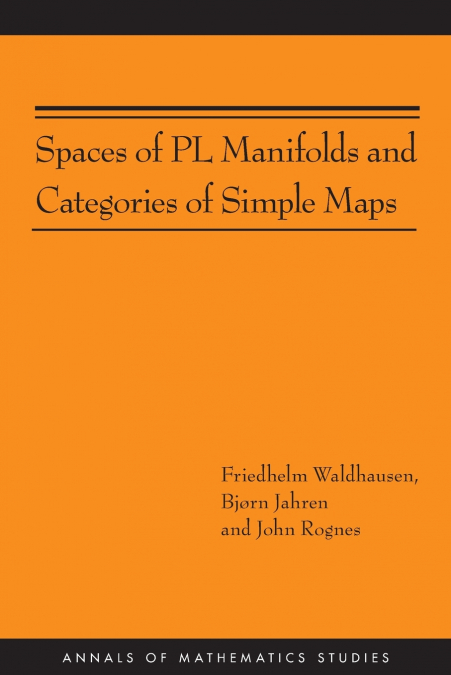
  • Spaces of PL Manifolds and Categories of Simple Maps
    Bjørn Jahren / Friedhelm Waldhausen / John Rognes
    Since its introduction by Friedhelm Waldhausen in the 1970s, the algebraic K-theory of spaces has been recognized as the main tool for studying parametrized phenomena in the theory of manifolds. However, a full proof of the equivalence relating the two areas has not appeared until now. This book presents such a proof, essentially completing Waldhausen’s program from more than t...
    Disponible

    127,78 €

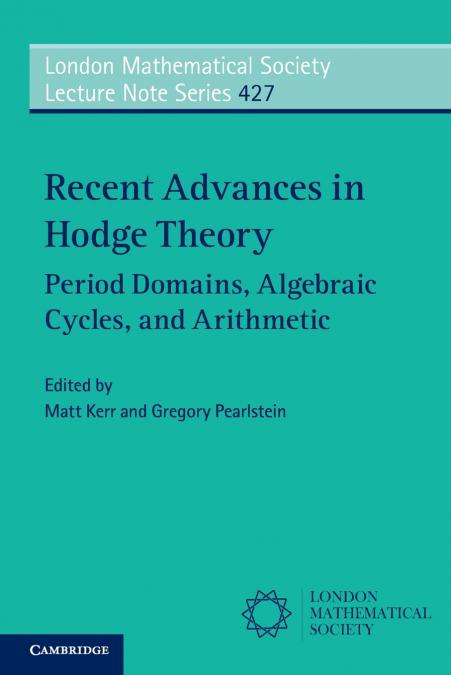
  • Recent Advances in Hodge Theory
    ...
    Disponible

    114,34 €

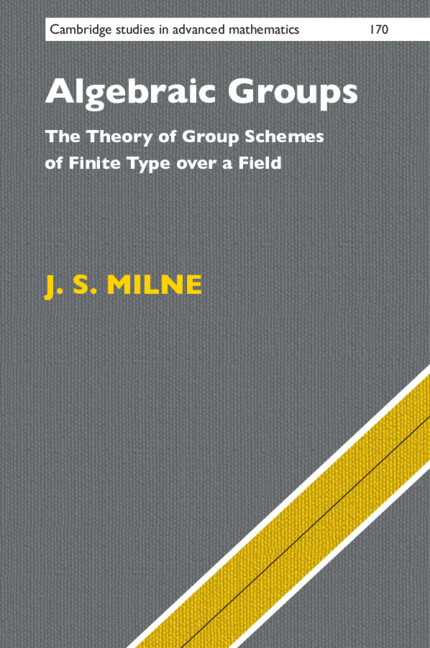
  • Algebraic Groups
    J. S. Milne
    ...
    Disponible

    68,65 €

  • A First Course in Algebraic Topology
    Czes Kosniowski
    ...
    Disponible

    76,37 €

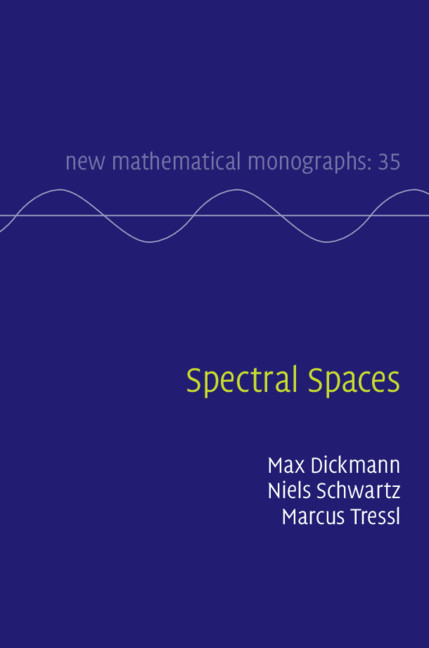
  • Spectral Spaces
    Marcus Tressl / Max Dickmann / Niels Schwartz
    ...

Otros libros del autor

  • The Mathematics of Coordinated Inference
    Alan D. Taylor / Christopher S. Hardin
    Two prisoners are told that they will be brought to a room and seated so that each can see the other. Hats will be placed on their heads; each hat is either red or green. The two prisoners must simultaneously submit a guess of their own hat color, and they both go free if at least one of them guesses correctly. While no communication is allowed once the hats have been placed, t...
    Disponible

    48,64 €

  • The Mathematics of Coordinated Inference
    Alan D. Taylor / Christopher S. Hardin
    Two prisoners are told that they will be brought to a room and seated so that each can see the other. Hats will be placed on their heads; each hat is either red or green. The two prisoners must simultaneously submit a guess of their own hat color, and they both go free if at least one of them guesses correctly. While no communication is allowed once t...