
Inicio > Humanidades > Historia > The Masonic Book Club, Vol. 17
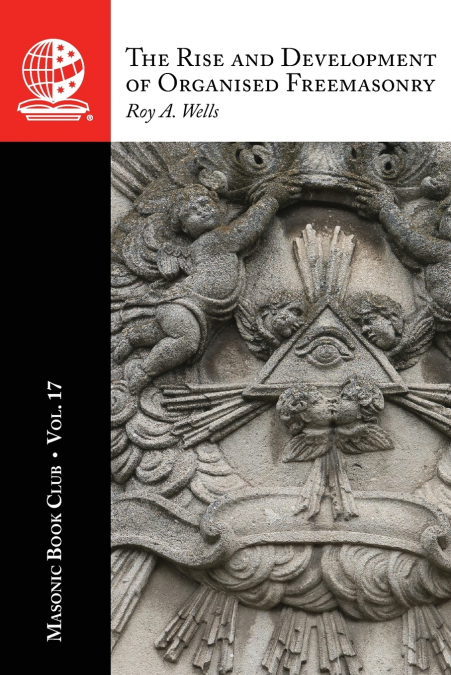
The Masonic Book Club, Vol. 17

The Masonic Book Club, Vol. 17

Roy A. Wells

21,98 €
IVA incluido
Disponible
Editorial:
Westphalia Press
Año de edición:
2026
Materia
Historia
ISBN:
9781637235508
21,98 €
IVA incluido
Disponible

Selecciona una librería:

  • Librería Samer Atenea

  • Kálamo Books
  • Librería Elías (Asturias)
  • Librería Kolima (Madrid)
  • Librería Proteo (Málaga)

The inauguration of the premier Grand Lodge in London on St John’s Day, 24 June 1717, may well be said to have been the commencement of organised freemasonry as it is understood today but, before examining the development from that date it would be helpful if earlier threads are drawn together and to take a look at pointers in that direction that are to be found prior to that date, and that event.Following the Norman conquest of England in AD 1066 architectural styles began to change from the strong, sturdy and simple, to ornate structures. Designers, architects, sculptors, and artisans all gained considerably from the techniques that entered the country from other nations. Churches, cathedrals, and palaces were built on the grand scale and with added skills that were then necessary the time had arrived for a development of control, not only for protection of crafts and skills that were involved but for the maintenance of those higher standards. Trade Guilds arose in the cities and principal towns and the craftsmen met together there as well as on sites where the work went on; some projects were of such magnitude that decades were to pass and a lifetime was spent by some before they were completed. No artisan could pursue his skill without proper recognition from a controlling body and accredited evidence had to be forthcoming before any acknowledgement could be afforded in passing from one site to another. A system of tuition and control for apprentices and masters alike, as well as an elementary code of behaviour were devised and such details were drawn up for the mason craft on parchment rolls and read out on every convenient occasion for that purpose. As was to be expected in a Christian society when life in general was guided by scholars from the abbeys, monasteries, cathedrals and churches which represented the centrepiece for each community, large or small, each Guild had its patron Saint and attendance for Mass on that day was deemed an obligation and wages paid for attention to it.


Artículos relacionados

  • Raising Freedom's Banner
    Paul Harris
    World wide history of peaceful street demonstrations from their earliest beginning in eighteenth century England to their use throughout the world in the twenty-first century. Describes why some demonstration movements succeeded and others failed. Contrasts demonstrations within the law with civil disobedience demonstrations. Describes Peterloo, the Chartists, the Suffragettes,...
    Disponible

    23,59 €

  • Waipi’o Valley
    Jeffrey L. Gross
    Waipi’o Valley: A Polynesian Journey from Eden to Eden recounts the remarkable migrations of the Polynesians across a third of the circumference of the earth. Their amazing journey began from Kalana i Hau’ola, the biblical “Garden of Eden” located along the shore of the Persian Gulf, extended to the Indus River Valley of ancient Vedic India, to Egypt where some ancestors of the...
  • Floralia
    June Rainsford Butler
    A century characterized by a growing interest in science, the opportunity for travel, and leisure for gardening furnishes the setting for Butler’s book. The rise of landscape gardening in England is traced, and the origin and history of its most famous gardens are given. The close relation between England and America in the field of horticulture is also discussed.Originally pub...
    Disponible

    61,20 €

  • President Wilson’s Addresses
    Woodrow Wilson
    'These addresses of President Woodrow Wilson are almost entirely concerned with political affairs, and more specifically with defining Americanism. Yet they also show that even as he moved from academia to the heights of politics, Wilson retained something of the teacher’s interest in showing the relation between specific instances and the general forms of thought or action of ...
  • The Story of my Life
    John Albert Macy
    The Story of My Life, is Helen Keller’s autobiography detailing her early life, especially her experiences with Anne Sullivan. The book is dedicated to inventor Alexander Graham Bell. The dedication reads, 'To ALEXANDER GRAHAM BELL Who has taught the deaf to speak and enabled the listening ear to hear speech from the Atlantic to the Rockies, I dedicate this Story of My Life.' ...
  • The Story of My Life Vol. 6 Spanish Passions
    Giacomo Casanova
    Casanova was an Italian adventurer and author from the Republic of Venice. His autobiography, Histoire de ma vie (Story of My Life), is regarded as one of the most authentic sources of the customs and norms of European social life during the 18th century. He has become so famous for his often complicated and elaborate affairs with women that his name is now synonymous with 'wom...