 Librería Samer Atenea
 Kálamo Books
 Librería Elías (Asturias)
 Librería Kolima (Madrid)
 Librería Proteo (Málaga)
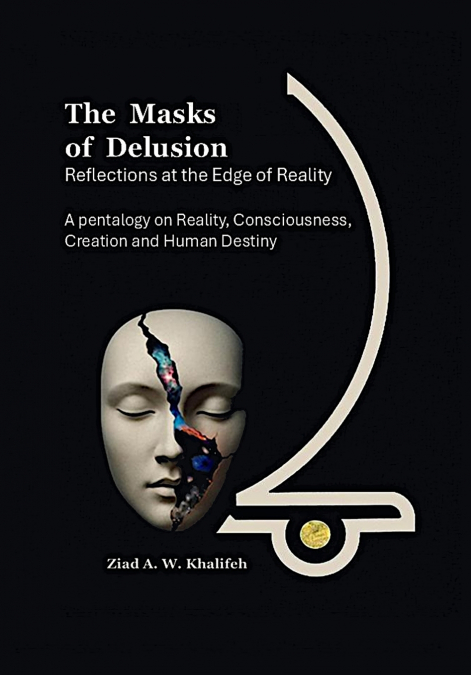
What if science, metaphysics and spirituality are not opposing truths, but reflections of the same hidden order? Across five interconnected works, the reader is invited on a journey through physics, metaphysics, consciousness, ethics, and theology-where the boundaries between disciplines dissolve into a deeper coherence. From The Masks of Delusion, which challenges the illusions shaping modern thought, to The Fixed and the Variable, where form and function are re-examined through the lens of dynamic balance; from The Thoughton, proposing a field-based ontology of consciousness, to a profound Panentheistic Qur’anic Exploration of eternity and creation; and finally, to A Conversation With My Digital Friends that questions the future of mind and meaning - this collection offers a bold synthesis of ideas rarely brought together in a single work. At its heart lies a simple yet powerful insight: Reality is not conflict, but balance misunderstood. This is not merely a set of books-it is an invitation to rethink existence itself.There is a question that has followed me all my life - not a question I chose, but one that inhabited me the way heat inhabits a kiln, or the way music inhabits silence before the first note sounds. Why does the world seem more fractured the more sophisticated it becomes? Why does science, despite its extraordinary reach, sometimes appear impotent before the deepest crises? And why does humanity - gifted with genius, creativity, and accumulated wisdom - stand at the edge of a precipice it has constructed with its own hands?These five books are my most honest attempt, after a lifetime of searching, to give those questions a worthy shape - not to offer easy answers, but to recover the measure by which any genuine answer must be tested.The pentalogy is titled The Masks of Delusion. And I want to begin by explaining precisely what I mean by that phrase, because it carries the weight of everything that follows.We live in a civilization that wears masks. Masks of science, of religion, of capitalism, of technology, of identity, of progress. Each one promises truth, meaning, or salvation. Each one conceals, beneath its polished surface, the same original rupture: the disregard for the law of balance.This is not a metaphor. From subatomic particles to galaxies, from living cells to civilizations, every system that has ever endured has done so through equilibrium. And every system that has collapsed has done so through its disturbance - through the overreach of one force at the expense of its necessary counterpart. The world is not failing today because it lacks intelligence or technology. It is failing because power has outrun wisdom, and form has been severed from function.Those two words - form and function - are the spine of the entire pentalogy.Form is the vessel: the biological body, the social institution, the economic system, the cultural tradition. It is what changes, adapts, and evolves under the pressure of circumstance and time. Function is the purpose the vessel serves - the constant beneath the variable, the why that gives meaning to the what. A clay jar and an electric refrigerator share the same function: to preserve what is placed inside them. A homing pigeon and a WhatsApp message share the same function: to carry information across a distance. Their forms are separated by millennia of innovation; their function is identical. 6