 Librería Samer Atenea
 Kálamo Books
 Librería Elías (Asturias)
 Librería Kolima (Madrid)
 Librería Proteo (Málaga)
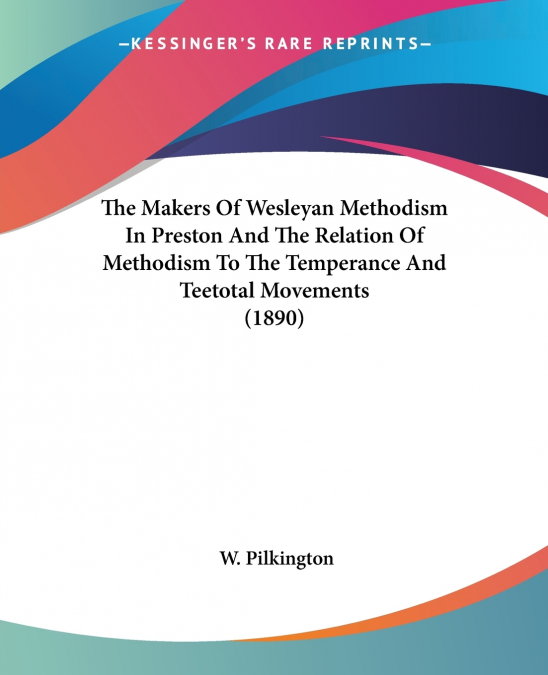
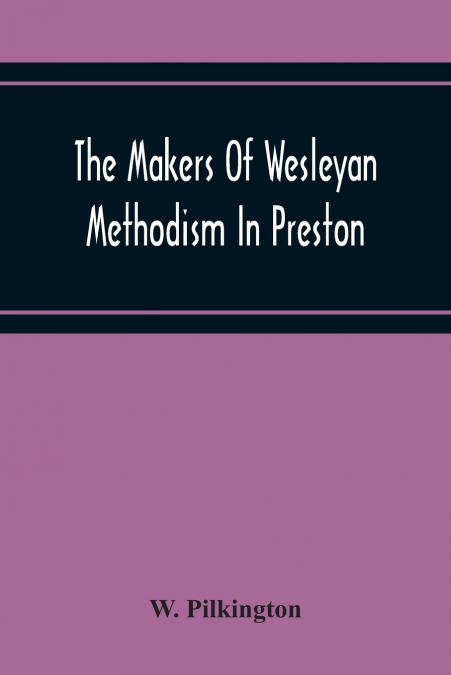
A concise, stirring record of faith, reform and community in Victorian Preston. Lives reshaped by firm conviction. Pilkington’s study follows the makers of Wesleyan Methodism in Preston and tracks the close relation of Methodism to the temperance and tee-total movements. More than a methodist church history book, it interrogates how chapel theology translated into everyday practice, moral campaigning and civic influence. Written with calm authority and an eye for local detail, the narrative balances anecdote and analysis to reveal the social mechanics of nineteenth century religious reform: how meetings, sermons and societies fed into wider religious movements in England and shaped working-class life amid industrial change. Pilkington offers lively portraits of ministers and lay organisers without romanticising; the text is both documentary and humane, valuable to readers seeking vivid local history and to those studying the broader patterns of British religious reform.Historically significant and vividly local, the work is essential for anyone assembling a church historians collection or mapping british religious reformers across the nineteenth century. It contributes to wesleyan methodism studies and to temperance movement history alike, and it offers a clear resource for religious studies students seeking context on christianity and temperance. Republished by Alpha Editions in a careful modern edition, this volume preserves the spirit of the original while making it effortless to enjoy today - a heritage title prepared for readers and collectors alike. Beyond its local focus, the volume helps to explain national debates about sobriety, public morals and the place of religion in civic life - topics still resonant for students of social reform. Casual readers drawn to Preston local history discover gripping narrative and social colour; classic-literature collectors appreciate its period voice and archival value; scholars gain a clear lens on methodism and social change in Victorian era England. Its insights continue to inform present debates.