 Librería Samer Atenea
 Kálamo Books
 Librería Elías (Asturias)
 Librería Kolima (Madrid)
 Librería Proteo (Málaga)
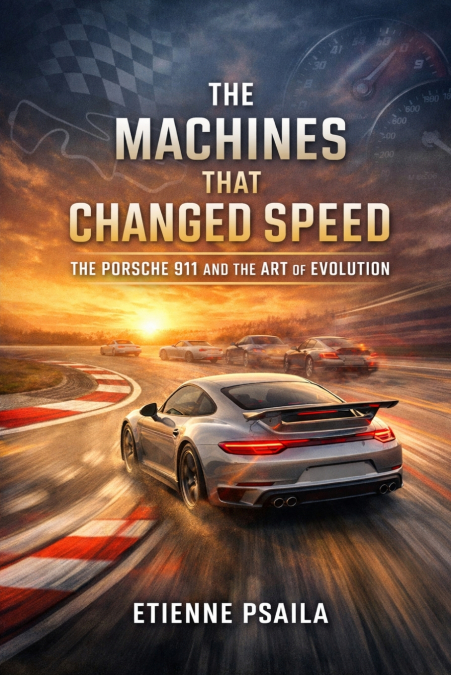
For more than six decades, the Porsche 911 has done something the modern car business rarely tolerates: it has stayed recognizably itself while the world around it repeatedly changed its rules. Safety standards hardened, emissions targets tightened, test cycles evolved, markets surged and cooled, and customers asked for contradictory virtues-more speed and more comfort, more technology and more intimacy, more efficiency and more theatre. Through every disruption, Porsche treated the 911 not as a relic to be protected, but as a platform to be refined-one revision at a time.This book follows the 911 as a case study in continuous improvement, tracking how a single rear-engine architecture survived by being re-engineered without surrendering its defining feel. It examines the decisions that anchored identity-packaging, layout, driving position, and the disciplined insistence on evolutionary design-and the engineering work required to keep the promise credible at modern speeds. From air-cooled origins through water cooling, from naturally aspirated character to turbocharged realities, and into the era of sophisticated electronics and hybrid assistance, the story is told through what changed, why it changed, and how Porsche made each change feel like an extension rather than a replacement.The result is not a nostalgia tour, but a practical narrative about how engineering organizations learn over time. The 911’s history reveals how racing pressure can harden road-car durability, how regulation can become an engineering brief instead of a defeat, and how a brand can scale a model line into many variants without losing coherence. If you want to understand why the 911 remains a global benchmark-desired by enthusiasts, studied by rivals, and repeatedly updated without breaking its silhouette-this is the story of the method behind the legend.