 Librería Samer Atenea
 Kálamo Books
 Librería Elías (Asturias)
 Librería Kolima (Madrid)
 Librería Proteo (Málaga)
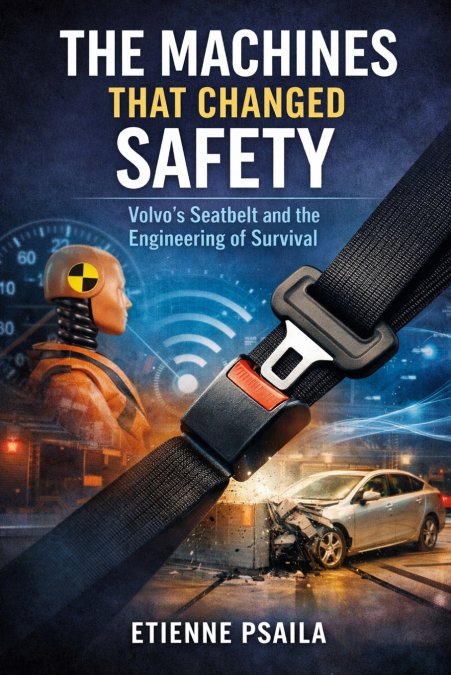
A single, deceptively simple restraint changed what the world expected from an automobile. Before the three-point seat belt, crashes were often treated as misfortune and injury as an inevitable cost of mobility. After it, survival became something engineers could pursue deliberately-measured in forces, injury metrics, and outcomes rather than in promises and slogans.This book traces how Volvo’s safety work-anchored by Nils Bohlin’s 1959 three-point belt-helped shift the industry from styling-and-speed progress to progress defined by fewer deaths and fewer life-altering injuries. It follows the belt’s journey from early skepticism to global standard, showing how design details, usability, regulation, and culture determined whether a life-saving idea actually saved lives.Along the way, the narrative opens the 'black box' of modern occupant protection: crash science, test protocols, pretensioners and load limiters, airbag integration, and today’s sensor-driven systems that aim to prevent crashes altogether. The result is a clear, fact-based story of how survival engineering became one of the most consequential forms of automotive innovation-quietly, daily, for almost everyone.