
The Limits to Scarcity

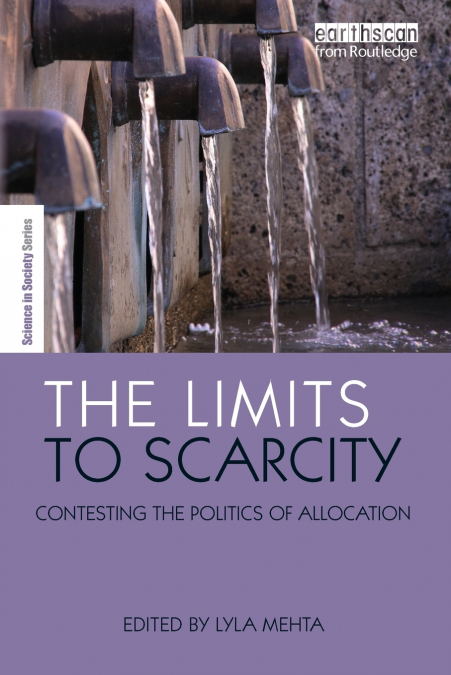
The Limits to Scarcity

Lyla Mehta

73,03 €
IVA incluido
Disponible
Editorial:
Taylor & Francis Ltd
Año de edición:
2010
Materia
Economía
ISBN:
9781844075423
73,03 €
IVA incluido
Disponible

Selecciona una librería:

  • Librería Samer Atenea
  • Librería Aciertas (Toledo)
  • Kálamo Books
  • Librería Perelló (Valencia)
  • Librería Elías (Asturias)
  • Donde los libros
  • Librería Kolima (Madrid)
  • Librería Proteo (Málaga)

Scarcity is considered a ubiquitous feature of the human condition. It underpins much of modern economics and is widely used as an explanation for social organisation, social conflict and the resource crunch confronting humanity’s survival on the planet. It is made out to be an all-pervasive fact of our lives - be it of housing, food, water or oil. But has the conception of scarcity been politicized, naturalized, and universalized in academic and policy debates? Has overhasty recourse to scarcity evoked a standard set of market, institutional and technological solutions which have blocked out political contestations, overlooking access as a legitimate focus for academic debates as well as policies and interventions? Theoretical and empirical chapters by leading academics and scholar-activists grapple with these issues by questioning scarcity’s taken-for-granted nature. They examine scarcity debates across three of the most important resources - food, water and energy - and their implications for theory, institutional arrangements, policy responses and innovation systems. The book looks at how scarcity has emerged as a totalizing discourse in both the North and South. The ’scare’ of scarcity has led to scarcity emerging as a political strategy for powerful groups. Aggregate numbers and physical quantities are trusted, while local knowledges and experiences of scarcity that identify problems more accurately and specifically are ignored. Science and technology are expected to provide ’solutions’, but such expectations embody a multitude of unexamined assumptions about the nature of the ’problem’, about the technologies and about the institutional arrangements put forward as a ’fix.’ Through this examination the authors demonstrate that scarcity is not a natural condition: the problem lies in how we see scarcity and the ways in which it is socially generated.
Artículos relacionados

  • Principles of Economics 2e
    David Shapiro / Steven A. Greenlaw / Steven AGreenlaw / Timothy Taylor
    Principles of Economics 2e covers the scope and sequence of most introductory economics courses. The text includes many current examples, which are handled in a politically equitable way. The outcome is a balanced approach to the theory and application of economics concepts. The second edition has been thoroughly revised to increase clarity, update data and current event impact...
    Disponible

    49,73 €

  • Perspectivas sobre desarrollo y territorio en el nuevo contexto
    José I. Távara / Roxana Barrantes
    Las contribuciones de este volumen intentan expresar el reconocimiento y el homenaje a Efraín Gonzales de Olarte, entrañable integrante de nuestra comunidad universitaria, una persona comprometida con la investigación y la formación de varias generaciones de profesionales y ciudadanos, dedicada al fortalecimiento de la educación en nuestro país, tanto dentro como fuera de las a...
    Disponible

    20,75 €

  • Comparable Worth
    Elaine Sorensen
    For decades women working as nurses, librarians, and secretaries have argued that they are paid less than men in jobs requiring comparable skill and effort. By the late 1980s, the notion of 'comparable worth' had become a familiar one, and comparable worth initiatives were being developed to counteract the persistent disparities between male and female pay. In a comprehensive a...
    Disponible

    47,60 €

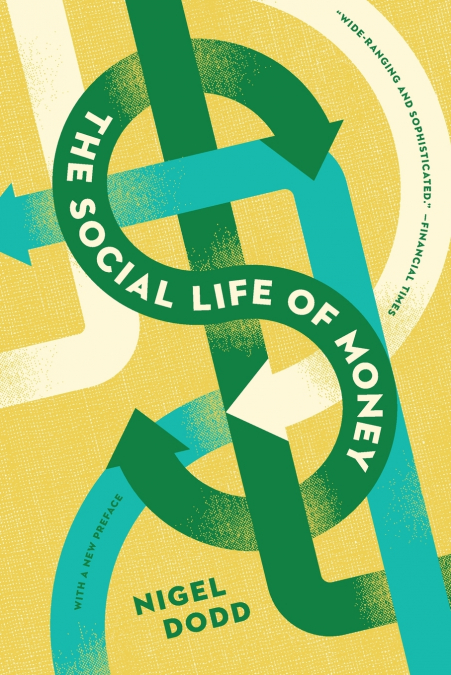
  • The Social Life of Money
    Nigel Dodd
    A reevaluation of what money is-and what it might beQuestions about the nature of money have gained a new urgency in the aftermath of the global financial crisis. Even as many people have less of it, there are more forms and systems of money, from local currencies and social lending to mobile money and Bitcoin. Yet our understanding of what money is-and what it might be-hasn’t ...
    Disponible

    36,83 €

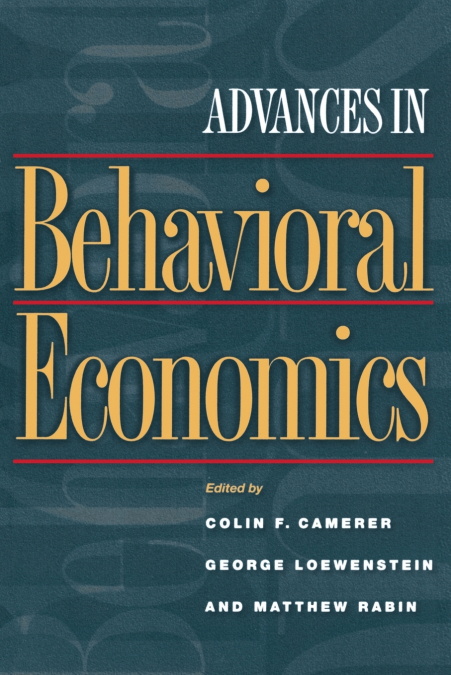
  • Advances in Behavioral Economics
    Twenty years ago, behavioral economics did not exist as a field. Most economists were deeply skeptical--even antagonistic--toward the idea of importing insights from psychology into their field. Today, behavioral economics has become virtually mainstream. It is well represented in prominent journals and top economics departments, and behavioral economists, including several con...
    Disponible

    113,11 €

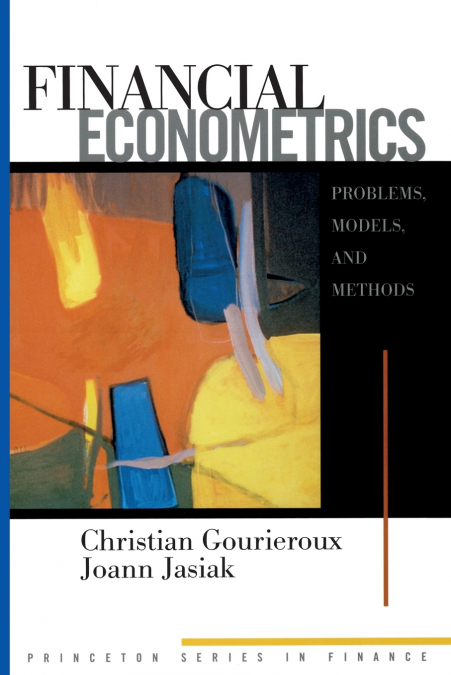
  • Financial Econometrics
    Christian Gouriéroux / Joann Jasiak
    Financial econometrics is a great success story in economics. Econometrics uses data and statistical inference methods, together with structural and descriptive modeling, to address rigorous economic problems. Its development within the world of finance is quite recent and has been paralleled by a fast expansion of financial markets and an increasing variety and complexity of f...
    Disponible

    216,13 €

Otros libros del autor

  • The Limits to Scarcity
    Lyla Mehta
    Scarcity is considered a ubiquitous feature of the human condition. It underpins much of modern economics and is widely used as an explanation for social organisation, social conflict and the resource crunch confronting humanity’s survival on the planet. It is made out to be an all-pervasive fact of our lives - be it of housing, food, water or oil. But has the conception of sca...