 Librería Samer Atenea
 Kálamo Books
 Librería Elías (Asturias)
 Librería Kolima (Madrid)
 Librería Proteo (Málaga)
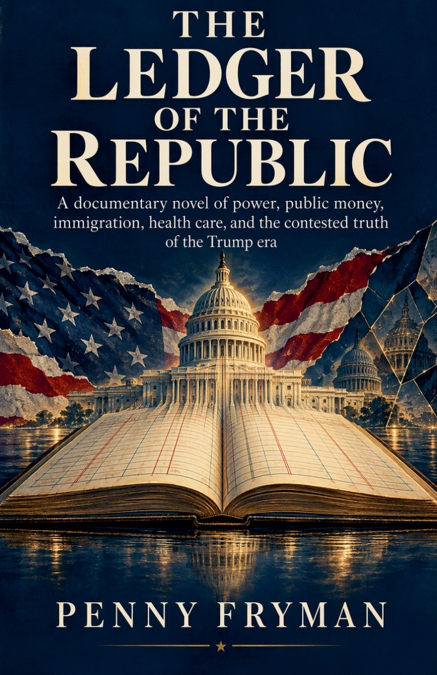
The Ledger of the Republic is a work of documentary fiction that examines American government, public money, constitutional power, immigration enforcement, health care, war, political misinformation, court battles, and the dismantling of federal institutions from the Nixon era through the Trump administrations.The book’s governmental record is grounded in documented sources. Elections, court verdicts, indictments, dismissals, Supreme Court decisions, congressional votes, public statements, budget figures, agency actions, workforce reductions, laws, contracts, and historical events are presented from official records, judicial decisions, legislative material, agency data, and attributed reporting. Where a matter remains disputed, alleged, preliminary, projected, or unresolved, the narrative identifies it that way rather than presenting it as settled fact.Interwoven with that factual record is a fictional community led by Mara Vale, a former local reporter who teaches citizens how to read public documents and test political claims. Daniel, Elena, Walter, Theo, Nora, Ben, Luis, and their families are invented composite characters. Their conversations, town halls, workplaces, medical decisions, household bills, detention experiences, and community scenes did not occur as literal transcripts. They are narrative devices built from documented patterns and realistic consequences.This combination allows the book to show both the official ledger and the human one. A court ruling is factual; the discussion around Mara’s library table is fictional. A federal layoff total is factual; the unanswered telephone in a county office is a representative scene. A recorded presidential quotation is presented as a public statement; dialogue spoken by the novel’s principal citizens is invented. The fictional passages do not change the underlying governmental facts-they illustrate how those facts can reach ordinary lives.The result is neither a conventional history nor a wholly invented political novel. It is a fact-based narrative about institutions and consequences: how executive power expands, how Congress yields or resists, how courts distinguish procedure from proof, how public accounts can be distorted, and how national decisions become delayed care, lost work, family separation, higher costs, weaker services, and diminished trust. Its central question is not only what government did, but how citizens can determine what is true when power has an interest in controlling the answer.