 Librería Samer Atenea
 Kálamo Books
 Librería Elías (Asturias)
 Librería Kolima (Madrid)
 Librería Proteo (Málaga)
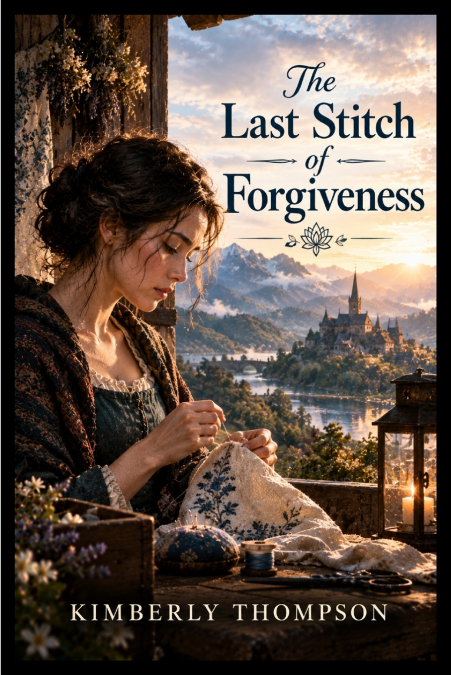
Mira Bennett has spent seven years building a life of perfect order inside her small stitchery beside the ancient pagoda of Oakhaven Verge. She trusts measurements, clean seams, and carefully controlled work because human affairs are far less predictable. Then, one evening, an anonymous hemp sack appears at her door containing three impossible pieces of cloth: Holloway indigo workwear, a fire-scorched fragment of denim, and delicate Thornton silk brocade. Hidden among them is a message: 'A seam split in anger can only hold when mended in unison.'The fabrics are connected to the Great Barn Fire that devastated Oakhaven twenty-five years earlier, destroying cooperative property and turning the Holloway and Thornton families into bitter enemies. Each side has preserved its own version of the disaster, blaming the other for the catastrophe. But Mira’s trained eye sees evidence that contradicts the stories everyone has inherited. The scorched fibers, the surviving garments, and the old parish records reveal that the fire was caused by a dry lightning strike-not deliberate arson.The mystery deepens when Mira discovers that the sack is part of a secret effort begun by Sylvia Harrington, the legendary master tailor who withdrew from the village decades earlier. Sylvia reveals that the surviving cloth pieces are incomplete. A missing center square once belonged to a larger textile assembly, and its history connects the feud not only to the fire but to Mira’s own family. Mira learns that her mother, Clara Vance, knew far more about the disaster than she ever admitted.As Mira follows the evidence, she discovers how easily grief and financial ruin can become hatred when people need someone to blame. Victor Holloway and Blaine Thornton had once survived the fire together, but the losses that followed-debts, ruined livelihoods, and legal battles-turned their shared trauma into generations of resentment.The final reconciliation does not come through a dramatic apology or the erasure of the past. Instead, Mira brings the surviving evidence together and forces the valley to confront what actually happened. The cloth becomes a physical metaphor for Oakhaven itself: damaged, incompatible in places, and yet capable of being repaired when the broken pieces are held together.In the end, forgiveness is not presented as forgetting. It is the difficult act of acknowledging the truth, accepting responsibility for inherited hatred, and choosing not to pass the wound forward. At Mira’s workbench, an old torn linen runner is finally brought together by her hands and those of Franklin Moore. The needle passes through both layers, creating the first stitch in a future that the valley once believed impossible.