

 Librería Samer Atenea
 Kálamo Books
 Librería Elías (Asturias)
 Librería Kolima (Madrid)
 Librería Proteo (Málaga)
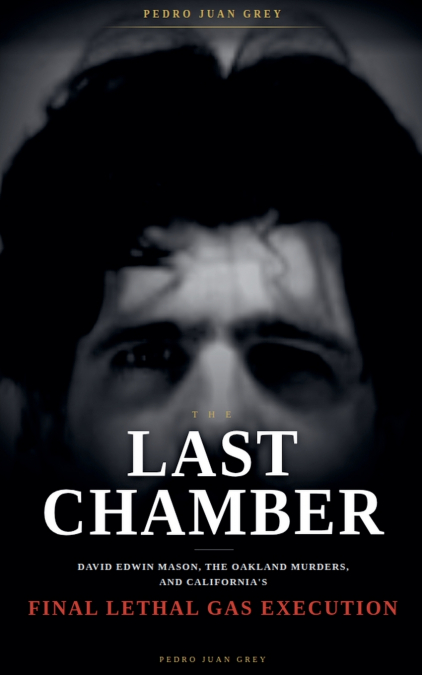
In the predawn hours of August 24, 1993, David Edwin Mason was escorted into the gas chamber at San Quentin State Prison and asked by the warden whether he wished to halt the proceedings. He said no. His execution that morning - the last by lethal cyanide gas in California’s history - was not imposed on an unwilling man. Mason had spent six months dismantling his own legal defences, firing his court-appointed attorney, retaining private counsel to accelerate his death, and fighting through a landmark federal competency hearing to prove he had the right to choose it.Born in Georgia in 1956 and raised in an Oakland household of extraordinary violence, Mason carried his developmental damage through a juvenile system, the California Youth Authority, the United States Marine Corps, and a California prison term before returning to Oakland in 1979 with an ice pick, a method, and a list. Between March and December 1980, he murdered four elderly residents of Oakland’s flatlands - Joan Picard, Arthur Jennings, Antoinette Brown, and Dorothy Lang - targeting each through prior acquaintance, stealing what they had, and ensuring they could not identify him. A fifth murder followed on Thanksgiving night, a sixth in the Alameda County Jail.The Last Chamber is the definitive account of a case that reshaped California capital jurisprudence, retired a method of execution, and raised questions about trauma, autonomy, and the nature of choice that the law answered without resolving.





