
Inicio > Humanidades > Filosofía > The Knowledge is Instrument, Not Vision
The Knowledge is Instrument, Not Vision

The Knowledge is Instrument, Not Vision

Bukhan Purvan Zayabat

116,95 €
IVA incluido
Disponible
Editorial:
Bukhan Purvan Zayabat
Año de edición:
2026
Materia
Filosofía
ISBN:
9798235816428
116,95 €
IVA incluido
Disponible

Selecciona una librería:

  • Librería Samer Atenea
  • Kálamo Books
  • Librería Elías (Asturias)
  • Librería Kolima (Madrid)
  • Librería Proteo (Málaga)

The Knowledge Is Instrument, Not Vision begins with an uncomfortable confession: we may have mistaken one of humanity’s greatest instruments for humanity’s destination.We built universities and called ourselves educated. We accumulated information and called ourselves knowledgeable. We created technologies and called ourselves advanced. We increased computational power and called it intelligence. We expanded economies and called it prosperity.But did we ever stop to ask: advanced toward what?Knowledge can cure disease, but it can also engineer destruction. Science can extend life, but it cannot tell us why that life should possess dignity. Technology can connect billions of people while leaving them divided, manipulated, or alone. Artificial intelligence can increase our power without increasing our conscience.The problem is not knowledge. The problem is our failure to understand its proper place.This book turns its criticism inward. Before blaming governments, corporations, ideologies, technologies, or history, we must examine the architecture of our own thinking. We repeatedly confuse means with ends, capability with wisdom, information with understanding, and progress with civilization.A different architecture becomes possible.Vision answers what humanity seeks: prosperity, peace, health, and longevity.The human ecosystem establishes the conditions that make such a future worthy of human beings: dignity, rights, reason, conscience, democracy, and planetary equality.Knowledge answers how.Knowledge is an instrument through which we understand reality, learn from failure, make decisions, solve problems, innovate, reform institutions, and continually improve the conditions of human existence.This distinction changes everything.Science becomes an instrument. Technology becomes an instrument. Education becomes an instrument. Law, governance, finance, and the economy become instruments. None deserves to become humanity’s master.The deepest danger of the future may therefore be neither ignorance nor insufficient intelligence. It may be possessing extraordinary knowledge without knowing what that knowledge is for.Artificial intelligence, biotechnology, longevity science, planetary computation, and space civilization are giving humanity powers once belonging to mythology. Yet greater power makes the question of purpose more urgent, not less.We must become capable of criticizing even our most celebrated achievements-including knowledge itself.And from that criticism comes becoming.Not becoming more informed merely.Not becoming more powerful merely.But becoming a civilization capable of knowing why it knows, what its knowledge serves, and when its own instruments must be restrained.Knowledge is not our vision.Knowledge is not our human ecosystem.Knowledge is not our destination.Knowledge is an instrument.The question that remains is whether we can become wise enough to use it.
Artículos relacionados

  • Introduction to a Future Way of Thought
    Kostas Axelos / Kenneth Mills
    'Technologists only change the world in various ways in generalized indifference; the point is to think the world and interpret the changes in its unfathomability, to perceive and experience the difference binding being to the nothing.'Anticipating the age of planetary technology Kostas Axelos, a Greek-French philosopher, approaches the technological question in this book, firs...
    Disponible

    18,58 €

  • Capsule
    John Kenneth Press
    Join John and Adam as they wander the mean streets of Japan on a psychedelic fueled search for identity. While fun for the average reader, this book could also serve as a philosphy textbook because of its ordered exploration of sources of identity. Ultimately this trip through nationalist attacks, sex, and drugs, will take you to a better understanding of yourself and your pl...
    Disponible

    11,51 €

  • If you look at it long enough...
    Paul Hallam
    Originally written for an academic journal, If you look at it long enough... is primarily a personal account of Paul Hallam’s recollections of “self-abuse” through the consumption of porn over several decades. Challenging the familiar form of an “academic essay,” this autobiographical narrative raises several questions in relation to our contemporary morals related to sex in ge...
    Disponible

    11,30 €

  • The Teachers of Gurdjieff
    Rafael Lafort / Rafael Lefort
    When The Teachers of Gurdjieff was first published more than 50 years ago, it made a considerable stir. George Ivanovich Gurdjieff had been one of the most famous mystics in the West in the first half of the 20th century - a teaching master who had many fashionable and influential pupils. He had a striking appearance and manner of teaching, and his teaching proved to be very in...
    Disponible

    20,45 €

  • Manifesto of the Communist Party
    Karl Marx
    The Communist Manifesto was first published on February 21, and it is one of the world’s most influential political tracts. Commissioned by the Communist League and written by communist theorists Karl Marx and Friedrich Engels, it laid out the League’s purposes and program. The Manifesto suggested a course of action for a proletarian (working class) revolution to overthrow the ...
  • The Art of Literature
    Arthur Schopenhauer
    Collected here are eight short essays, On Authorship, On Style, On the Study of Latin, On Men of Learning, On Thinking for Ones Self, On Criticism, On Reputation, On Genius, by the world renowned philosopher Arthur Achopenhauer. ...

Otros libros del autor

  • The Mongol Dialogue
    Bukhan Purvan Zayabat
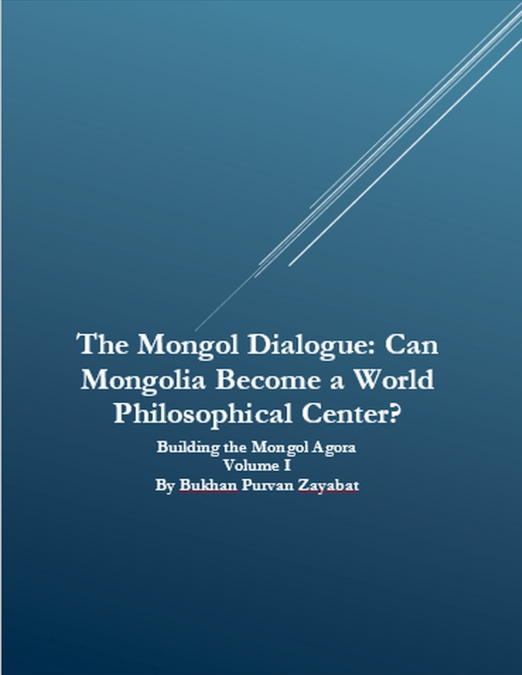
    MONGOL DIALOGUE: CAN MONGOLIA BECOME A WORLD PHILOSOPHICAL CENTER?Building the Mongol Agora - Volume ICan a nation commonly placed at the edge of other civilizations’ maps become a center of planetary thought?This first volume of The Mongol Dialogue answers with another question: What kind of philosophical center should Mongolia become?Not a center that silences other centers. ...
    Disponible

    54,86 €

  • Evolution of the Religions
    Bukhan Purvan Zayabat
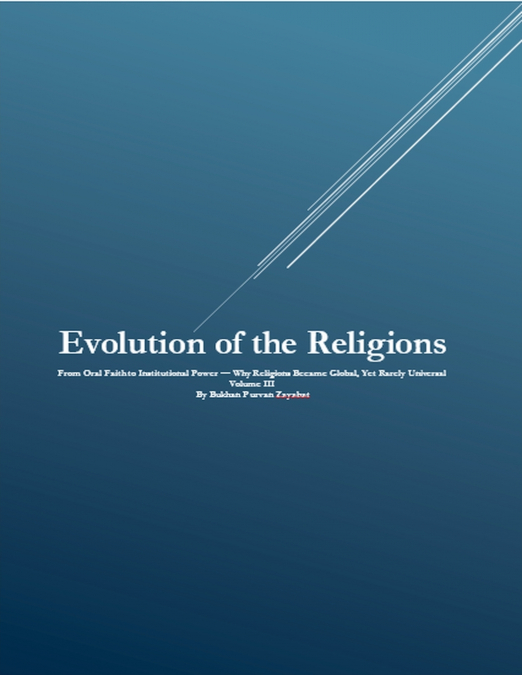
    Before there was religion, there was the human being.A child looking at the sky.A mother giving birth.A family burying the dead.A stranger asking why suffering exists.A civilization searching for meaning beyond survival.Then came scripture. Ritual. Priesthood. Temples. Churches. Mosques. Monasteries. Law. Wealth. Political power. Institutions.Religion preserved memory, created ...
    Disponible

    73,24 €

  • Evolution of the Religions
    Bukhan Purvan Zayabat
    Before there was religion, there was the human being.A child looking at the sky.A mother giving birth.A family burying the dead.A stranger asking why suffering exists.A civilization searching for meaning beyond survival.Then came scripture. Ritual. Priesthood. Temples. Churches. Mosques. Monasteries. Law. Wealth. Political power. Institutions.Religion preserved memory, created ...
    Disponible

    65,92 €

  • Evolution of the Religions
    Bukhan Purvan Zayabat
    Before there was religion, there was the human being.A child looking at the sky.A mother giving birth.A family burying the dead.A stranger asking why suffering exists.A civilization searching for meaning beyond survival.Then came scripture. Ritual. Priesthood. Temples. Churches. Mosques. Monasteries. Law. Wealth. Political power. Institutions.Religion preserved memory, created ...
    Disponible

    80,59 €

  • THE PRINCIPLES OF MONGOL IMPERIAL COURT DIETETICS
    Bukhan Purvan Zayabat
    The Mongol World as the WorldGilles Deleuze taught us to see the nomad not as a wanderer without order, but as a creator of movement, relation, force, and becoming. In this sense, the nomad creates history before the sedentary world writes it. The sedentary scholar often records history from the viewpoint of walls, capitals, archives, borders, taxation, and fixed institutions. ...
    Disponible

    57,74 €

  • THE PRINCIPLES OF MONGOL IMPERIAL COURT DIETETICS
    Bukhan Purvan Zayabat
    The Mongol World as the WorldGilles Deleuze taught us to see the nomad not as a wanderer without order, but as a creator of movement, relation, force, and becoming. In this sense, the nomad creates history before the sedentary world writes it. The sedentary scholar often records history from the viewpoint of walls, capitals, archives, borders, taxation, and fixed institutions. ...
    Disponible

    63,88 €