Librería Samer Atenea
 Kálamo Books
 Librería Elías (Asturias)
 Librería Kolima (Madrid)
 Librería Proteo (Málaga)
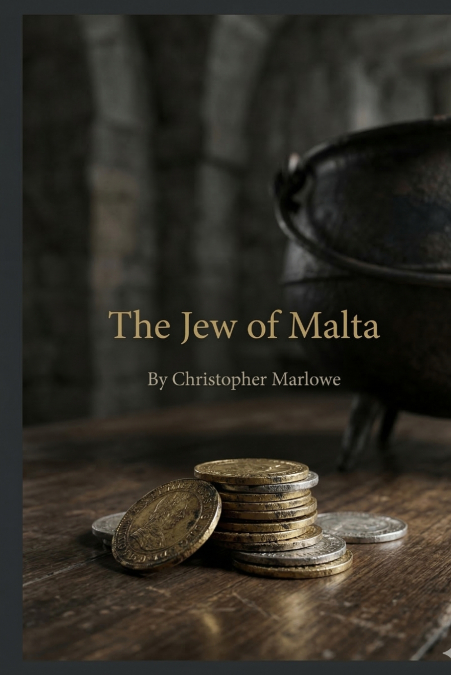
When the state takes his fortune, Barabas decides that everyone will pay. His revenge exposes a world where faith, money, and political authority serve dangerously selfish ends.Christopher Marlowe’s The Jew of Malta centers on a wealthy Jewish merchant whose property is seized by Malta’s Christian rulers. Barabas answers his dispossession with calculated deception, drawing politicians, religious figures, and lovers into an escalating chain of betrayal and murder. In this volatile Mediterranean setting, private vengeance and public corruption become inseparable.A disturbing blend of Elizabethan revenge tragedy and savage comedy, the play makes its central schemer both compelling and appalling. Marlowe’s poetic force and bitter wit unsettle any easy division between respectable authority and criminal ambition. The work’s portrayal of Jewish identity also demands a critical encounter with Renaissance anti-Jewish prejudice, even as its attacks on hypocrisy reach across religious and political boundaries.What readers find inside:A calculating antihero — Barabas uses intelligence and manipulation to pursue vengeance after the loss of his wealth.Religion and self-interest — Professions of faith collide with greed, ambition, and the pursuit of worldly advantage.Revenge and reversal — Schemes and betrayals drive a plot in which control is always precarious.Power under scrutiny — Malta’s rulers reveal the uneasy relationship between political necessity and moral principle.Dark theatrical wit — Cruel humor and heightened language give the play its unsettling dramatic energy.For readers of Shakespearean drama, students of Renaissance theater, and anyone drawn to morally troubling antiheroes, this is a sharp encounter with the costs of revenge and the uses of prejudice.Enter Marlowe’s Malta and follow a struggle for wealth and power in which no claim to virtue goes untested. 10