

 Librería Samer Atenea
 Kálamo Books
 Librería Elías (Asturias)
 Librería Kolima (Madrid)
 Librería Proteo (Málaga)
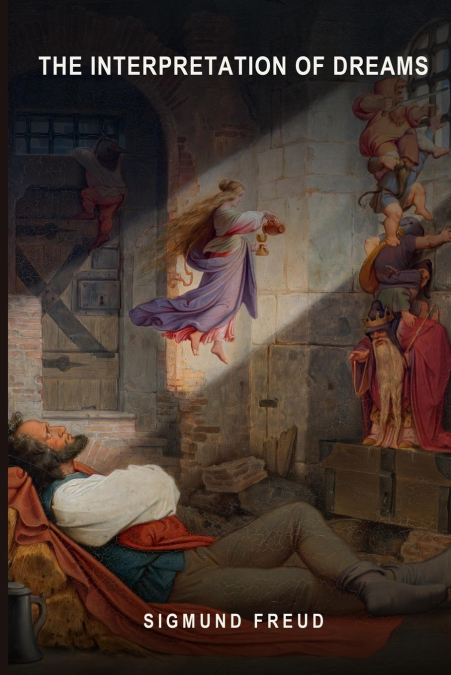
Freud finished The Interpretation of Dreams in 1899. His publisher put 1900 on the title page for the look of the thing, and the first edition took eight years to sell six hundred copies. Freud thought it the best thing he would ever do, and said later that insight of this kind falls to one’s lot but once in a lifetime.The argument is that a dream is a wish, disguised. Not a message from elsewhere, not the stomach, not a random discharge of a sleeping brain, but something the dreamer wants, made unrecognisable enough to be allowed through. From that follow the ideas the century argued about: the dream-work, condensation and displacement, the manifest and latent content, and the claim that the interpretation of dreams is, in Brill’s rendering, the via regia to a knowledge of the unconscious.The book is not a system delivered from a height. Chapter I is a long, patient survey of what the scientific literature had said about dreams before him, and it is where the book earns its authority: Freud read the field and then explained why he thought it had stalled. The rest is worked examples, most of them his own dreams, laid out with their associations so a reader can follow the reasoning and disagree with it.A NOTE ON THIS EDITION. This is Brill’s authorised translation of the third German edition, published by The Macmillan Company, New York, in 1913, and it is the text that carried Freud into English. It has the marks of its moment. Brill translates in an idiom now a century old, and some of his choices, 'psychic' for seelisch above all, would not be made today. The edition prints his translation as it stands rather than quietly modernising it, because a reader deserves to know which English they are reading.Set from a proofread transcription rather than a scan, so no text was reconstructed. Freud’s prefaces to the second and third editions are included, along with Brill’s own preface and the literary index of earlier writers on dreams, which is a bibliography of the field as it stood in 1913.Companion to this press’s edition of Artemidorus, the second-century Oneirocritica: the same question at the two ends of eighteen centuries.








