
Inicio > Humanidades > Filosofía > Ética y filosofía moral > The Internet Is Not What You Think It Is
The Internet Is Not What You Think It Is

The Internet Is Not What You Think It Is

Justin Smith-Ruiu

20,04 €
IVA incluido
Disponible
Editorial:
Princeton University Press
Año de edición:
2023
Materia
Ética y filosofía moral
ISBN:
9780691235219
20,04 €
IVA incluido
Disponible

Selecciona una librería:

  • Librería Samer Atenea

  • Kálamo Books
  • Librería Elías (Asturias)
  • Librería Kolima (Madrid)
  • Librería Proteo (Málaga)

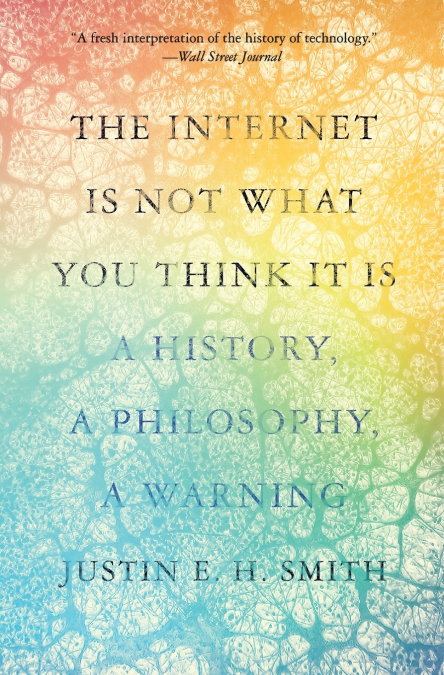
An original deep history of the internet that tells the story of the centuries-old utopian dreams behind it-and explains why they have died todayMany think of the internet as an unprecedented and overwhelmingly positive achievement of modern human technology. But is it? In The Internet Is Not What You Think It Is, Justin Smith offers an original deep history of the internet, from the ancient to the modern world-uncovering its surprising origins in nature and centuries-old dreams of radically improving human life by outsourcing thinking to machines and communicating across vast distances. Yet, despite the internet’s continuing potential, Smith argues, the utopian hopes behind it have finally died today, killed by the harsh realities of social media, the global information economy, and the attention-destroying nature of networked technology.Ranging over centuries of the history and philosophy of science and technology, Smith shows how the 'internet' has been with us much longer than we usually think. He draws fascinating connections between internet user experience, artificial intelligence, the invention of the printing press, communication between trees, and the origins of computing in the machine-driven looms of the silk industry. At the same time, he reveals how the internet’s organic structure and development root it in the natural world in unexpected ways that challenge efforts to draw an easy line between technology and nature.Combining the sweep of intellectual history with the incisiveness of philosophy, The Internet Is Not What You Think It Is cuts through our daily digital lives to give a clear-sighted picture of what the internet is, where it came from, and where it might be taking us in the coming decades.

Artículos relacionados

  • Ka Ab Ba Building The Lighted Temple
    Dr Terri R. Nelson / Dr Terri RNelson
    The book KaAbBa Building The Lighted Temple/Metaphysical Keys to the Tree of Life draws a circle that is inclusive of the Afrikan origin of the Ancient Kemetic/Egyptian wisdom. It reveals the undeniable root and link of Ancient Africa to all the religious systems that would develop worldwide. This book is explosive in its power to convey the meaning of KaAbBa, the Medu Neter  (...
    Disponible

    37,41 €

  • Technoethics and the Evolving Knowledge Society
    Rocci Luppicini
    Recently, there has been a major push to rediscover the ethical dimension of technology across the sciences, social sciences, and humanities. Technoethics and the Evolving Knowledge Society: Ethical Issues in Technological Design, Research, Development, and Innovation examines human processes and practices connected to technology embedded within social, political, and moral sph...
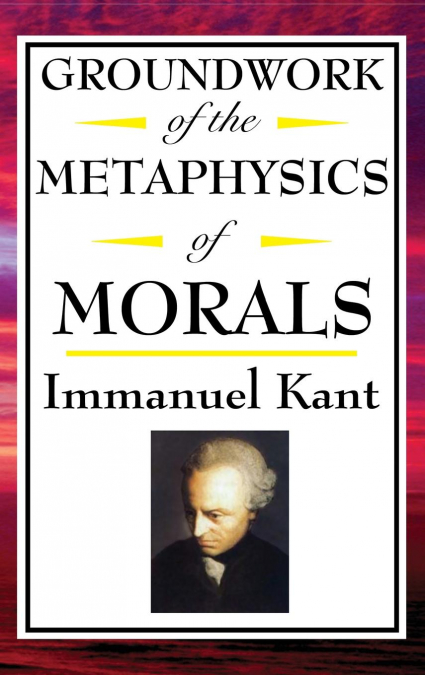
  • Kant
    Immanuel Kant
    Kant’s Groundwork of the Metaphysics of Morals is one of the most important works in modern moral philosophy. It belongs beside Plato, Aristotle, Machiavelli, and Hobbes. Here Kant sets out to articulate and defend the Categorical Imperative - the fundamental principle that underlies moral reasoning - and to lay the foundation for a comprehensive account of justice and human vi...
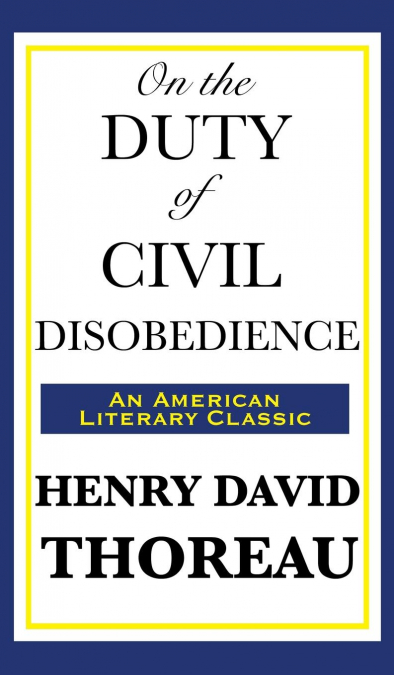
  • On the Duty of Civil Disobedience
    HENRY DAVID THOREAU
    Civil Disobedience argues that citizens should not permit their governments to overrule their consciences, and that they have a duty to avoid allowing their acquiescence to enable the government to make them the agents of injustice. Thoreau was motivated in part by his disgust with slavery and the Mexican-American War, but the sentiments he expresses here are just as pertinent ...
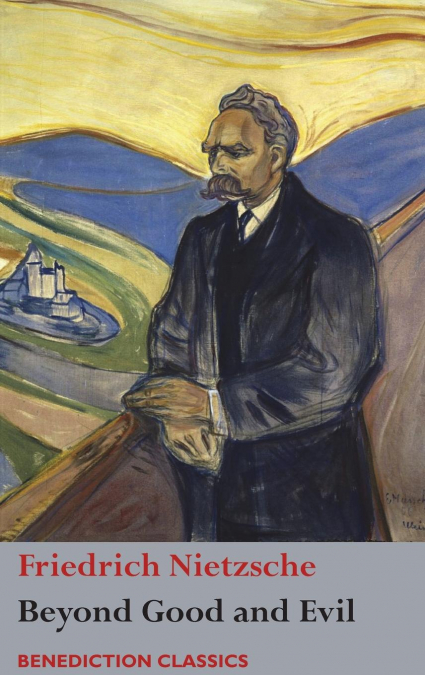
  • Beyond Good and Evil
    Friedrich Nietzsche
    Nietzsche, though primarily a philosopher, wrote widely on art, philology, history, religion, tragedy, culture, and science.  In 1886, at the height of his powers, he published Beyond Good and Evil.  Here he examines much of the best of human thought--dogmatic philosophy, Judeo-Christian morality, science and democracy – and finds it lacking.  Rejecting “slave-morality” he pres...
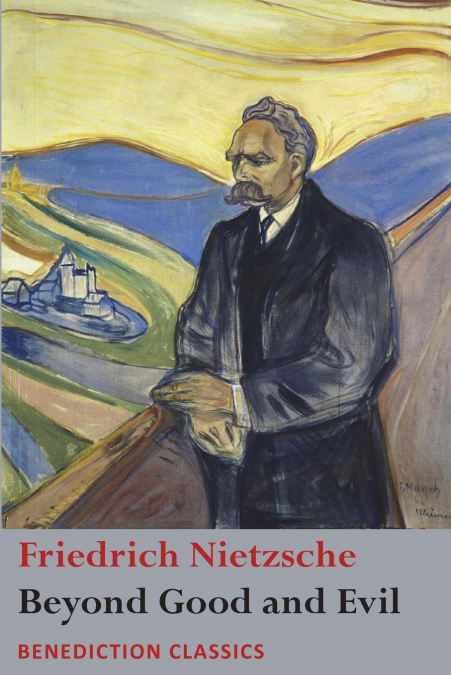
  • Beyond Good and Evil
    Friedrich Nietzsche
    Nietzsche, though primarily a philosopher, wrote widely on art, philology, history, religion, tragedy, culture, and science.  In 1886, at the height of his powers, he published Beyond Good and Evil.  Here he examines much of the best of human thought--dogmatic philosophy, Judeo-Christian morality, science and democracy – and finds it lacking.  Rejecting “slave-morality” he pres...
    Disponible

    9,99 €

Otros libros del autor

  • Irrationality
    Justin Smith-Ruiu
    From sex and music to religion and politics, a history of irrationality and the ways in which it has always been with us-and always will beIn this sweeping account of irrationality from antiquity to the rise of Twitter mobs and the election of Donald Trump, Justin Smith argues that irrationality makes up the greater part of human life and history. Ranging across philosophy, pol...
    Disponible

    23,15 €

  • The Philosopher
    Justin Smith-Ruiu
    How the role of the philosopher has changed over time and across cultures-and what it reveals about philosophy todayWhat would the global history of philosophy look like if it were told not as a story of ideas but as a series of job descriptions-ones that might have been used to fill the position of philosopher at different times and places over the past 2,500 years? The Philos...
    Disponible

    27,11 €