

 Librería Samer Atenea
 Kálamo Books
 Librería Elías (Asturias)
 Librería Kolima (Madrid)
 Librería Proteo (Málaga)
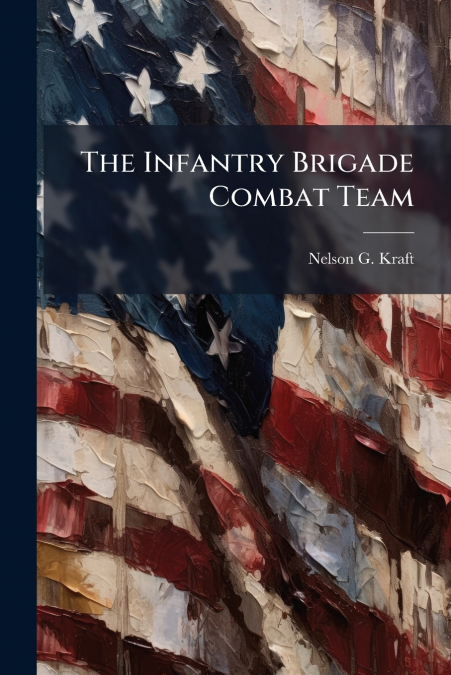
The purpose of this paper, which was prepared using both a present day and historical research methodology, is to propose that the U.S. Army should further its transformation efforts and develop a force specially trained and organized to meet the challenges of irregular warfare in the 21st century. As many irregular warfare conflicts are born during the stabilization phase, or phase IV, of a conventional conflict, this proposed force would also be transformed to operate in that environment as well. Although such a force already exists in the U.S. Army Special Forces, this force is not large enough to succeed in large-scale irregular warfare conflicts, which is currently evident in both Iraq and Afghanistan. An existing Army force, which is large enough, is the Infantry Brigade Combat Team (IBCT). The findings from researching this topic were remarkable. In order for a force to succeed in an irregular warfare conflict, the force must be properly organized, possess highly technical skills in various functional areas, and be willing to adopt asymmetrical tactics. The functional areas that were identified as insufficient were: socio-cultural awareness, information operations, civil-military operations, and intelligence. Other areas that were found to be deficient were the Army’s methodology in advising host nation armies, and its lack of using asymmetrical tactics. The conclusions of these findings were astonishing. While the Army may appear to be suffering from these deficiencies at the tactical unit levels, in looking at the Army in its entirety, much of the necessary expertise already exist, they are just not properly organized and trained for irregular warfare. This paper recommends the proper organizations and training, and discusses the potential arguments and implications associated with each recommendation.This work has been selected by scholars as being culturally important, and is part of the knowledge base of civilization as we know it. This work was reproduced from the original artifact, and remains as true to the original work as possible. Therefore, you will see the original copyright references, library stamps (as most of these works have been housed in our most important libraries around the world), and other notations in the work.This work is in the public domain in the United States of America, and possibly other nations. Within the United States, you may freely copy and distribute this work, as no entity (individual or corporate) has a copyright on the body of the work.As a reproduction of a historical artifact, this work may contain missing or blurred pages, poor pictures, errant marks, etc. Scholars believe, and we concur, that this work is important enough to be preserved, reproduced, and made generally available to the public. We appreciate your support of the preservation process, and thank you for being an important part of keeping this knowledge alive and relevant.





