

 Librería Samer Atenea
 Kálamo Books
 Librería Elías (Asturias)
 Librería Kolima (Madrid)
 Librería Proteo (Málaga)
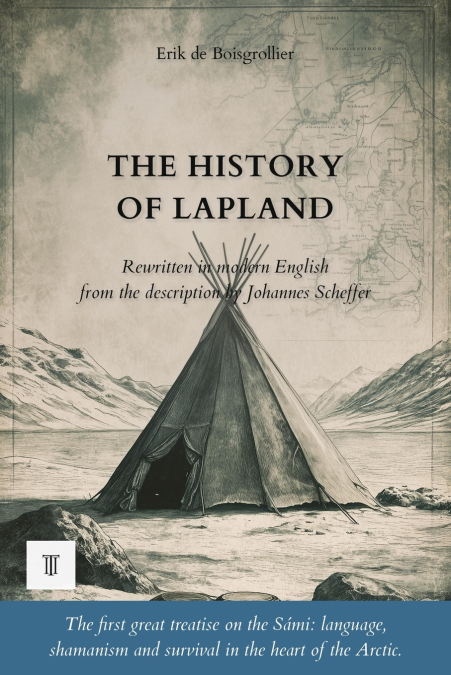
In 1673, from his study in Uppsala, the Alsatian scholar Johannes Scheffer publishes in Latin a book that will open to Europe an unprecedented window onto one of the continent’s least known peoples: the Sámi of the Far North. Born in Strasbourg, professor of eloquence and politics at the university, he writes at the request of Magnus Gabriel de la Gardie, chancellor of the Swedish realm, who wants a reliable account of the lands and people living under the Swedish crown at the edge of the Arctic.He never saw Lapland. He reconstructs it from the letters sent to him by pastors posted on the icy edges of Sweden, which he cross-checks with ancient authors and his own learning. Samuel Rheen describes the drum and the rites of Pite Lapland, Johannes Tornaeus the language and the weddings of the Tornio valley, while Olof Sirma, a Sámi pastor studying in Uppsala, gives him the words of two joik songs. From this patient inquiry comes the first major European description of a world of snow, reindeer and tents.It follows the origins of a nation come from the cold, the faith of its old gods, Thor the thunderer and Storjunkare who dwells in the sacred stones, the cross advancing toward the North, the shaman’s drum that questions the spirits, the laws and the tribute, the silent trade, the language, weddings, hunting, and the reindeer that sustains an entire people. Scheffer also describes skis and sledges, the hut and the hearth, the work of men and women, birth, sickness and burial, the wild beasts, birds and fish, and the copper and silver veins of the mountains. At the heart of the account, a man, Petrus Paejwiae, burns the sacred stone of his fathers: a world tips over.Three and a half centuries later, this book remains the most precise window ever opened onto a people long withdrawn into the silence of the North. Translated into English, French, German and Dutch within a few years of its publication, it shaped for generations the image Europe held of the Sámi, and it remains today a source read by historians, ethnologists and Sámi communities themselves.Complete rewriting in modern English of the description: 'Lapponia, id est, Regionis Lapponum et gentis nova et verissima descriptio' by Johannes Scheffer, 1673, including maps and illustrations.





