
Inicio > Sociedad y ciencias sociales > Guerra y defensa > Armas y equipamiento > The History of Hydrogen Bomb and Why It Should Be Banned.
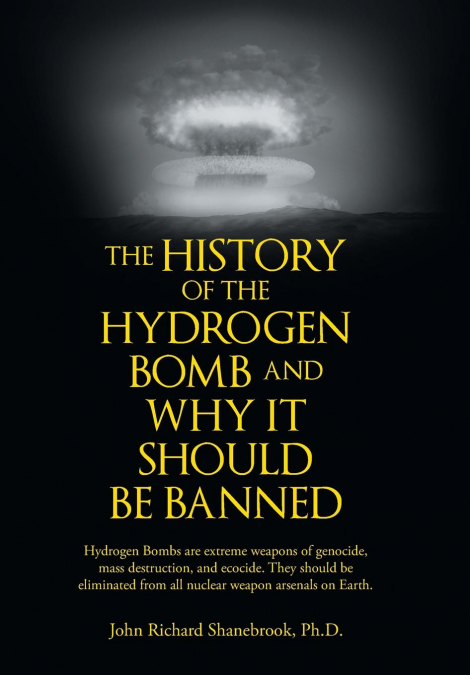
The History of Hydrogen Bomb and Why It Should Be Banned.

The History of Hydrogen Bomb and Why It Should Be Banned.

The History of Hydrogen Bomb and Why It Should Be Banned.

John Richard Shanebrook

17,66 €
IVA incluido
Disponible
Editorial:
AuthorHouse
Año de edición:
2016
Materia
Armas y equipamiento
ISBN:
9781504984843
17,66 €
IVA incluido
Disponible

Selecciona una librería:

  • Librería Samer Atenea
  • Librería Aciertas (Toledo)
  • Kálamo Books
  • Librería Perelló (Valencia)
  • Librería Elías (Asturias)
  • Donde los libros
  • Librería Kolima (Madrid)
  • Librería Proteo (Málaga)

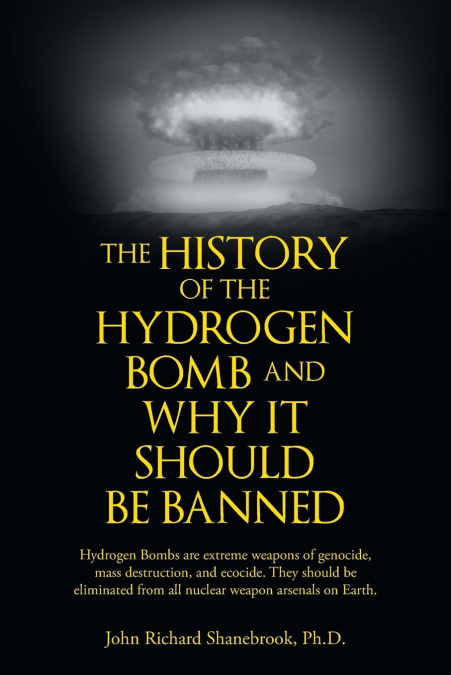
One of the first applications of the atomic bomb after Nuclear War I was to serve as the trigger for much more powerful hydrogen bombs. The explosion of an atom bomb emits nuclear radiation, heat energy, and photons. These emissions compress fusion fuel to thermonuclear conditions.From 1945 to 1949, the United States had a monopoly on nuclear weapons until August 29, 1949, when the USSR exploded its first nuclear device. Edward Teller was already actively working on the design of hydrogen bombs, but J. Robert Oppenheimer opposed these efforts. It was President Harry S. Truman who approved the US program to design, build, and test hydrogen bombs.Meanwhile, the USSR had been secretly working on nuclear weapons since 1941, with extensive help from several spies, including Klaus Fuchs. Both the United States and the USSR achieved early success with hydrogen bombs, as was demonstrated by hundreds of test explosions that spread radioactive fallout around the entire Earth.It was the US BRAVO test of a huge hydrogen explosive device on March 1, 1954, that brought matters to a conclusion. The radioactive fallout proved to be lethal over thousands of square miles. The result was an international ban on testing nuclear weapons in the atmosphere (1963).However, the 'Wizards of Armageddon' were busily preparing to fight, and maybe win, future wars fought with hydrogen bombs. These plans included risky maneuvers with live hydrogen bombs on planes, submarines, and other mobile devices. Accidents happened, and many hydrogen bombs were lost, blown apart, or simply abandoned.The absolute worst aspect of hydrogen bomb explosions is global ecocide. The explosions are so powerful they harm the ozone layer and ignite huge fires on Earth that darken the skies. The latter was termed 'nuclear winter' by Carl Sagan. The conclusion of this book is very simple. All hydrogen bombs should be banned, forever

Artículos relacionados

  • Trigger Guard
    Chris Grall
    DON’T BE GUN-SHYGuns are featured in almost every form of fiction, and firearms aficionados love to call out mistakes. Fear not: You don’t have to be a gun pro to create accurate gun-related prose. Retired Green Beret Chris Grall’s Trigger Guard is a one-stop resource for fiction writers about countless firearm-related topics, including:•The development and evolution of firearm...
    Disponible

    30,11 €

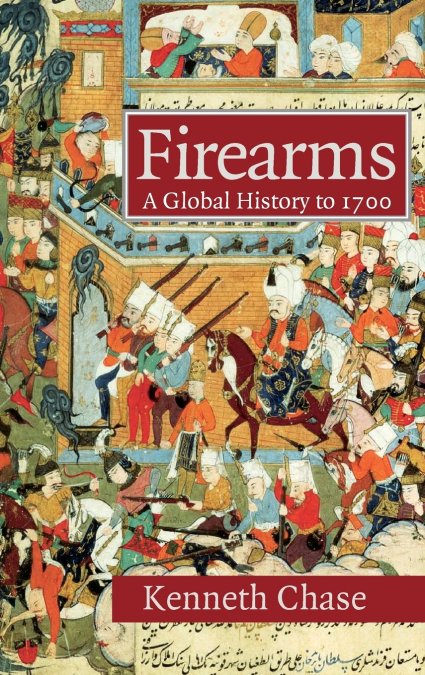
  • Firearms
    Kenneth Chase
    ...
    Disponible

    44,28 €

  • Warfare in Medieval Europe c.400-c.1453
    Bernard S. Bachrach / David S. Bachrach
    Warfare in Medieval Europe, now in its second edition, offers considerably more attention to the transition from the later Roman Empire to the early Middle Ages, the composition of the armies of the opponents of the West, and the experience of commanders and individual combatants on the battlefield. ...
    Disponible

    72,44 €

  • Kriege in Der Dritten Welt
    Volker Matthies
    ...
    Disponible

    85,47 €

  • Firearms
    Kenneth Chase
    ...
  • How Drones Fight
    Lars Celander
    An in-depth analysis of how drones have revolutionized ground combat, including combat experience from recent wars. In 2020, Azerbaijan used drones to defeat Armenia, and large-scale use of small drones in Ukraine since 2022 has been so effective that it has rendered large-scale maneuver warfare largely impossible. Drones enable a military force to operate over enemy-held terri...
    Disponible

    25,95 €

Otros libros del autor

  • The History of Hydrogen Bomb and Why It Should Be Banned.
    John Richard Shanebrook
    One of the first applications of the atomic bomb after Nuclear War I was to serve as the trigger for much more powerful hydrogen bombs. The explosion of an atom bomb emits nuclear radiation, heat energy, and photons. These emissions compress fusion fuel to thermonuclear conditions.From 1945 to 1949, the United States had a monopoly on nuclear weapons until August 29, 1949, when...
  • The History of Nuclear War I
    John Richard Shanebrook
    In August of 1945, some 200,000 people died at Hiroshima and Nagasaki from two nuclear weapon explosions during Nuclear War I. This book details the following historical events that led to Nuclear War I: Fermi and Szilard worked on nuclear fission at Columbia University in 1939. Plutonium-239 was discovered in 1940. Einstein informed President Roosevelt of possible German urani...
    Disponible

    19,92 €

  • The History of Nuclear War I
    John Richard Shanebrook
    In August of 1945, some 200,000 people died at Hiroshima and Nagasaki from two nuclear weapon explosions during Nuclear War I. This book details the following historical events that led to Nuclear War I: Fermi and Szilard worked on nuclear fission at Columbia University in 1939. Plutonium-239 was discovered in 1940. Einstein informed President Roosevelt of possible German urani...