 Librería Samer Atenea
 Kálamo Books
 Librería Elías (Asturias)
 Librería Kolima (Madrid)
 Librería Proteo (Málaga)
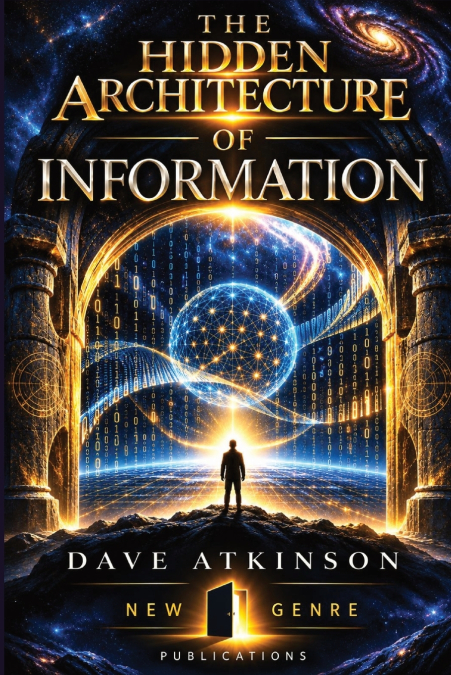
The Hidden Architecture of InformationWe live in an age dominated by information. It drives our technology, shapes our societies, transforms our economies, and increasingly influences how we understand ourselves and the universe around us. Information is gathered, stored, transmitted, analysed, bought, sold and protected. Entire industries are built upon it. Yet one fundamental question is rarely asked:What is information?Is information a thing in its own right? Is it a substance from which reality is constructed? Is it a fundamental property of the universe? Or is it something more subtle, emerging only when structure, observation and meaning come together?In The Hidden Architecture of Information, the author explores one of the most influential and least understood concepts of the modern age. Moving beyond computers, communications and data processing, the book examines the deeper foundations of information itself and asks how information relates to knowledge, meaning, intelligence, understanding and reality.Drawing on ideas from science, complexity, philosophy, cognition, communication theory and systems thinking, the book investigates a range of fundamental questions:What is the difference between data and information?Can information exist independently of an observer?How does information acquire meaning?What is the relationship between information and knowledge?Is intelligence fundamentally an information-processing activity?Does information exist in nature, or is it something minds construct from observation?Can information be considered a fundamental component of reality?Along the way, readers are invited to challenge a number of assumptions that have become deeply embedded in modern thinking. While information is often presented as the foundation of everything from biology to quantum physics, this book takes a different view. It argues that information is not fundamental but emergent; a consequence of structure being recognised, interpreted and understood.This distinction has profound implications.If information is not fundamental, then many familiar discussions surrounding artificial intelligence, consciousness, knowledge and even the nature of reality may need to be reconsidered. Information becomes something that minds create from structure rather than something that exists independently as a physical substance.Accessible and thought-provoking, the book avoids excessive technical complexity while remaining grounded in serious inquiry.Part of the wider Hidden Architecture series, this volume continues the search for the deeper patterns that lie beneath everyday experience. Just as previous volumes explore hidden architectures within science, society and reality itself, this book examines the unseen principles that underlie information, knowledge and meaning.For if information is not a thing, then what is it?And if information depends upon interpretation, what does that tell us about knowledge, intelligence and reality itself?This book explores those questions and offers a fresh perspective on one of the defining ideas of our age.