
The Great Divorce

The Great Divorce

J.F. Franklin

37,19 €
IVA incluido
Disponible
Editorial:
J.F. Publishing
Año de edición:
2026
Materia
Ética y filosofía moral
ISBN:
9798233706196
37,19 €
IVA incluido
Disponible

Selecciona una librería:

  • Librería Samer Atenea

  • Kálamo Books
  • Librería Elías (Asturias)
  • Librería Kolima (Madrid)
  • Librería Proteo (Málaga)

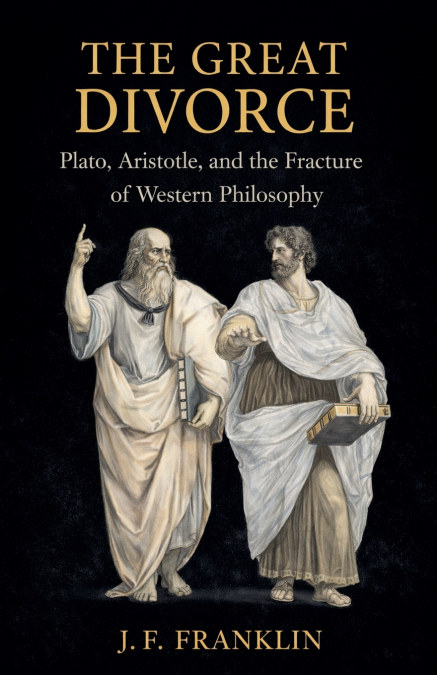
The Great Divorce Plato, Aristotle, and the Fracture of Western Philosophy In 367 BCE, a seventeen-year-old boy from Macedonia arrived at Plato’s Academy in Athens. For the next twenty years, Aristotle would study under the master, becoming the most brilliant student the Academy had ever seen. But when Plato died in 347 BCE, something unexpected happened: Aristotle did not inherit the Academy. Instead, he left Athens and eventually founded a rival school, developing a philosophy that contradicted his teacher’s at almost every turn. This was not merely a personal falling-out. It was the beginning of the most consequential intellectual divorce in Western history, a split that would echo through twenty-four centuries, shaping everything from medieval theology to modern science, from the Enlightenment to contemporary debates about artificial intelligence, from political theory to how we understand our own minds. The Great Divorce tells the story of how two of history’s greatest minds disagreed about the most fundamental questions: What is real? How do we know? What makes life worth living? Plato believed in eternal Forms accessible through reason; Aristotle insisted on studying the particular things we can observe. Plato sought truth in mathematics and abstract contemplation; Aristotle found it in careful observation of nature. Plato designed ideal republics ruled by philosophers; Aristotle analyzed how actual constitutions function. Their disagreement was not resolved. Instead, it became embedded in the structure of Western thought. Christianity adopted Plato for eight centuries before Aristotle returned through Islamic scholars, sparking a medieval crisis. The Scientific Revolution succeeded by combining Platonic mathematics with Aristotelian observation, a hybrid neither philosopher would have recognized. Modern philosophy split into rationalism and empiricism, idealism and materialism, each claiming descent from one or the other ancient master. Today, the divide persists in debates about whether mathematical objects are real, whether consciousness can be explained physically, whether justice is universal or culturally relative. But The Great Divorce argues that this fracture was not a failure but a necessity. The tension between Plato and Aristotle, between ideal and real, universal and particular, reason and experience reflects a genuine duality in how humans must approach truth. We need both philosophers because reality itself requires multiple perspectives. The divorce remains productive precisely because it remains unresolved. Drawing on philosophy, history, and science, this book offers both a gripping narrative of the teacher-student relationship that shaped civilization and a guide to navigating the intellectual choices we all face. When should we trust abstract reasoning, when concrete observation? When should we pursue ideals, when accommodate reality? The ancient debate is not merely academic, it structures how we think, work, and live. Accessible to general readers yet rigorous in its scholarship, The Great Divorce illuminates the past to help us understand the present. It shows how the questions Plato and Aristotle raised in the Academy gardens remain our questions, how their answers remain our options, and how wisdom lies not in choosing between them but in learning to live with both.

Artículos relacionados

  • Ka Ab Ba Building The Lighted Temple
    Dr Terri R. Nelson / Dr Terri RNelson
    The book KaAbBa Building The Lighted Temple/Metaphysical Keys to the Tree of Life draws a circle that is inclusive of the Afrikan origin of the Ancient Kemetic/Egyptian wisdom. It reveals the undeniable root and link of Ancient Africa to all the religious systems that would develop worldwide. This book is explosive in its power to convey the meaning of KaAbBa, the Medu Neter  (...
    Disponible

    37,41 €

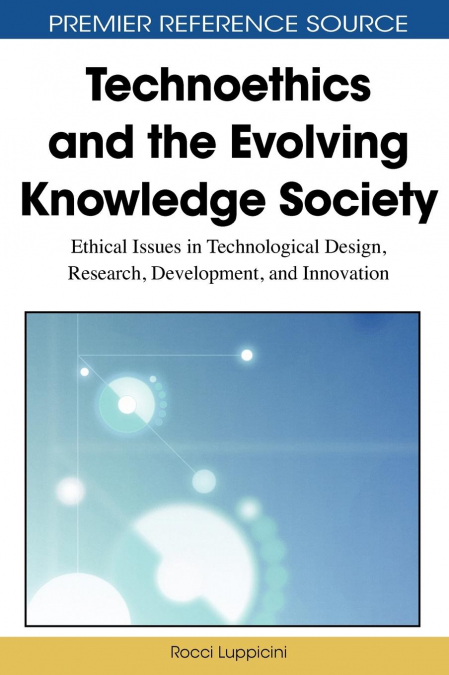
  • Technoethics and the Evolving Knowledge Society
    Rocci Luppicini
    Recently, there has been a major push to rediscover the ethical dimension of technology across the sciences, social sciences, and humanities. Technoethics and the Evolving Knowledge Society: Ethical Issues in Technological Design, Research, Development, and Innovation examines human processes and practices connected to technology embedded within social, political, and moral sph...
  • Kant
    Immanuel Kant
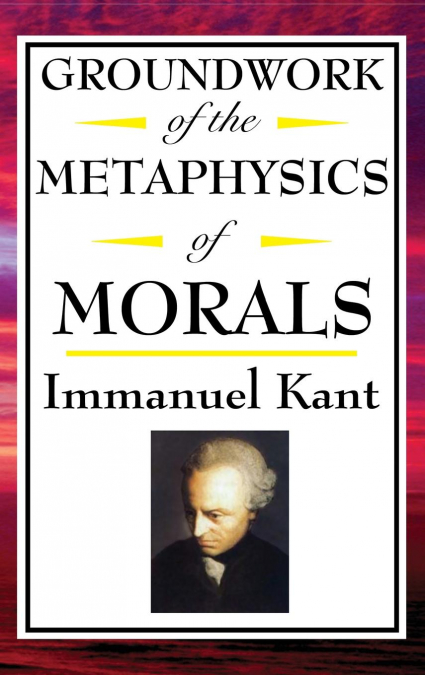
    Kant’s Groundwork of the Metaphysics of Morals is one of the most important works in modern moral philosophy. It belongs beside Plato, Aristotle, Machiavelli, and Hobbes. Here Kant sets out to articulate and defend the Categorical Imperative - the fundamental principle that underlies moral reasoning - and to lay the foundation for a comprehensive account of justice and human vi...
  • On the Duty of Civil Disobedience
    HENRY DAVID THOREAU
    Civil Disobedience argues that citizens should not permit their governments to overrule their consciences, and that they have a duty to avoid allowing their acquiescence to enable the government to make them the agents of injustice. Thoreau was motivated in part by his disgust with slavery and the Mexican-American War, but the sentiments he expresses here are just as pertinent ...
  • Beyond Good and Evil
    Friedrich Nietzsche
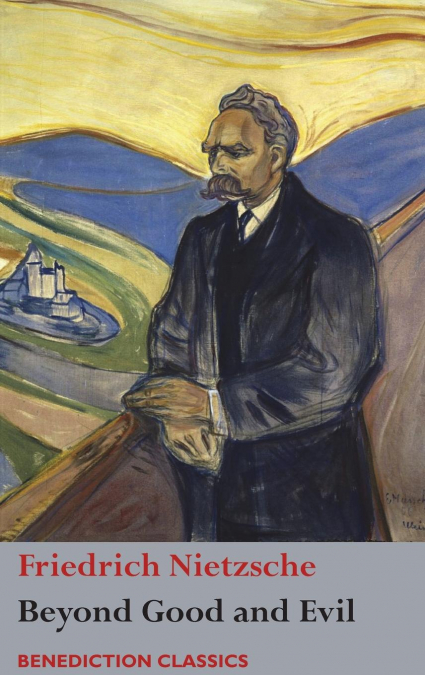
    Nietzsche, though primarily a philosopher, wrote widely on art, philology, history, religion, tragedy, culture, and science.  In 1886, at the height of his powers, he published Beyond Good and Evil.  Here he examines much of the best of human thought--dogmatic philosophy, Judeo-Christian morality, science and democracy – and finds it lacking.  Rejecting “slave-morality” he pres...
  • Beyond Good and Evil
    Friedrich Nietzsche
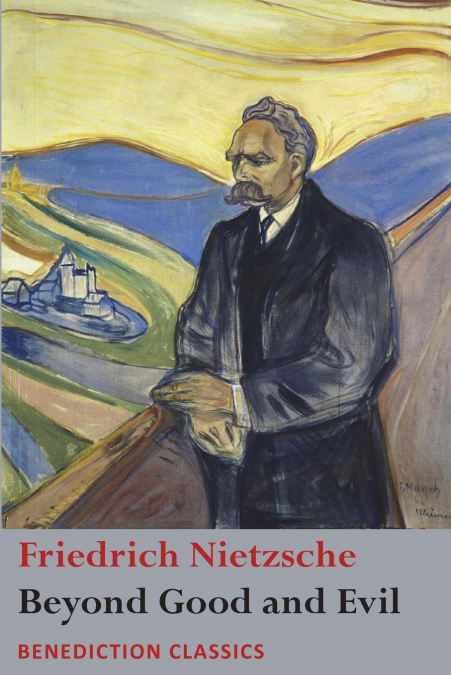
    Nietzsche, though primarily a philosopher, wrote widely on art, philology, history, religion, tragedy, culture, and science.  In 1886, at the height of his powers, he published Beyond Good and Evil.  Here he examines much of the best of human thought--dogmatic philosophy, Judeo-Christian morality, science and democracy – and finds it lacking.  Rejecting “slave-morality” he pres...
    Disponible

    9,99 €

Otros libros del autor

  • The Barbarian Code
    J.F. Franklin
    Civilization did not defeat you. It softened you, quietly, patiently, one comfortable choice at a time, until the strength your ancestors needed simply to survive the night became a capacity you forgot you ever had. You were not born weak. You were engineered into ease by a world that no longer demands anything of you, and it will keep offering you that ease for the rest of you...
    Disponible

    38,21 €

  • Begin with Ignorance
    J.F. Franklin
    BEGIN WITH IGNORANCE The Socratic Method for Clearer Thinking in a Confusing World In an age of information overload, social media echo chambers, and increasingly polarized discourse, we need ancient wisdom more than ever. Begin with Ignorance revives the 2,400-year-old Socratic method and makes it urgently relevant for our confusing modern world. The wisest man in Athens claim...
    Disponible

    38,17 €

  • Meditations Unbound
    J.F. Franklin
    MEDITATIONS UNBOUND What Marcus Aurelius Really Meant And Why It Matters Now Nearly two thousand years ago, the most powerful man in the world sat in a military camp and wrote notes to himself about how to stay sane. Marcus Aurelius never intended anyone to read his Meditations, but his private journal of Stoic philosophy has become one of history’s most influential books, read...
    Disponible

    35,98 €

  • Forge of the Mind
    J.F. Franklin
    Forge of the Mind: Stoic Wisdom for Modern ChaosTransform Ancient Philosophy into Modern ResilienceIn an age of information overload, social media anxiety, and constant uncertainty, millions are rediscovering the timeless wisdom of Stoicism not as abstract philosophy, but as practical life skills for navigating contemporary chaos. Forge of the Mind bridges the gap between ancie...
    Disponible

    36,00 €

  • The Modern Way of the Sword
    J.F. Franklin
    In an age of endless distractions, moral compromise, and superficial pursuits, the timeless wisdom of Japan’s greatest swordsman offers a path to authentic mastery and fulfillment. The Modern Way of the Sword transforms Miyamoto Musashi’s legendary 21 principles from 16th-century battlefield strategy into a comprehensive framework for navigating the complexities of modern exist...
    Disponible

    37,08 €

  • The Barbarian Mindset
    J.F. Franklin
    The Barbarian Mindset: How to Conquer the Modern WorldModern civilization has made you weak. It’s time to reclaim your power.While society promises comfort, convenience, and safety, it delivers something far more sinister: a systematic weakening of everything that once made humans formidable. You’ve been conditioned to seek ease over growth, security over strength, and complian...
    Disponible

    36,96 €