 Librería Samer Atenea
 Kálamo Books
 Librería Elías (Asturias)
 Librería Kolima (Madrid)
 Librería Proteo (Málaga)
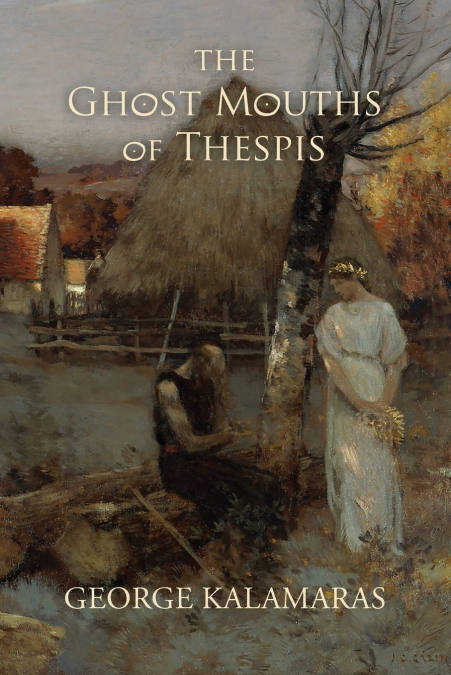
The Ghost Mouths of Thespis is George Kalamaras’s chronicle of his Greek ancestry-literary, artistic, philosophical, mystical, and familial. Not a sequel but a companion volume to his earlier book of poems about Greek poets and his Greek family-To Sleep in the Horse’s Belly: My Greek Poets and the Aegean Inside Me, which won the 2024 Indiana Book Award in Poetry-this new book continues retelling the lives of some of Kalamaras’s favorite Greek poets and artists, most often with his characteristic Surrealist outpouring and accretion of imagery. At the same time, it expands this focus by also interlacing his inquiry with myth and imaginative retellings of the insights of ancient Greek philosophers and Orthodox saints. Kalamaras embraces pillars of Greek Letters, such as Yannis Ritsos and Andreas Embirikos-two poets who helped form the backbone of Kalamaras’s poetics forty-six years ago. Yet he moves beyond these well-known poets, delving into a plethora of modern and contemporary Greek poets whom he has studied during decades of poetic apprenticeship, most of whom are little-known in the United States, poets like Veroniki Dalakoura, Byron Leondaris, Yannis Dhallas, Giorgos Heimonas, Pavlina Pompoudi, and others. Many of these figures are at the forefront of the Greek avant-garde, questioning (implicitly or explicitly) Greece’s two military dictatorships in the last century. This abundant collection of poems takes us on an expansive journey not only of Kalamaras’s literary and artistic forebears but also of his familial roots from Zakynthos, Pharaklatha, and Solaki-places in Greece from which three of his four grandparents emigrated during the early part of the last century. In every other section of the book, he also introduces imaginative retellings of Greek philosophers such as Pythagoras, Protagoras, Diogenes, and others alongside Greek Orthodox saints such as St. George, St. Demetrios, St. Barbara, St. Aspasia and others. With his characteristic focus of 'seeing one in the other,' Kalamaras continues to affirm the value of 'an archeology of Being,' a decades-long project in which he continues to chronicle the world around him, attempting to unearth the value of poets who have come before him, affirming the living presence of the 'dead.' Kalamaras delivers this connectivity in the midst of exploring the fascist oppression of two military dictatorships that threaten Greece’s democracy. Yet as poet Yannis Ritsos says in one of the book’s opening epigraphs whatever it is that’s Greek, whatever it is that’s Greece, / reaches into the sky and arms itself with the sun. This triumphant affirmation of what it means to be Greek and to carry the legacy of Greek ancestry imbues Kalamaras’s latest book with hope and the enduring embrace of Greek thought. Whether one is interested in Greece and Greek philosophy or not, this new book by George Kalamaras offers deep insights into lineage and connectivity, highlighting the healing power of a living past. 6