Joseph Habimana Ngoma / Joseph Ngoma
 Librería Samer Atenea
 Kálamo Books
 Librería Elías (Asturias)
 Librería Kolima (Madrid)
 Librería Proteo (Málaga)
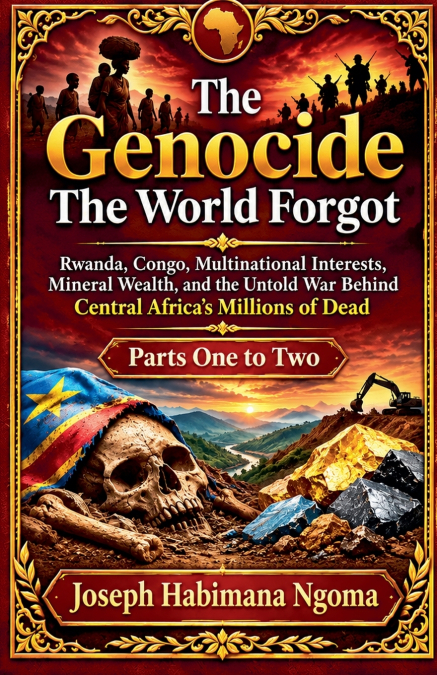
The Genocide The World ForgotRwanda, Congo, Multinational Interests, Mineral Wealth, and the Untold War Behind Central Africa’s Millions of DeadWhat happens when one war officially ends, but its violence crosses a border and begins another catastrophe? The Genocide The World Forgot follows the devastating transformation of the Great Lakes crisis from post-genocide Rwanda into Zaire and the Democratic Republic of the Congo. After the 1994 genocide against the Tutsi, enormous numbers of Hutu refugees crossed into eastern Zaire. Among them were innocent civilians as well as former soldiers, militia members, and individuals implicated in genocide. Refugee camps became both centers of humanitarian suffering and sources of serious regional security concerns. Then Rwanda, Uganda, Laurent-Désiré Kabila’s AFDL, and other regional actors entered a conflict that would overthrow Mobutu Sese Seko and reshape Central Africa, but Mobutu’s fall did not bring peace. This book examines the destruction of refugee camps, the pursuit and disappearance of refugees, the suffering of Congolese civilians, allegations of massacres and mass graves, and the serious crimes later documented by international investigations. It explores the United Nations Mapping Report and its documentation of 617 of the most serious violent incidents committed in the Democratic Republic of the Congo between 1993 and 2003, while carefully examining the unresolved legal question surrounding whether some attacks against Hutu refugees and civilians could meet the legal definition of genocide.Rather than beginning with a predetermined verdict, Joseph Habimana Ngoma asks readers to follow the evidence. The book also traces the extraordinary rise of Laurent-Désiré Kabila, the collapse of Mobutu’s Zaire, the restoration of the name Democratic Republic of the Congo, Rwanda’s influence within the new government, Kabila’s growing struggle for national sovereignty, and the dramatic moment when he ordered foreign forces to leave. Within days, former allies became enemies, rebellion returned, and Congo moved toward an even greater conflict, the Second Congo War, often called Africa’s World War. Behind the armies and political struggles stands another question that cannot be ignored: Congo’s extraordinary mineral wealth. Gold, diamonds, coltan, copper, cobalt, tin, and other resources would become increasingly connected to military power, regional interests, international trade, and wartime economic networks. The book challenges readers to examine who benefited from Congo’s instability while maintaining an essential distinction: benefiting from war is not automatically proof of creating it.Written by a Congolese author whose own life was transformed by conflict and more than sixteen years as a refugee, The Genocide The World Forgot is a search for truth, memory, accountability, and justice. It refuses collective ethnic blame. It does not deny the genocide against the Tutsi, minimize Rwanda’s legitimate security concerns, or ignore crimes committed against other populations. Instead, it insists upon a principle too often lost in political conflict:Remembering one victim must never require forgetting another. This is the story of refugees and armies, presidents and rebels, foreign intervention and national sovereignty, mass violence and unanswered questions, mineral wealth and human suffering. Above all, it is the story of people whose lives disappeared behind political narratives while Central Africa moved from one devastating war toward another. The government changed. The country’s name changed. The alliances changed. But the bloodshed did not end.