

 Librería Samer Atenea
 Kálamo Books
 Librería Elías (Asturias)
 Librería Kolima (Madrid)
 Librería Proteo (Málaga)
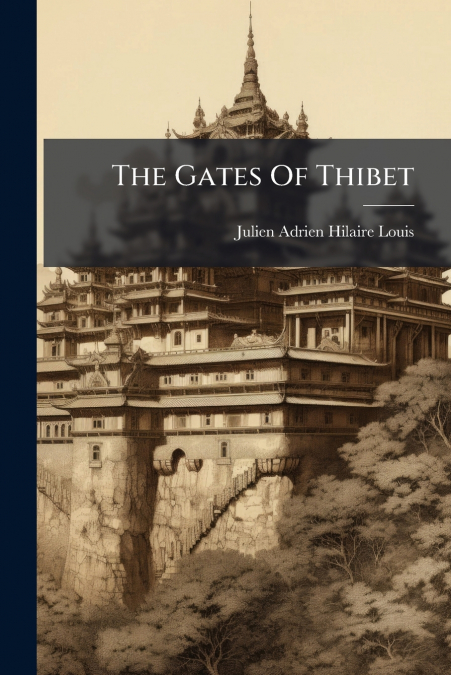
'The Gates of Thibet' recounts the captivating journey of Evariste Regis Huc, a 19th-century Lazarist missionary, through the heart of Asia. This enthralling narrative details his travels through unexplored territories, offering a rare glimpse into the mysterious land of Tibet and its unique culture. Huc’s vivid descriptions bring to life the landscapes, customs, and spiritual practices of the region, providing invaluable insights into Tibetan Buddhism, also known as Lamaism. Readers will be transported to a world of towering mountains, remote monasteries, and vibrant religious ceremonies. Huc’s adventurous spirit and keen observations make this book a timeless exploration of a land largely unknown to the Western world, capturing the imagination with tales of resilience, discovery, and cultural exchange. 'The Gates of Thibet' remains a significant historical account and a testament to the allure of uncharted territories.This work has been selected by scholars as being culturally important, and is part of the knowledge base of civilization as we know it. This work was reproduced from the original artifact, and remains as true to the original work as possible. Therefore, you will see the original copyright references, library stamps (as most of these works have been housed in our most important libraries around the world), and other notations in the work.This work is in the public domain in the United States of America, and possibly other nations. Within the United States, you may freely copy and distribute this work, as no entity (individual or corporate) has a copyright on the body of the work.As a reproduction of a historical artifact, this work may contain missing or blurred pages, poor pictures, errant marks, etc. Scholars believe, and we concur, that this work is important enough to be preserved, reproduced, and made generally available to the public. We appreciate your support of the preservation process, and thank you for being an important part of keeping this knowledge alive and relevant.





