

 Librería Samer Atenea
 Kálamo Books
 Librería Elías (Asturias)
 Librería Kolima (Madrid)
 Librería Proteo (Málaga)
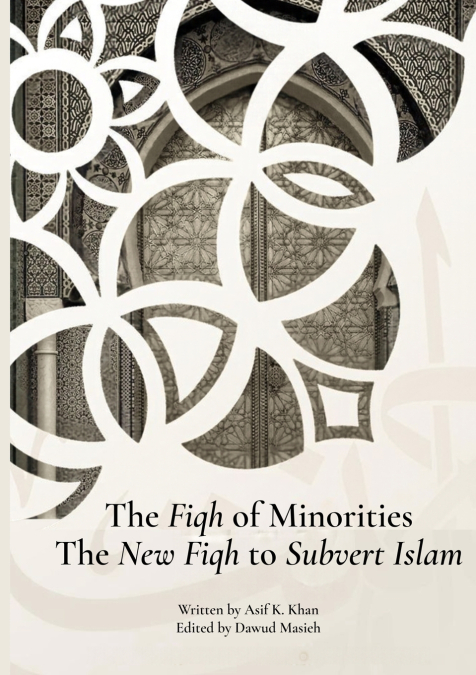
The Fiqh of Minorities: The New Fiqh to Subvert Islam by Asif Khan offers a critical examination of Fiqh al-Aqalliyyāt, the jurisprudential approach developed to address the circumstances of Muslim minorities living outside historically Muslim societies.Drawing upon the Qur’ān, Sunnah, classical Islamic jurisprudence, and the principles of uṣūl al-fiqh, the author investigates the legal foundations, interpretive assumptions, and methodological arguments associated with minority jurisprudence.The study considers whether distinct social and political circumstances require a separate framework of Islamic legal reasoning or whether established juristic principles already provide the necessary means of deriving rulings.Central themes include:The foundations of minority jurisprudence: An examination of the emergence, definitions, and methodological assumptions of Fiqh al-Aqalliyyāt.The authority of Islamic legal evidence: The relationship between Qur’ānic injunctions, Prophetic traditions, and the derivation of legal rulings.Changing circumstances and legal interpretation: An assessment of customary practice, changing social conditions, and the jurisprudential development associated with Imam al-Shāfiʿī.Maqāṣid al-Sharīʿah and public welfare: A detailed discussion of the objectives of Islamic law, legal causation (ʿillah), juristic wisdom (ḥikmah), and maṣlaḥah.Political participation and legal authority: An examination of arguments concerning Muslim participation in non-Islamic political institutions, including interpretations of the Qur’ānic account of Prophet Yūsuf.Citizenship and territorial classification: A study of Dār al-Islām, Dār al-Kufr, citizenship, residence, legal obligations, and historical Islamic administrative principles.Throughout the work, Asif Khan advances a text-centred approach to Islamic jurisprudence, maintaining that contemporary circumstances must be examined through established methods of legal deduction rather than treated as independent sources of legislation.The discussion engages with classical juristic authorities, Qur’ānic exegesis, Prophetic narrations, and contemporary arguments associated with scholars of minority jurisprudence.Scholarly SignificanceThe book provides a clearly articulated critical perspective within debates concerning Islamic legal methodology, interpretive authority, and the application of Sharīʿah principles to changing social circumstances.Its examination of legal evidence, juristic disagreement, and methodological limits makes it relevant to readers studying Islamic jurisprudence and the intellectual history of contemporary Islamic legal debates







