 Librería Samer Atenea
 Kálamo Books
 Librería Elías (Asturias)
 Librería Kolima (Madrid)
 Librería Proteo (Málaga)
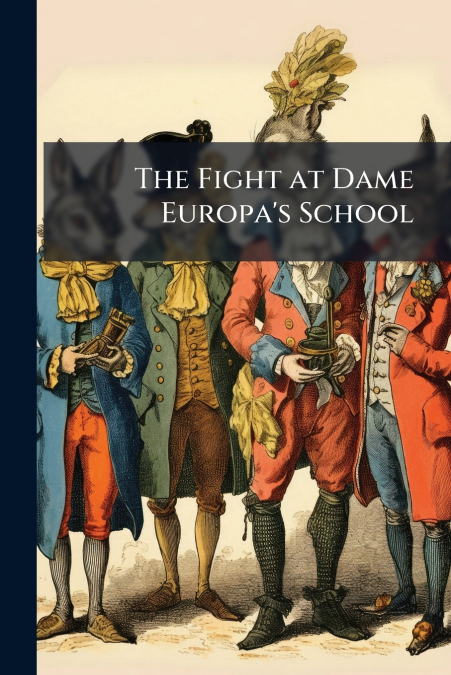
'The Fight at Dame Europa’s School' is a satirical allegory that uses the setting of a school to represent the political tensions and rivalries among European nations in the Victorian era. Published anonymously in 1871, the book employs humor and caricature to critique the burgeoning nationalism and militarism that would eventually lead to World War I. The headmistress, Dame Europa, struggles to maintain order among her unruly students, each representing a different European power, as they squabble over territory, prestige, and influence. Through its witty and insightful narrative, the book offers a commentary on the absurdities of international politics and the dangers of unchecked ambition. Beyond its historical context, 'The Fight at Dame Europa’s School' remains relevant for its exploration of timeless themes such as power, competition, and the challenges of maintaining peace in a world of competing interests. Its enduring appeal lies in its ability to use satire to expose the follies of those in power and to remind readers of the human cost of conflict.This work has been selected by scholars as being culturally important, and is part of the knowledge base of civilization as we know it. This work was reproduced from the original artifact, and remains as true to the original work as possible. Therefore, you will see the original copyright references, library stamps (as most of these works have been housed in our most important libraries around the world), and other notations in the work.This work is in the public domain in the United States of America, and possibly other nations. Within the United States, you may freely copy and distribute this work, as no entity (individual or corporate) has a copyright on the body of the work.As a reproduction of a historical artifact, this work may contain missing or blurred pages, poor pictures, errant marks, etc. Scholars believe, and we concur, that this work is important enough to be preserved, reproduced, and made generally available to the public. We appreciate your support of the preservation process, and thank you for being an important part of keeping this knowledge alive and relevant.