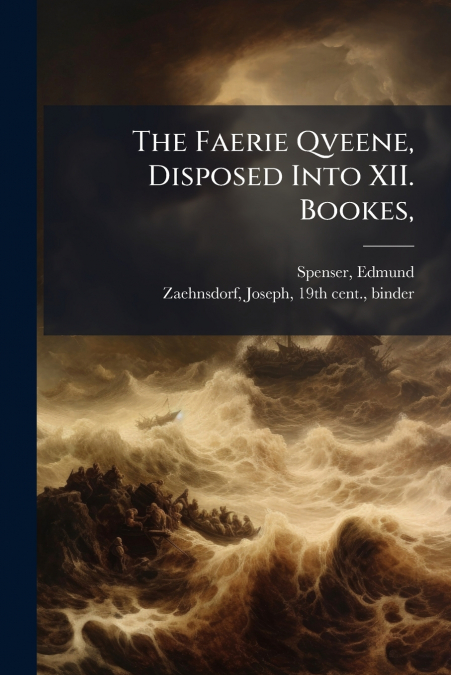
Spenser Edmund 1552?-1599 / Joseph 19th cent. binder Zaehnsdorf
 Librería Samer Atenea
 Kálamo Books
 Librería Elías (Asturias)
 Librería Kolima (Madrid)
 Librería Proteo (Málaga)
'The Faerie Qveene,' Edmund Spenser’s unfinished epic poem, stands as a monumental achievement of the English Renaissance. Published in stages, beginning in 1590, this allegorical work aims to embody twelve moral virtues through the adventures of various knights and ladies in a fantastical realm. Volume 1 introduces readers to the early books of this ambitious project, showcasing Spenser’s intricate verse, rich symbolism, and profound exploration of ethical and spiritual ideals. Spenser’s work blends Arthurian romance with classical and contemporary philosophical ideas, creating a complex tapestry of narrative and meaning. This edition offers a glimpse into the original intent and scope of 'The Faerie Qveene,' inviting readers to engage with a foundational text of English literature. Its enduring influence on poetry, romance, and the allegorical tradition makes it essential reading for scholars and enthusiasts alike.This work has been selected by scholars as being culturally important, and is part of the knowledge base of civilization as we know it. This work was reproduced from the original artifact, and remains as true to the original work as possible. Therefore, you will see the original copyright references, library stamps (as most of these works have been housed in our most important libraries around the world), and other notations in the work.This work is in the public domain in the United States of America, and possibly other nations. Within the United States, you may freely copy and distribute this work, as no entity (individual or corporate) has a copyright on the body of the work.As a reproduction of a historical artifact, this work may contain missing or blurred pages, poor pictures, errant marks, etc. Scholars believe, and we concur, that this work is important enough to be preserved, reproduced, and made generally available to the public. We appreciate your support of the preservation process, and thank you for being an important part of keeping this knowledge alive and relevant.