 Librería Samer Atenea
 Kálamo Books
 Librería Elías (Asturias)
 Librería Kolima (Madrid)
 Librería Proteo (Málaga)
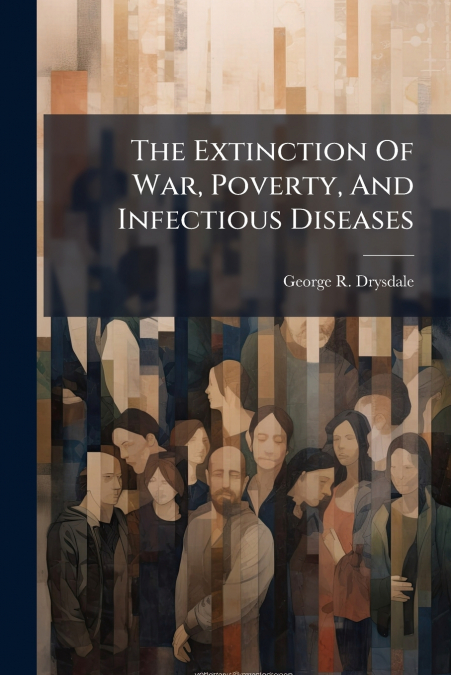
'The Extinction Of War, Poverty, And Infectious Diseases' by George R. Drysdale presents a visionary collection of essays advocating for profound societal change. This volume addresses critical issues of the late 19th and early 20th centuries, exploring potential solutions for global challenges that remain relevant today. Drysdale’s work delves into the root causes of war, proposing innovative approaches to international relations and conflict resolution. He also tackles the pervasive problem of poverty, offering insights into economic reform and social justice. A significant portion of the book is dedicated to the control and eradication of infectious diseases, reflecting the growing understanding of public health issues during this period. Additionally, the collection includes essays on home rule and federation, examining models of governance that promote autonomy and cooperation. Drysdale’s comprehensive analysis and forward-thinking proposals make this book a valuable historical document and a compelling call for a more just and healthy world.This work has been selected by scholars as being culturally important, and is part of the knowledge base of civilization as we know it. This work was reproduced from the original artifact, and remains as true to the original work as possible. Therefore, you will see the original copyright references, library stamps (as most of these works have been housed in our most important libraries around the world), and other notations in the work.This work is in the public domain in the United States of America, and possibly other nations. Within the United States, you may freely copy and distribute this work, as no entity (individual or corporate) has a copyright on the body of the work.As a reproduction of a historical artifact, this work may contain missing or blurred pages, poor pictures, errant marks, etc. Scholars believe, and we concur, that this work is important enough to be preserved, reproduced, and made generally available to the public. We appreciate your support of the preservation process, and thank you for being an important part of keeping this knowledge alive and relevant.