 Librería Samer Atenea
 Kálamo Books
 Librería Elías (Asturias)
 Librería Kolima (Madrid)
 Librería Proteo (Málaga)
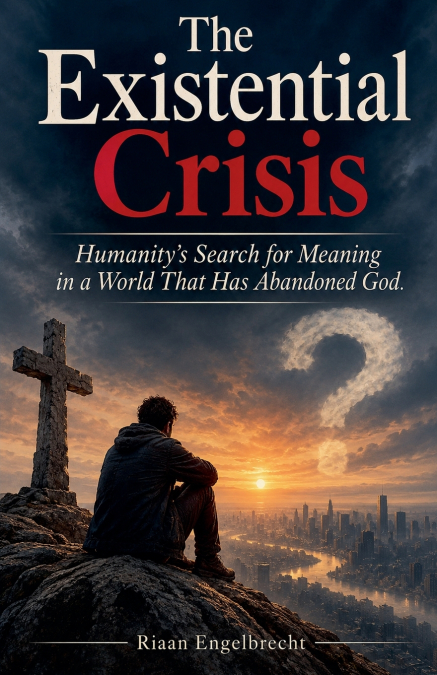
What happens when humanity loses sight of its Creator - and then attempts to find meaning without Him? We live in an age of unprecedented knowledge, technological advancement and personal freedom. Yet beneath the surface of modern civilisation lies a profound existential crisis. People are searching for meaning, identity, purpose, truth and lasting fulfilment, while increasingly turning away from the very One who gives existence its meaning. Having abandoned the foundations of biblical truth, humanity has embarked on a relentless pursuit of self-discovery, self-definition and self-fulfilment. But can the human heart truly find meaning when God is removed from the equation? Can philosophy answer the deepest questions of existence? Can human reason overcome the reality of suffering, death and the fear of eternity? And can humanity become its own saviour? In The Existential Crisis, Riaan Engelbrecht explores the philosophical, intellectual and spiritual foundations of humanity’s search for meaning. Through the contributions and challenges of influential thinkers such as Søren Kierkegaard, Friedrich Nietzsche, Jean-Paul Sartre, Albert Camus, Martin Heidegger, Sigmund Freud, Carl Jung, Viktor Frankl, C.S. Lewis, Augustine and Blaise Pascal, this book examines the ideas that have shaped our understanding of existence, identity, freedom, morality, truth and God. Yet this is more than an exploration of philosophy. It is an examination of the spiritual condition of a generation searching for answers while increasingly rejecting the Source of truth. The existential crisis cannot ultimately be resolved by humanity looking deeper within itself. It can only be answered when humanity turns its eyes back to God. This book is an invitation to think deeply, question honestly, examine the foundations of modern thought and rediscover the eternal truth that gives life its meaning. Because when humanity abandons God, it does not merely lose a religious belief. It loses its ultimate point of reference for understanding who it is, why it exists and where it is going.