 Librería Samer Atenea
 Kálamo Books
 Librería Elías (Asturias)
 Librería Kolima (Madrid)
 Librería Proteo (Málaga)
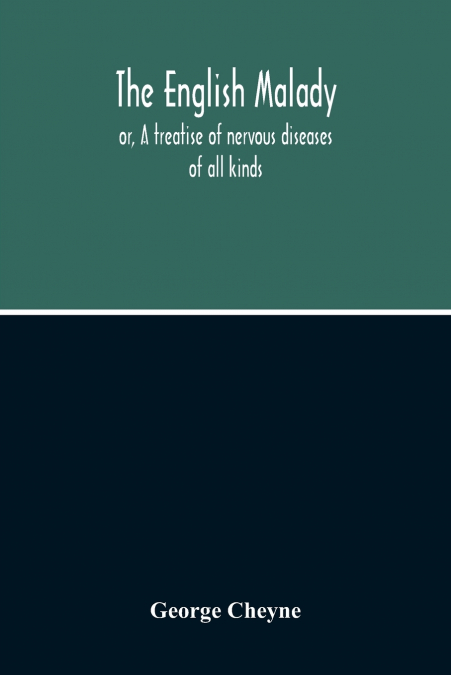
An unsparing examination of mind and body from Georgian England. A seminal work of medicine.George Cheyne’s The English Malady addresses the bewildering rise of nervous afflictions, from spleen and vapours to low spirits, hypochondriacal and hysterical distempers, across three measured parts on nature and cause, cure, and illustrative cases. This eighteenth-century medical treatise reads as both a historical health guide and a classic medical text: clinical observation, prescriptive advice and moral reflection sit side by side to map early mental health and nervous disorders treatment in the age of Enlightenment period science. The prose alternates brisk prescription with contemplative digression, making the book unexpectedly readable for the curious modern mind. Scholars will recognise its value as a history of medicine reference; general readers will be struck by its humane attention to sufferers and the ways it anticipates later debates about mind, diet and lifestyle. In tone and temperament it is similar to Robert Burton yet shaped by the empiricism of Georgian era England.Republished by Alpha Editions in a careful modern edition, this volume preserves the spirit of the original while making it effortless to enjoy today, a heritage title prepared for readers and collectors alike. As vintage health literature that helped shape Enlightenment discussions of melancholy and bodily complaint, it appeals equally to casual readers curious about the origins of psychiatric thinking and to collectors of medical books who prize historically significant editions. The final section’s variety of cases provides vivid, sometimes surprising, primary-source portraits of symptoms, treatments and outcomes, a resource for students and writers researching early mental health and the history of medicine. Accessible yet exacting, the text rewards casual curiosity and bibliophilic attention in equal measure, finding a home on shelves devoted to classic literature and to medical history. Its language rewards slow reading and its observations serve as fuel for essays, exhibitions and classroom discussion. Ideal for reading, study and display.