Inicio > Economía, finanzas, empresa y gestión > Economía > The Economics and Econometrics of Innovation
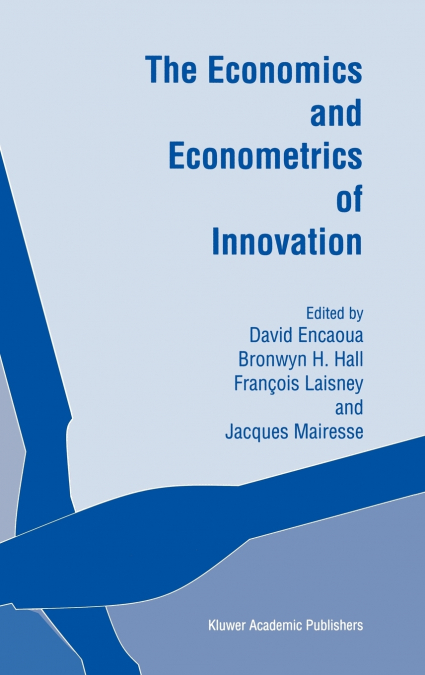
The Economics and Econometrics of Innovation

The Economics and Econometrics of Innovation

Brownyn H. Hall / François Laisney

266,26 €
IVA incluido
Consulta disponibilidad
Editorial:
Springer Nature B.V.
Año de edición:
2000
Materia
Economía
ISBN:
9780792378006

Selecciona una librería:

  • Librería Samer Atenea
  • Librería Aciertas (Toledo)
  • Kálamo Books
  • Librería Perelló (Valencia)
  • Librería Elías (Asturias)
  • Donde los libros
  • Librería Kolima (Madrid)
  • Librería Proteo (Málaga)

During the past few decades, the interest of economists in the sources of long-term economic growth has led an increasing number of them to focus on the role of innovation in creating that growth. Although some researchers have always been interested in this topic, the groundbreaking work of Solow (1957), Nelson (1959) and Arrow (1962) made many other economists recognize the central role played by innovation in almost all spheres of economic activity. The Economics and Econometrics of Innovation presents a valuable overview of the work of the world’s most renowned experts in the field of innovation and technical change. It collects 22 outstanding contributions that reflect the results of the vast, worldwide research efforts and remind us of the importance of economic incentives in shaping and directing innovative activities. The volume presents an edited selection of papers that were first presented at the 10th International ADRES conference. One particular goal of this book is to bring out the complementary nature of the various approaches to innovation, and to facilitate in-depth dialogues both between microeconomists and macroeconomists, and between theoreticians and econometricians. General topics that are considered range from the economy-wide effects of innovation on growth and employment to the variation of individual firm innovative performance; from the analysis of networks and standardization to the role of intellectual property rights and the assessment of knowledge spillovers. Besides the wealth of information presented in the chapters, readers of this volume will also appreciate the value of examining a single question from different angles and by using different methods.


Artículos relacionados

  • Technological Change and the British Iron Industry, 1700-1870
    Charles K. Hyde
    This book describes technological change in an industry that played a central role in the Indsutrial Revolution. While earlier scholars have examined isolated aspects of ironmaking in the eighteenth- and nineteenth-century Britain, Charles Hyde surveys all aspects of its development. Costs, prices, profits, shrewd leaders, competition, new inventions, and productivity all figur...
    Disponible

    71,94 €

  • Corporate Governance in Asia
    ...
    Disponible

    72,99 €

  • The European Guilds
    Sheilagh Ogilvie
    A comprehensive analysis of European craft guilds through eight centuries of economic historyGuilds ruled many crafts and trades from the Middle Ages to the Industrial Revolution, and have always attracted debate and controversy. They were sometimes viewed as efficient institutions that guaranteed quality and skills. But they also excluded competitors, manipulated markets, and ...
  • Technological Change and the British Iron Industry, 1700-1870
    Charles K. Hyde
    This book describes technological change in an industry that played a central role in the Indsutrial Revolution. While earlier scholars have examined isolated aspects of ironmaking in the eighteenth- and nineteenth-century Britain, Charles Hyde surveys all aspects of its development. Costs, prices, profits, shrewd leaders, competition, new inventions, and productivity all figur...
  • Technology Differences over Space and Time
    Francesco Caselli
    Technology Differences over Space and Time looks at how countries use their productive resources-such as workers, skills, equipment and structures, and natural resources. Francesco Caselli develops methods to assess the efficiency with which productive inputs are used, and how these efficiencies vary across countries and over time.Caselli finds that richer countries use skilled...
  • Cybersecurity Measures for Logistics Industry Framework
    Global supply chains are becoming more customer-centric and sustainable thanks to next-generation logistics management technologies. Automating logistics procedures greatly increases the productivity and efficiency of the workflow. There is a need, however, to create flexible and dynamic relationships among numerous stakeholders and the transparency and traceability of the supp...