 Librería Samer Atenea
 Kálamo Books
 Librería Elías (Asturias)
 Librería Kolima (Madrid)
 Librería Proteo (Málaga)
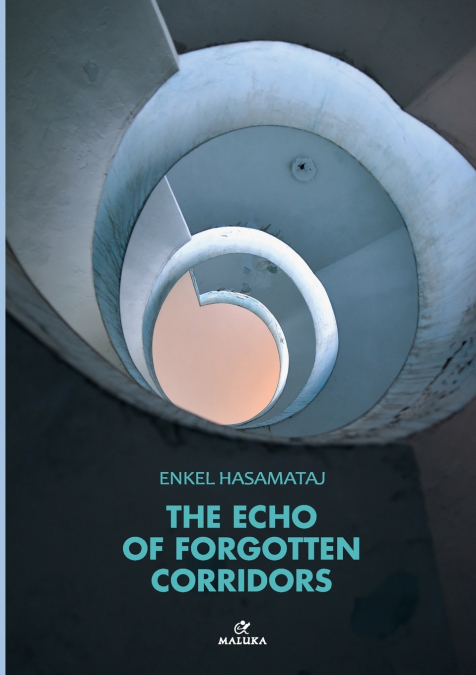
The first-person narration in The Echo of Forgotten Corridors draws the reader into a world that feels at once familiar and distant. Every sentence and exclamation is crafted to faithfully encapsulate the spirit of the age, with its oral idiosyncratic voiceimprints. The challenge to remould the novel from the original language (Albanian) into English was itself an odyssey. To illustrate: the English 'window' derives from 'wind-eye,' the roof aperture that lets smoke and foul air escape; the Albanian dritare, by contrast, stems from dritë ('light'), signifying the opening through which light enters the home.The idiomatically rich English language has paved the way for unprecedented translation, allowing the exchange of cultural heritage and artifacts embedded in the respective languages. The translation of the metaphors was the pinnacle of this Sisyphean effort; as such, quite a few of them will strike you as new with their fresh resonances.The novel weaves together the threads of personal relationships, societal shifts, and the lingering shadows of history. Through its poignant and often surprising storytelling, the novel draws readers into a world where the past and present are inextricably linked, and where every encounter reveals another layer of meaning.The story opens with a young man whose tranquil daily life is disrupted by events tied to his past. The Narrator, whose name begins with the letter T., finds himself swept into the unfolding drama when his childhood friend Besian, having returned from emigration, faces a harrowing trial after being accused of a grave crime within his family.This tragedy triggers a chain of revelations, pulling T. into encounters with people from his past, including Sherif, whose mysterious disappearance years ago opens up new dimensions to the narrative. As T. attempts to make sense of these revelations, the cast of characters widens. Ilir, another close friend, introduces a mystery of his own, while Aikuna, T’s enigmatic flatmate, and Behar, a homeless man they’ve taken in, contribute to the texture of the story with their unique roles. The arrival of Mrs. Bekteshi, a determined woman with a political agenda, further intensifies the plot, raising the stakes for everyone involved.The novel’s greatest strength lies in its characters. Each one is vividly rendered, with distinct personalities and compelling backstories that add more to the overall narrative. The interactions between these characters feel authentic and layered, creating a sense of realism even as the plot ventures into dramatic and emotionally charged, and unstable grounds. Despite the gravity of the events-family tragedy, court trials, and political upheaval the novel is punctuated by moments of humor and beautifully wrought descriptions.The author’s prose captures the nuances of human emotion and the complexities of relationships, making it a pleasure to follow T’s journey, even when even when darkness lines the path ahead.The ending, both unexpected and befitting, binds the narrative together with a poignant reflection on love, friendship, and the enduring impact of the past on the present.It is a fulfilling conclusion to a story that is as much about emotional discovery as it is about the dramatic twists and turns of life. The Echo of Forgotten Corridors is a compelling read, offering a rich tapestry of characters and themes that will resonate with readers, whether reading it in-depth or giving it a whirl, long after they turn the final page. It is a testament to the author’s skill in blending humor, drama, and profound human insight into a story that feels both timeless and deeply personal.