
The Disenchantment of the World

The Disenchantment of the World

The Disenchantment of the World

Marcel Gauchet / Oscar Burge

61,29 €
IVA incluido
Disponible
Editorial:
Princeton University Press
Año de edición:
1999
Materia
Filosofía de la religión
ISBN:
9780691029375
61,29 €
IVA incluido
Disponible

Selecciona una librería:

  • Librería Samer Atenea
  • Librería Aciertas (Toledo)
  • Kálamo Books
  • Librería Perelló (Valencia)
  • Librería Elías (Asturias)
  • Donde los libros
  • Librería Kolima (Madrid)
  • Librería Proteo (Málaga)

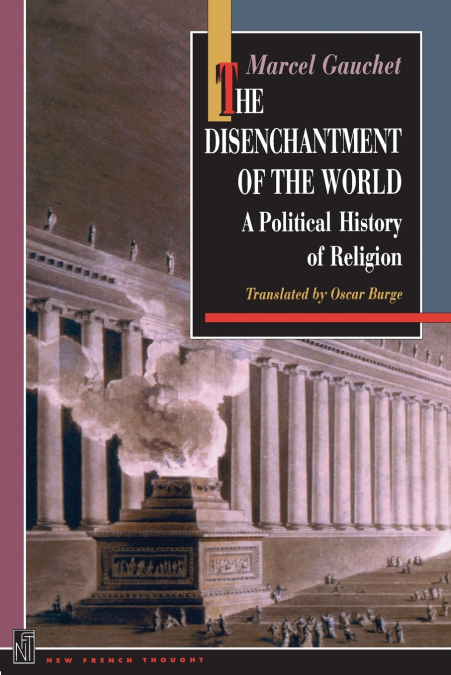
Marcel Gauchet has launched one of the most ambitious and controversial works of speculative history recently to appear, based on the contention that Christianity is 'the religion of the end of religion.' In The Disenchantment of the World, Gauchet reinterprets the development of the modern west, with all its political and psychological complexities, in terms of mankind’s changing relation to religion. He views Western history as a movement away from religious society, beginning with prophetic Judaism, gaining tremendous momentum in Christianity, and eventually leading to the rise of the political state. Gauchet’s view that monotheistic religion itself was a form of social revolution is rich with implications for readers in fields across the humanities and social sciences. Life in religious society, Gauchet reminds us, involves a very different way of being than we know in our secular age: we must imagine prehistoric times where ever-present gods controlled every aspect of daily reality, and where ancestor worship grounded life’s meaning in a far-off past. As prophecy-oriented religions shaped the concept of a single omnipotent God, one removed from the world and yet potentially knowable through prayer and reflection, human beings became increasingly free. Gauchet’s paradoxical argument is that the development of human political and psychological autonomy must be understood against the backdrop of this double movement in religious consciousness--the growth of divine power and its increasing distance from human activity. In a fitting tribute to this passionate and brilliantly argued book, Charles Taylor offers an equally provocative foreword. Offering interpretations of key concepts proposed by Gauchet, Taylor also explores an important question: Does religion have a place in the future of Western society? The book does not close the door on religion but rather invites us to explore its socially constructive powers, which continue to shape Western politics and conceptions of the state.
Artículos relacionados

  • The Writings of Charles De Koninck
    Charles De Koninck
    The Writings of Charles De Koninck, volumes 1 and 2, present the first English editions of collected works of the Catholic Thomist philosopher Charles De Koninck (1906-1965). Ralph McInerny (1929-2010) was the project editor and prepared the excellent translations. Volume 1 contains writings ranging from De Koninck’s 1934 dissertation at the University of Louvain on the philoso...
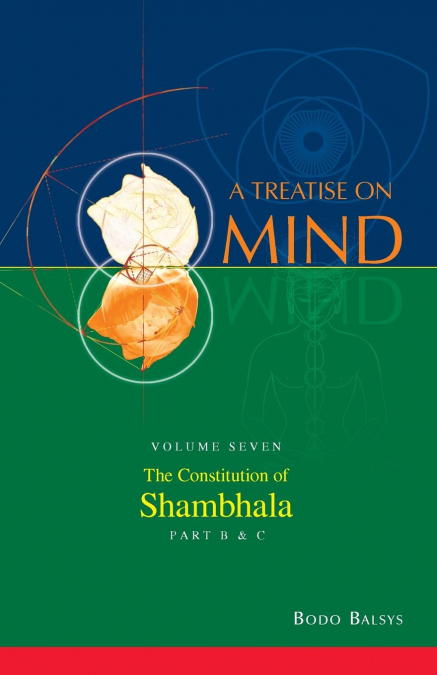
  • The Constitution of Shambhala (Vol. 7B of a Treatise on Mind)
    Bodo Balsys
    The theme of the first of the two parts of this volume concerns the feminine deva hierarchy, their relation to Hierarchy and Shambhala. Many concepts are introduced that most seekers have little cognisance (e.g., the nature of the deva Lord Varuna). The Mother of the World’s role is revealed, and the feminine function in cosmos, (e.g., the Pleiades). Advanced teaching concernin...
    Disponible

    44,89 €

  • A Labyrinth Walk Of Life
    Lewis Tagliaferre
    Here is a collection of journaled essays leading to the inevitable belief in theological fatalism, aka Theofatalism. They include arguments from theology, psychology, politics, geology, technology, sociology, economics, history, cosmology and more. With this belief system, you can feel good inside no matter what happens outside. It may take several readings to get it, but anyth...
    Disponible

    13,41 €

  • Religion
    Arthur Schopenhauer
    Collected here are five short essays, A Dialogue, A Few Words on Pantheism, On Books and Reading, Physiognomy, and, Psychological Observations, by the world renowned philosopher Arthur Schopenhauer. ...
  • The Handbook
    Epictetus Epictetus
    No writings of Epictetus himself are really known. His discourses were transcribed and compiled by his pupil Arrian (author of the Anabasis Alexandri). The main work is The Discourses, four books of which have been preserved (out of an original eight). Arrian also compiled a popular digest, entitled the Enchiridion, or Handbook. In a preface to the Discourses, addressed to Luci...
  • The Origin Comes Alive
    Cale Rainer
    Believers and Atheists alike will get a firsthand look at the Divine Presence as it reveals the intimate behaviors and processes that compose a sense of GOD, and how this arose in social consciousness to inspire a global phenomenon known as Religion.The sense of life is taken to the limits of extreme perspective in this somewhat involved, yet intimate look into our social origi...
    Disponible

    9,92 €