

 Librería Samer Atenea
 Kálamo Books
 Librería Elías (Asturias)
 Librería Kolima (Madrid)
 Librería Proteo (Málaga)
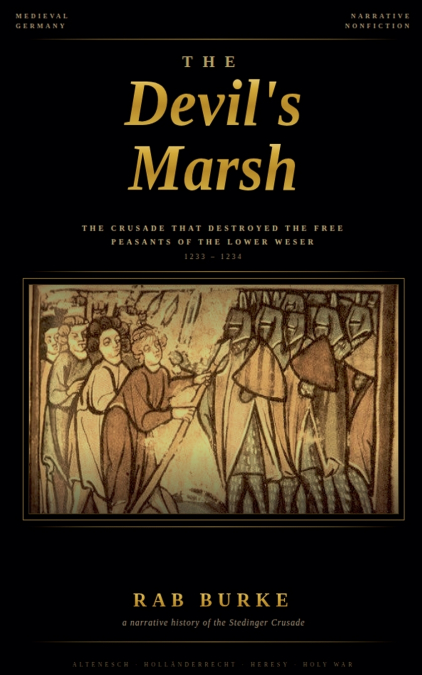
In the marshlands northwest of Bremen in the early thirteenth century, a community of orthodox Christian farmers had built one of the most remarkable autonomous societies in medieval Europe. For six generations, the Stedingers had drained the coastal bogs, constructed elaborate hydraulic systems, and governed themselves through communal institutions guaranteed by a century-old charter. They paid their tithes, attended their parish churches, and buried their dead in consecrated ground.Then Archbishop Gerhard II decided he wanted their land.What followed was a masterwork of institutional fraud. Unable to defeat the Stedingers in conventional warfare, the archiepiscopal administration accused the community of devil-worship - of kissing toads, desecrating the Eucharist, and attending nocturnal Luciferian assemblies. The charges were fabricated wholesale from a standardized inquisitorial template. Pope Gregory IX endorsed them without serious examination. Dominican preachers carried the crusade across Germany, Flanders, and Brabant. On 27 May 1234, at the Battle of Altenesch, a massive crusading host destroyed the Stedingen levy and massacred thousands of non-combatants. Eighteen months later, the surviving community was welcomed back into the Church with no mention of the devil-worship charges. They had served their purpose.Rab Burke’s meticulous and devastating narrative reconstructs this forgotten atrocity in full - exposing the mechanisms of institutional violence that turned a charter dispute into a holy war, and a free people into heretics.





