 Librería Samer Atenea
 Kálamo Books
 Librería Elías (Asturias)
 Librería Kolima (Madrid)
 Librería Proteo (Málaga)
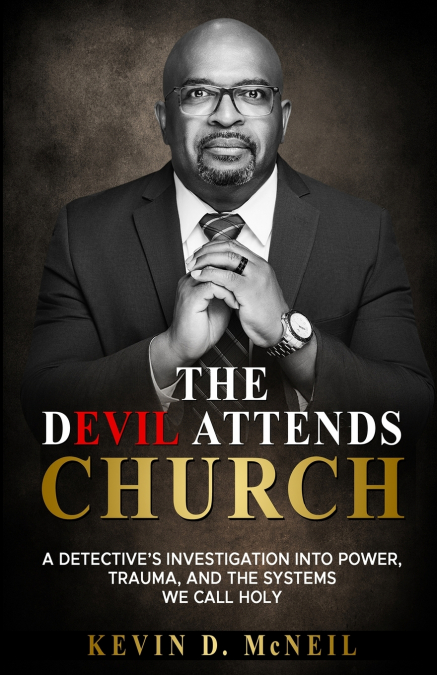
The church calls addiction demonic. It calls mental illness demonic. It calls the anger of the abused demonic. It calls the questions people ask about their own suffering demonic. For two thousand years, it has deployed that single diagnosis to cover every condition it is unwilling to actually examine.Kevin McNeil spent twenty years as a Special Victims detective, investigating crimes against children. He learned to read the architecture of harm before anyone said a word - the reflexive institutional self-protection, the theological framing that converts accountability into betrayal and silence into virtue, the particular exhaustion on the faces of people who reported what was done to them and were told that what happened to them was the problem.Then he walked into the church. And he kept seeing the pattern.The Devil Attends Church: A Detective’s Investigation into Power, Trauma, and the Systems We Call Holy is not a memoir of church hurt, though the author’s personal witness runs through every page. It is not a theological treatise, though it takes Scripture seriously enough to let it indict as well as comfort. It is an investigation - built with the same evidentiary precision McNeil applied to twenty years of criminal cases - into the architecture that makes harm inside religious institutions not merely possible but predictable.Drawing on the Adverse Childhood Experiences Study, the documented history of institutional cover-up from the Catholic Church to the prosperity gospel, the specific mechanics of how capitalism monetized religious communities, and the research of Bessel van der Kolk, Bruce Perry, and Gabor Maté, McNeil builds a case that is difficult to dismiss and impossible to ignore. The subject is not any single denomination or any single pastor. The subject is power - how it operates inside institutions that have convinced themselves they are accountable only to God, and have discovered that this conviction is a nearly perfect shield against accountability to anyone else.This is also a book about what healing actually requires. Part Two of the investigation moves from indictment to reckoning - what the original commission of Jesus actually called his followers to do, what authentic community looks like when the institution is removed from the center of it, and what it means to be, in the language of Isaiah, a repairer of the breach.The Devil Attends Church is written for three readers simultaneously: the believer who still loves the church and is looking not for permission to leave but for language to describe what they have already been living; the clinician or advocate who has been working with people the church damages and has never had a framework that named the institution as part of the problem; and the theologian who is already asking the hard questions in private and does not yet have a public vocabulary for them.This is not a book that asks you to leave your faith. It asks something harder - to take your faith seriously enough to apply it honestly to the institution that claims to represent it.The evidence is in. The case file is open.