
Inicio > Humanidades > Historia > Historia: primitiva hasta la actualidad > Historia antigua: hasta c. 500 e. c. > The Development and Traditions of Pottery in the Neolithic of the Anatolian Plateau
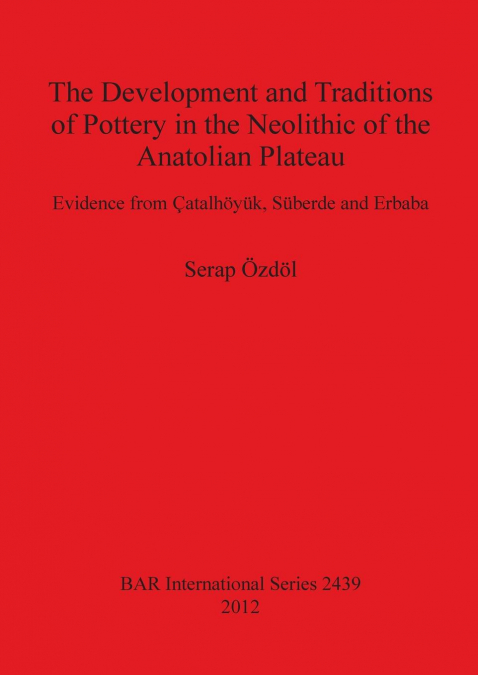
The Development and Traditions of Pottery in the Neolithic of the Anatolian Plateau

The Development and Traditions of Pottery in the Neolithic of the Anatolian Plateau

The Development and Traditions of Pottery in the Neolithic of the Anatolian Plateau

Serap Özdöl

71,35 €
IVA incluido
Disponible
Editorial:
British Archaeological Reports (Oxford) Ltd
Año de edición:
2012
Materia
Historia antigua: hasta c. 500 e. c.
ISBN:
9781407310381
Páginas:
296
Encuadernación:
Otros
71,35 €
IVA incluido
Disponible

Selecciona una librería:

  • Librería Samer Atenea
  • Librería Aciertas (Toledo)
  • Kálamo Books
  • Librería Perelló (Valencia)
  • Librería Elías (Asturias)
  • Donde los libros
  • Librería Kolima (Madrid)
  • Librería Proteo (Málaga)

The book sheds light on the cultural sequence of the Neolithic pottery in the Anatolian plateau with the help of original evidence from the settlements of Çatalhöyük in the Konya plain and Süberde and Erbaba in the Beyşehir-Suğla basin, all of which are located in the Çarşamba river basin within central Anatolia's broader Konya endoreic (closed) basin. Other zones from the basin and other parts of the Anatolian plateau have also been investigated and have provided data relevant to the issues addressed in this work; those discussed here are primarily the Lake District outside the basin to the west, the Karaman region and Niğde-Aksaray region within the Konya basin, western and northwestern Anatolia, and last of all, though only in general terms, the Cilicia and Amuq plains in southern Anatolia and the Rouj basin in northwestern Syria (northern Levant). The ceramic classification provided here is also used to define and compare contemporary pottery traditions from the Anatolian plateau and the Near East and to place them accurately within a single chronology. The study, at the same time, attempts to understand and define the regional pottery cultures of Anatolia and to assess the level of communication and interaction between them.
Artículos relacionados

  • Key to Countering Islamic Fundamentalism
    Maryam Rajavi
    Testimony before U.S. House Foreign Affairs Committee's subcommittee on Terrorism, non-Proliferation, and Trade discussing ISIS and Islamic fundamentalism. The book contains Maryam Rajavi's full testimony as well as the question and answer by representatives. During the hearing, Maryam Rajavi who is the president-elect of Iran's parliament-in-exile, the National Council of Resi...
    Disponible

    13,94 €

  • IRAN-A Writ of Deception and Cover-up
    NCRI- U.S. Representative Office / NCRI- U.SRepresentative Office
    Based on reliable information obtained by the Mujahedin-e Khalq (MEK) network inside Iran, a top-secret committee is in charge of drafting the answers to the International Atomic Energy Agency (IAEA) regarding the Possible Military Dimensions (PMD) of Tehran's nuclear program. Top officials from the Islamic Revolutionary Guards Corps (IRGC) and the Ministry of Defense Armed...
    Disponible

    5,44 €

  • Sebastopol to Dagenham
    Thomas Basil Fanshawe
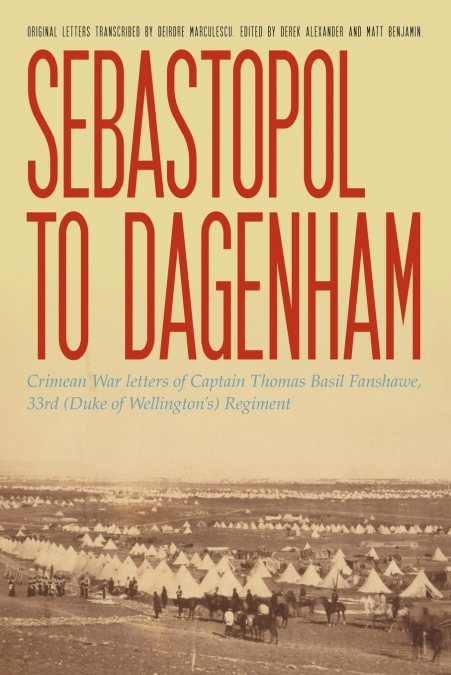
    'Sebastopol appears to be a succession of forts which the Russians are strengthening every day. A great number of the men are sick of the whole concern. No one looks forward to another winter out here with any degree of satisfaction'.Captain Thomas Basil Fanshawe served with the 33rd (Duke of Wellington's) Regiment at Sebastopol during the Crimean War. The letters h...
    Disponible

    23,05 €

  • THEN AND NOW
    Hussein Shabka
    The rise and fall of civilizations has been a fact of history since before it was recorded. It is a normal process. So what is the particular significance of Egypt’s descent from a wealthy, organized, sophisticated society into the chaotic milieu that reigns today? Perhaps it relates to the nature of the yawning gap that exists between that sophistication that endured for more ...
    Disponible

    33,86 €

  • Iran’s Nuclear Core
    NCRI- U.S. Representative Office / NCRI- U.SRepresentative Office
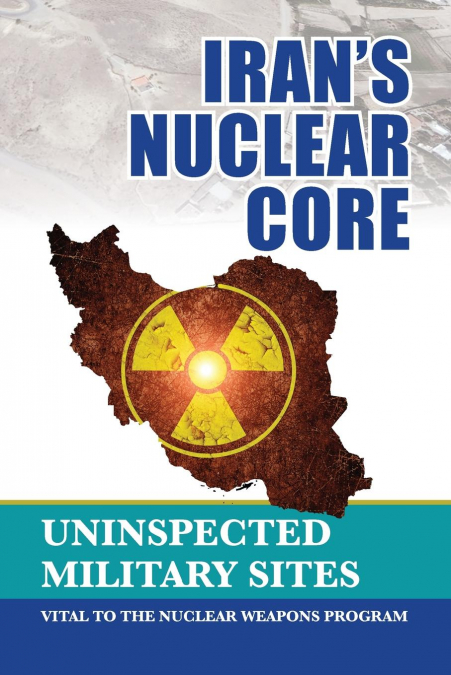
    Iran's Nuclear Core details how the nuclear weapons program is at the heart, and not in parallel, to the civil nuclear program of Iran. The program is run by the Islamic Revolutionary Guards Corp (IRGC) since the beginning, and the main nuclear sites and nuclear research facilities have been hidden from the eyes of the United Nations nuclear watchdog.The manuscript details ...
    Disponible

    23,24 €

  • Terrorist Training Camps in Iran
    NCRI- U.S. Representative Office / NCRI- U.SRepresentative Office
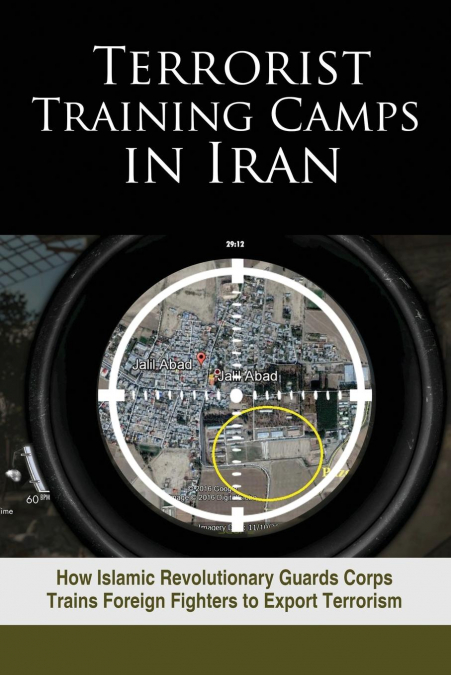
    The book details how  Islamic Revolutionary Guards Corps trains foreign fighters in 15 various camps in Iran to export terrorism. The IRGC has created a large directorate within its extraterritorial arm, the Quds Force, in order to expand its training of foreign mercenaries as part of the strategy to step up its meddling abroad in Syria, Iraq, Yemen, Bahrain, Afghanistan and el...
    Disponible

    23,24 €