Inicio > Humanidades > Historia > THE DAMBY TRADITION OF THE KONO PEOPLE OF SIERRA LEONE WEST AFRICA
THE DAMBY TRADITION OF THE KONO PEOPLE OF SIERRA LEONE WEST AFRICA

THE DAMBY TRADITION OF THE KONO PEOPLE OF SIERRA LEONE WEST AFRICA

THE DAMBY TRADITION OF THE KONO PEOPLE OF SIERRA LEONE WEST AFRICA

KUMBA FEMUSU SOLLEH

17,36 €
IVA incluido
Disponible
Editorial:
AuthorHouse
Año de edición:
2011
Materia
Historia
ISBN:
9781449074661
17,36 €
IVA incluido
Disponible

Selecciona una librería:

  • Librería Samer Atenea
  • Librería Aciertas (Toledo)
  • Kálamo Books
  • Librería Perelló (Valencia)
  • Librería Elías (Asturias)
  • Donde los libros
  • Librería Kolima (Madrid)
  • Librería Proteo (Málaga)

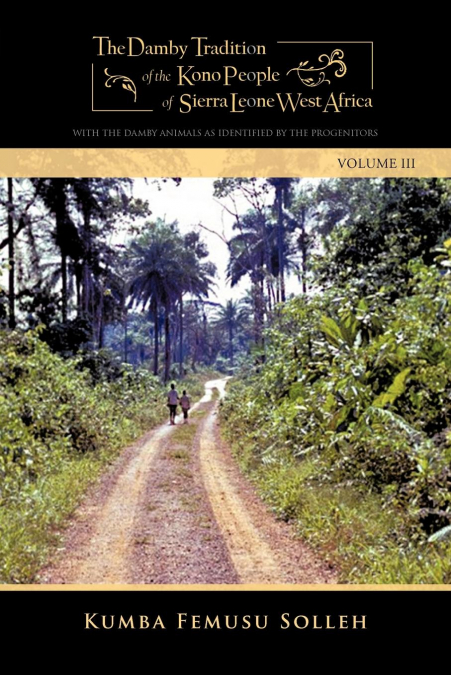
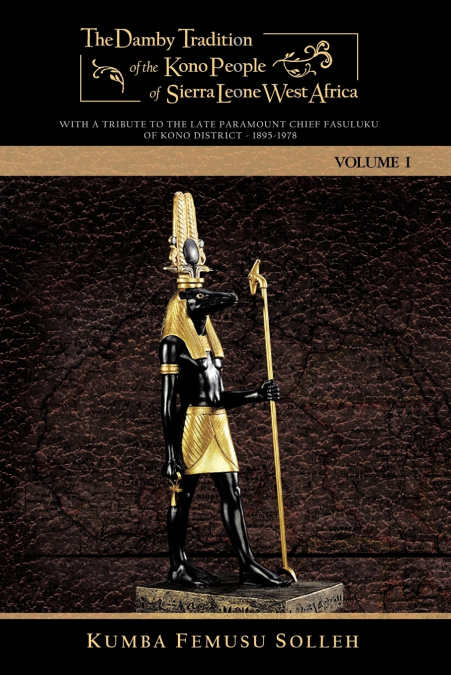
The Damby concept is very similar to the concept of DNA: protein chains from where every human or every living creature gets its hereditary traits. The earth was originally farmland created for a family. Animals that inhabited the air; water and earth were venerated by all cultures in the ancient world and viewed as symbols of the invisible forces; through whom he worships the Divine Power for the creative impulses of the gods readily respond to them.All cultures of the world reverent some animals as symbolism of divinity. The the forms and habits of these emblematic creatures : the media of existence closely relate them to the various generative and germinative powers of Nature thus, were viewed as evidence of Omnipresence.The Kono understood that all life has its origin in water. Therefore, he chose the fish as the symbol of the life germ. This fish as his emblem of the life germ is called Sa-neh (eel); meaning Sa, the ancient God is here.Furthermore, he went a step further and chose other kinds of animals to represent the divine for each - original founding fathers of the Kono Tribe. These animals and plants became known :Tana of the male heads of each founding family .However, the basic reasons behind such choices were based on a simple belief that each Damby head was a product of his Damby : his Tana or Totemic Animal. Therefore, the totemic animals were depicted as deities; and each family was prohibited from eating his or her totemic animal or food. At first, twelve animals and other forms of food were chosen and each family member had its own animal or other food form as the family’s Tana. The animals and their explanations are giving in the book.

Artículos relacionados

  • Raising Freedom's Banner
    Paul Harris
    World wide history of peaceful street demonstrations from their earliest beginning in eighteenth century England to their use throughout the world in the twenty-first century. Describes why some demonstration movements succeeded and others failed. Contrasts demonstrations within the law with civil disobedience demonstrations. Describes Peterloo, the Chartists, the Suffragettes,...
    Disponible

    23,59 €

  • Waipi’o Valley
    Jeffrey L. Gross
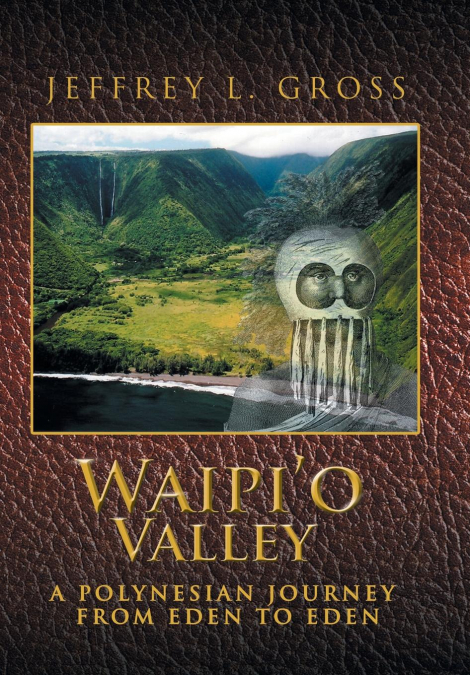
    Waipi’o Valley: A Polynesian Journey from Eden to Eden recounts the remarkable migrations of the Polynesians across a third of the circumference of the earth. Their amazing journey began from Kalana i Hau’ola, the biblical “Garden of Eden” located along the shore of the Persian Gulf, extended to the Indus River Valley of ancient Vedic India, to Egypt where some ancestors of the...
  • Floralia
    June Rainsford Butler
    A century characterized by a growing interest in science, the opportunity for travel, and leisure for gardening furnishes the setting for Butler’s book. The rise of landscape gardening in England is traced, and the origin and history of its most famous gardens are given. The close relation between England and America in the field of horticulture is also discussed.Originally pub...
    Disponible

    61,20 €

  • President Wilson’s Addresses
    Woodrow Wilson
    'These addresses of President Woodrow Wilson are almost entirely concerned with political affairs, and more specifically with defining Americanism. Yet they also show that even as he moved from academia to the heights of politics, Wilson retained something of the teacher’s interest in showing the relation between specific instances and the general forms of thought or action of ...
  • The Story of my Life
    John Albert Macy
    The Story of My Life, is Helen Keller’s autobiography detailing her early life, especially her experiences with Anne Sullivan. The book is dedicated to inventor Alexander Graham Bell. The dedication reads, 'To ALEXANDER GRAHAM BELL Who has taught the deaf to speak and enabled the listening ear to hear speech from the Atlantic to the Rockies, I dedicate this Story of My Life.' ...
  • The Story of My Life Vol. 6 Spanish Passions
    Giacomo Casanova
    Casanova was an Italian adventurer and author from the Republic of Venice. His autobiography, Histoire de ma vie (Story of My Life), is regarded as one of the most authentic sources of the customs and norms of European social life during the 18th century. He has become so famous for his often complicated and elaborate affairs with women that his name is now synonymous with 'wom...

Otros libros del autor

  • THE DAMBY TRADITION OF THE KONO OF SIERRA LEONE-WEST AFRICA
    KUMBA FEMUSU SOLLEH
    DAMBY TRADITION According to the Kono tribes of Sierra Leone, West Africa, a Damby System is a family group, propagated expanded from a single patrilineal lineage, empowered by strict dietary laws, totemic in nature, these laws bind the group to each other. Being a Damby member means being in a covenant relationship, where animal plants, or other food prohibitions must be stric...
    Disponible

    19,83 €

  • The Damby Tradition of the Kono People of Sierra Leone West Africa
    Kumba Femusu Solleh
    The Damby concept is very similar to the concept of DNA: protein chains from where every human or every living creature gets its hereditary traits. The earth was originally farmland created for a family. Animals that inhabited the air; water and earth were venerated by all cultures in the ancient world and viewed as symbols of the invisible forces; through whom he worshi...
    Disponible

    23,16 €

  • Kono Gold or Koine Gold
    Kumba Femusu Solleh
    Kono Gold or Koine Gold raises controversial issues: regarding the Kono natural resources, the people, their traditions, and lineage, these the world tends to identify with Sierra Leone and downplays the intellectual resources in the country. Kono Gold reveals the culture of the Kono people: belief systems, intellect, philosophies, religion and spirituality. Kono Gold or ...
    Disponible

    20,56 €