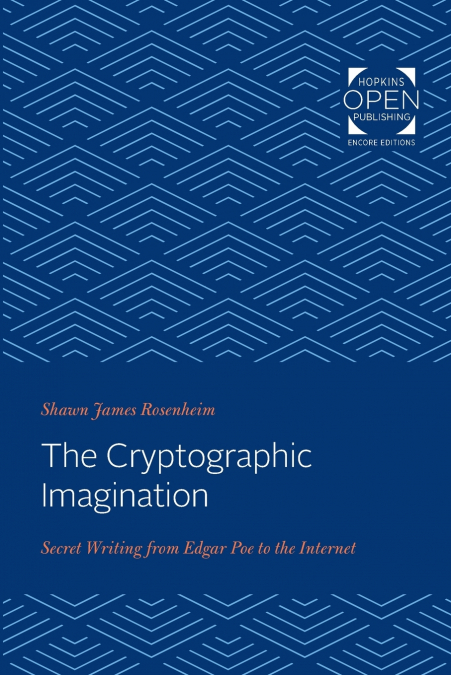

The Cryptographic Imagination

The Cryptographic Imagination

Shawn James Rosenheim

61,55 €
IVA incluido
Disponible
Editorial:
Hopkins Fulfillment Service
Año de edición:
2020
Materia
Teoría literaria
ISBN:
9781421437156
61,55 €
IVA incluido
Disponible

Selecciona una librería:

  • Librería Samer Atenea
  • Librería Aciertas (Toledo)
  • Kálamo Books
  • Librería Perelló (Valencia)
  • Librería Elías (Asturias)
  • Donde los libros
  • Librería Kolima (Madrid)
  • Librería Proteo (Málaga)

Originally published in 1996. In The Cryptographic Imagination, Shawn Rosenheim uses the writings of Edgar Allan Poe to pose a set of questions pertaining to literary genre, cultural modernity, and technology. Rosenheim argues that Poe's cryptographic writing--his essays on cryptography and the short stories that grew out of them--requires that we rethink the relation of poststructural criticism to Poe's texts and, more generally, reconsider the relation of literature to communication. Cryptography serves not only as a template for the language, character, and themes of much of Poe's late fiction (including his creation, the detective story) but also as a secret history of literary modernity itself. Both postwar fiction and literary criticism, the author writes, are deeply indebted to the rise of cryptography in World War II.Still more surprising, in Rosenheim's view, Poe is not merely a source for such literary instances of cryptography as the codes in Conan Doyle's The Dancing-Men or in Jules Verne, but, through his effect on real cryptographers, Poe's writing influenced the outcome of World War II and the development of the Cold War. However unlikely such ideas sound, The Cryptographic Imagination offers compelling evidence that Poe's cryptographic writing clarifies one important avenue by which the twentieth century called itself into being.The strength of Rosenheim's work extends to a revisionistic understanding of the entirety of literary history (as a repression of cryptography) and then, in a breathtaking shift of register, interlinks Poe's exercises in cryptography with the hyperreality of the CIA, the Cold War, and the Internet. What enables this extensive range of applications is the stipulated tension Rosenheim discerns in the relationship between the forms of the literary imagination and the condition of its mode of production. Cryptography, in this account, names the technology of literary production--the diacritical relationship between decoding and encoding--that the literary imagination dissimulates as hieroglyphics--the hermeneutic relationship between a sign and its content.--Donald E. Pease, Dartmouth College--Donald E. Pease, Dartmouth College "Errol Morris, director of The Thin Blue Line and A Brief History of Time"
Artículos relacionados

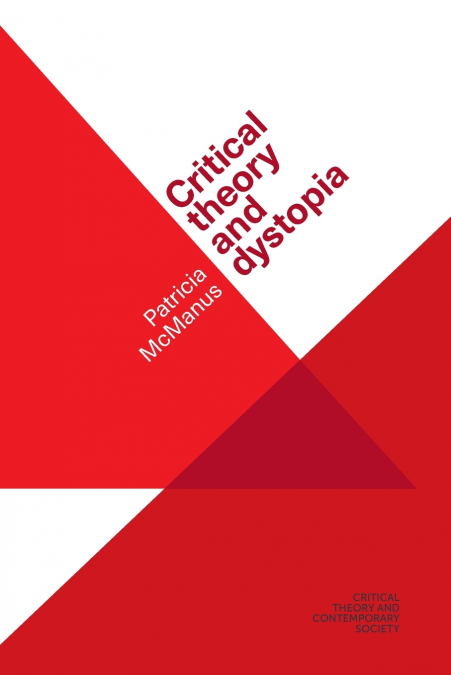
  • Critical theory and dystopia
    Patricia McManus
    Critical theory and dystopia offers a uniquely rich study of dystopian fiction, drawing on the insights of critical theory. Asking what ideological work these dark imaginings perform, the book reconstructs the historical emergence, consolidation and transformation of the genre across the twentieth century and into our own, ranging from Yevgeny Zamyatin’s We (1924) and Aldous Hu...
    Disponible

    35,86 €

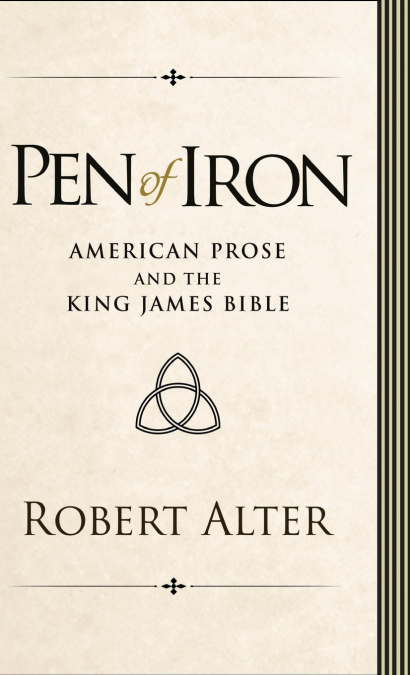
  • Pen of Iron
    Robert Alter
    How the King James Bible has influenced the style of the American novel from Melville to Cormac McCarthyThe simple yet grand language of the King James Bible has pervaded American culture from the beginning-and its powerful eloquence continues to be felt even today. In this book, acclaimed biblical translator and literary critic Robert Alter traces some of the fascinating ways ...
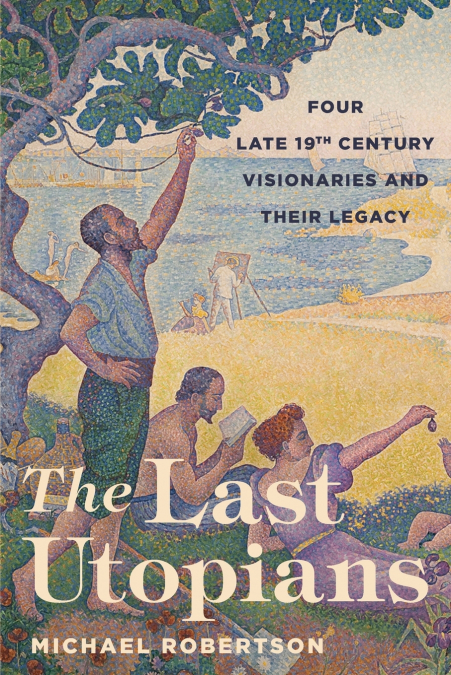
  • The Last Utopians
    Michael Robertson
    The entertaining story of four utopian writers-Edward Bellamy, William Morris, Edward Carpenter, and Charlotte Perkins Gilman-and their continuing influence todayIn this lively literary history, Michael Robertson introduces readers to a vital strain of utopianism that seized the imaginations of four American and British writers during an extraordinary period of literary and soc...
    Disponible

    30,46 €

  • Dao and Sign in History
    Daniel Fried
    Provides a new perspective on important linguistic issues in philosophical and religious Daoism through the comparative lens of twentieth-century European philosophies of language.From its earliest origins in the Dao De Jing, Daoism has been known as a movement that is skeptical of the ability of language to fully express the truth. While many scholars have compared the earlies...
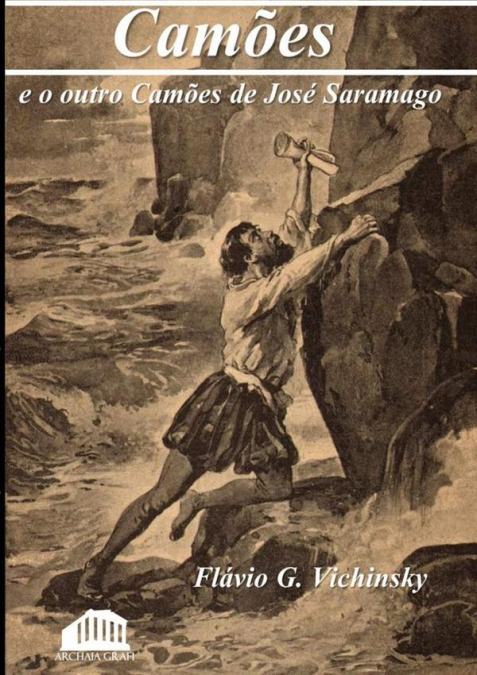
  • Camões E O Outro Camões De José Saramago
    Flávio G Vichinsky
    A consolidação da figura de Camões como elemento dos mais relevantes na cultura portuguesa é consenso entre os historiadores, literatos e demais estudiosos do processo de formação histórica e social desse país. A obra do poeta e a sua biografia, bem como a mitologia que as envolvem, transformaram-no em um dos maiores e mais conhecidos símbolos de Portugal, o que o coloca muitas...
    Disponible

    8,84 €

  • La enseñanza de la literatura
    José Emilio Hernández Sánchez
    El libro se centra en la enseñanza de la literatura. Consta de varios capítulos: El primero se dedica a ubicar el texto literario dentro del marco de la cultura. Se ofrecen diversas indicaciones didácticas para el estudio del texto literario desde el enfoque histórico-cultural de Lov Vigostky o constructivismo social. Igualmente se incluye un capítulo dedicado al sistema concep...