

 Librería Samer Atenea
 Kálamo Books
 Librería Elías (Asturias)
 Librería Kolima (Madrid)
 Librería Proteo (Málaga)
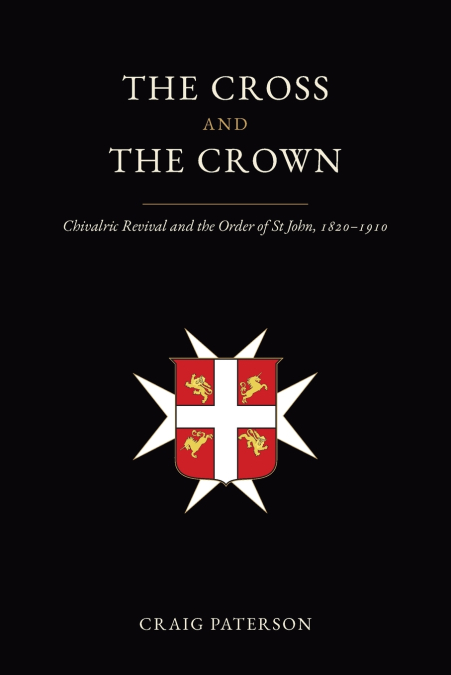
On 14 May 1888 Queen Victoria granted a royal charter to a body of English gentlemen who called themselves the Knights of St John. For more than fifty years they had claimed descent from the crusading Hospitallers and styled themselves a sovereign order, and the Order of Malta had disowned them. With the charter they became, for the first time, a body corporate and a Royal Order of Chivalry under the Crown. The Cross and the Crown explains how this came about and what it meant.The answer lies in Victorian Britain more than in the Middle Ages. The chivalric revival lent the Order its language and its emblem, and the gospel of self-improvement gave it a method of teaching and examining. The sanitary movement and the new concern for the wounded in war supplied its work, while a monarchy remaking itself as the head of the nation’s charity became its patron. Out of these currents came three lasting institutions: the St John Ambulance Association, founded in 1877, which carried first aid into the collieries, railways, and police divisions of Britain and the Empire; the St John Ambulance Brigade, formed in 1887; and an eye hospital in Jerusalem, opened in 1882, which treated the poor, in the words of the Order’s statutes, 'without distinction of race, class, or creed.'Drawing on the charters, statutes, and rolls of the Order itself, the book tests the romantic histories of the Order’s own chroniclers against the record of the law. It shows that the revived Order had founders, not ancestors, and that its standing rested on a grant from the Crown rather than on a pedigree reaching back to the crusades. Its legitimacy was the Crown’s creation, and the charter of 1888 its instrument.Written for historians of Victorian Britain, of the monarchy and the honours system, of philanthropy and medicine, and of the orders of chivalry, and for members and friends of the Order of St John, the book has full notes, a bibliography, and an index, with Ernest Dudley Heath’s portrait of Queen Victoria as its frontispiece.






