

 Librería Samer Atenea
 Kálamo Books
 Librería Elías (Asturias)
 Librería Kolima (Madrid)
 Librería Proteo (Málaga)
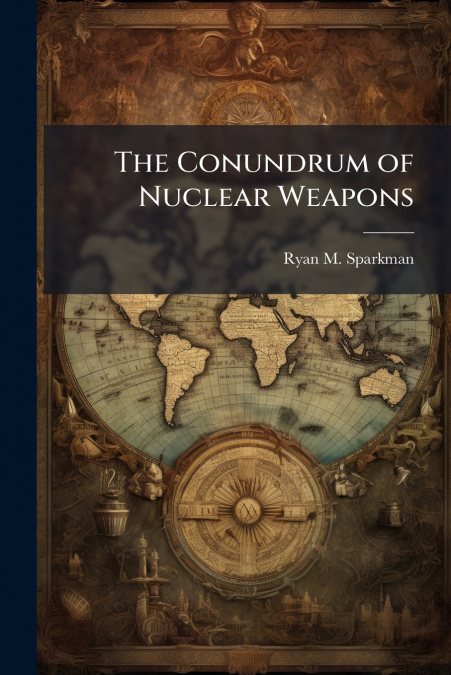
This paper makes an important contribution to understanding how preventive force (overt/covert military strikes or war) can prevent the proliferation of nuclear weapons of mass destruction (WMD). A historical analysis will help create a strategic profile useful in determining a nations primary interests and probable future choices. The focus of the paper looks at preventive force and the ideological and structural constants of U.S foreign policy. Three detailed cases are presented. The first case considers President Trumans rejection of preventive force against the Soviet Union. The second case considers President Kennedys hawkish plans of preventive force against a nascent Communist Chinese nuclear program. The third case explores the Clinton administrations coercive threat of preventive force against North Korea during the 1994 Korean peninsula crisis.This work has been selected by scholars as being culturally important, and is part of the knowledge base of civilization as we know it. This work was reproduced from the original artifact, and remains as true to the original work as possible. Therefore, you will see the original copyright references, library stamps (as most of these works have been housed in our most important libraries around the world), and other notations in the work.This work is in the public domain in the United States of America, and possibly other nations. Within the United States, you may freely copy and distribute this work, as no entity (individual or corporate) has a copyright on the body of the work.As a reproduction of a historical artifact, this work may contain missing or blurred pages, poor pictures, errant marks, etc. Scholars believe, and we concur, that this work is important enough to be preserved, reproduced, and made generally available to the public. We appreciate your support of the preservation process, and thank you for being an important part of keeping this knowledge alive and relevant.





