 Librería Samer Atenea
 Kálamo Books
 Librería Elías (Asturias)
 Librería Kolima (Madrid)
 Librería Proteo (Málaga)
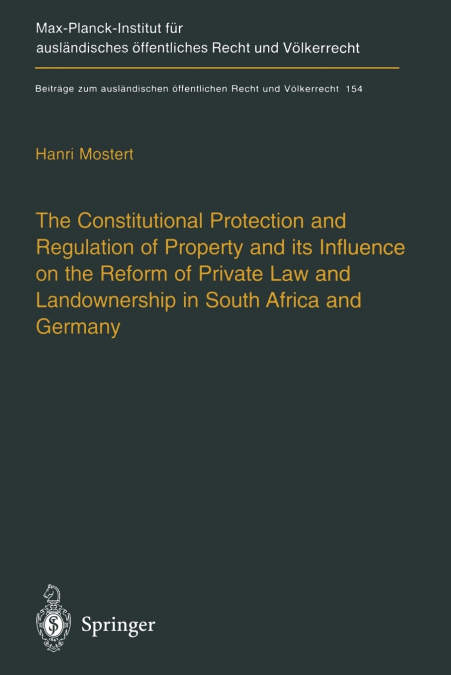
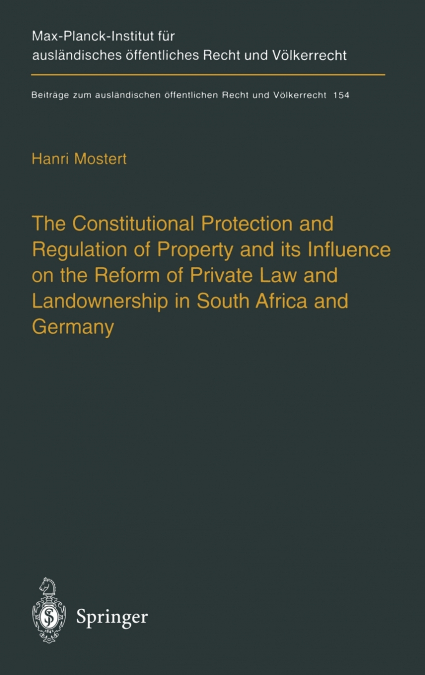
One: Research Question, Terminology and Methodology.- 1: Introduction.- 1. An Introduction to the Basic Problems.- 2. Objectives of Research.- 2.1. Motivation.- 2.2. Legal Comparison.- 2.3. Delimitation.- 3. Practical Significance of Research.- 4. Inquiry Outline.- 2: Terminology.- 1. Possible Terminological Difficulties.- 2. Ownership and Property.- 2.1. Ideological Concept.- 2.2. Legal Concept.- 2.2.1. Private Law Terminology.- 2.2.2. Terminology of the Constitution.- 2.2.3. Terminology of Reform.- 2.2.4. Polarisation of the Private Law Property and Constitutional Property.- 3. Public Interest, Common Weal and Public Purposes.- 3.1. Public Interest and Common Weal in the Constitutional Context.- 3.2. Public Interest, Public Purposes and the Property Clauses.- 3.2.1. Public Interest, Public Purposes and Expropriation.- 3.2.2. Public Interest, Public Purposes and Land Reform.- 4. The Relationship between Property and Public Interest.- 3: Legal Comparison and the Course of Inquiry.- 1. Legal Comparison as Method of Analysis.- 2. Comparative Analysis as Constitutional Directive.- 3. Possibilities for Legal Comparison.- 4. Similarities in the German and South African Property Orders.- 4.1. Bases of the Legal Systems and their Material Law.- 4.2. Corresponding Legal Problems.- 4.3. Comparable Legal Methods.- 4.4. Constitutional Principles.- 5. Differences between the German and South African Systems of Property Law.- 5.1. Drafting Circumstances.- 5.2. Wording of South African and German Property Clauses.- 6. Course of Inquiry.- Two: Background to the Constitutional Protection of Property in Germany and South Africa.- 4: The Drafting Histories of the South African and German Constitutional Property Clauses.- 1. Relevance of an Historical Inquiry.- 2. Germany: Development of Property Protection Under a Constitution.- 2.1. Historical Background of article 14 GG.- 2.1.1. First Attempts at Constitutional Protection of Property.- 2.1.2. Property Protection in the Weimar Republic and Under National-Socialism.- 2.1.3. Circumstances Influencing the Drafting of article 14 GG.- 2.1.4. Constitutional Property Protection in a Reunified Germany.- 2.2. Relevance of article 14 GG for the German Property Order.- 3. South Africa: Negotiating a Constitutional Property Clause.- 3.1. Historical Background to the Property Clauses.- 3.1.1. The Inclusion of a Property Guarantee in the Constitution.- 3.1.2. Compromises Incorporated in Section 28 IC and Section 25 FC.- 3.1.3 Certification of Section 25 FC.- 3.2. Relevance of the Constitutional Property Clauses for the South African Property Order.- 4. Constitutionalism and Socio-economic Needs.- 5: Structure of the Constitutional Protection and Regulation of Property in Germany and South Africa.- 1. External Aspects of the Constitutional Property Clauses.- 2. 'Positive' and 'Negative' Guarantees.- 2.1. The German Property Guarantee.- 2.2 The South African Property Guarantees.- 2.2.1. Section 28 IC.- 2.2.2. Section 25 FC.- 2.3. Legal-comparative Evaluation.- 3. Basic Structure of an Inquiry into the Constitutional Property Clause.- 3.1. Structure of Human Rights Litigation in General.- 3.2. Substantive Issues Relating to the Property Clause.- 3.2.1. Claims Arising from the Constitutional Property Clause.- 3.2.1.1. The Claim to Have Property.- 3.2.1.2. Eligibility to Hold Property.- 3.2.1.3. Insulation of Private Property from State Interference.- 3.2.1.4. Immunity against Uncompensated Expropriation.- 3.2.2. Stages of Inquiries Based on the Constitutional Property Clause.- 3.2.2.1. Inquiries into the Constitutional Validity of an Interference with Property.- 3.2.2.1.1. 'Threshold Question'.- 3.2.2.1.2. Infringement Question.- 3.2.2.1.3. Justifiability.- 3.2.2.2. Inquiries Regarding the Payment of Compensation.- 3.2.3. Summary: Object of Protection and Nature of Limitation.- 3.3. The Structure of the Judicial System and its Relevance for a Constitutional Property Inquiry.- 3.3.1. The South African Judicia...