
Inicio > Humanidades > Filosofía > Filosofía: metafísica y ontología > The Concept of Form in the Twentieth Century
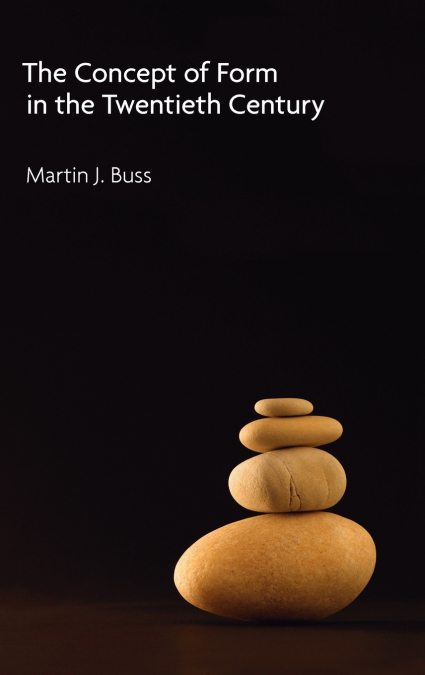
The Concept of Form in the Twentieth Century

The Concept of Form in the Twentieth Century

Martin J. Buss / Martin JBuss

62,68 €
IVA incluido
Consulta disponibilidad
Editorial:
Sheffield Phoenix Press
Año de edición:
2008
Materia
Filosofía: metafísica y ontología
ISBN:
9781906055516

Selecciona una librería:

  • Librería Samer Atenea
  • Librería Aciertas (Toledo)
  • Kálamo Books
  • Librería Perelló (Valencia)
  • Librería Elías (Asturias)
  • Donde los libros
  • Librería Kolima (Madrid)
  • Librería Proteo (Málaga)

This study provides a history of the concept of form in the twentieth century CE, focusing on the rise and character of relational theory. To some extent drawing on older traditions, relational theory accepts some aspects of modern particularism but moves beyond it by holding that relations simultaneously separate and connect. Particularity and generality are seen as aspects of relationality, and forms are viewed as complexes of relations. Prominent features of a relational view include: an avoidance of rigid structures through an orientation toward probability; multiperspectivity; possibility, not just particular actuality; continuity between the human and the nonhuman; and a valuational rather than a neutral view of reality.Socially, relational theory has supported a combination of freedoms. It joins internal freedom, which values both body and mind, with both negative and positive external freedom, including 'freedom from' external controls and 'freedom for' the fulfillment of possibilities in cooperation with others. Politically, this ideal favors economic solidarity, respectful recognition of different 'racial' or ethnic groups, women’s liberation, increased sexual freedom, and ecological consciousness.Relational theory was not the only notable view of form in the twentieth century, however. More-or-less individualistic particularism was radicalized in nihilist and skeptical philosophies, and powerful versions of group particularism arose in fascism, Stalinism, and continuing imperialism. Caucasian male thinkers varied considerably in the degree to which they supported relational conceptions of form, but, not surprisingly in view of the connection between a relational view of form and interactive freedom, most women and non-Caucasian males advocated relational views. Some of the tension described can be viewed positively from the relational side, however, for according to information theory uncertainty provides an opportunity for communication.
Artículos relacionados

  • Formas tradicionales y ciclos cósmicos
    René Guénon
    Los artículos reunidos en el presente libro representan acaso el aspecto más "original" -también el más desconcertante para muchos lectores- de la obra de René Guénon. Se le hubiera podido dar el título Fragmentos de una historia desconocida, pero de una historia que engloba protohistoria y prehistoria por cuanto empieza con la Tradición primordial contemporánea de los comienzo...
    Disponible

    23,42 €

  • Símbolos de la Ciencia Sagrada
    René Guénon
    La civilización moderna aparece en la historia como una verdadera anomalía: de todas las que conocemos, es la única que se haya desarrollado en un sentido puramente material, la única también que no se apoye en ningún principio de orden superior. Este desarrollo material, que continúa desde hace ya varios siglos y que va acelerándose de más en más, ha sido acompañado de una reg...
    Disponible

    32,01 €

  • How to Master Your Karma
    Lynn Wylnn
    What is your karma? Wonder why you are here and where you are going? Want to live a prosperous life? This practical guide will reveal your karma and teach you how to Soul Walk. Soul Walking will present you with your karma, show you ways to correct it, and then teach you how to find the treasures of life so that you might use them to prosper and become successful. Follow the st...
    Disponible

    13,88 €

  • Unfinished
    John W. Galler
    What if the majority of society simultaneously withdrew their cash and investments globally, and stopped working to collapse imperialist insanity? This would actually force the much needed attention and urgency to decide what we could become next.At some point, we have to evolve as a species. Should we still insist on the current chaos that we can’t seem to escape, we could all...
  • Unfinished
    John W. Galler
    What if the majority of society simultaneously withdrew their cash and investments globally, and stopped working to collapse imperialist insanity? This would actually force the much needed attention and urgency to decide what we could become next.At some point, we have to evolve as a species. Should we still insist on the current chaos that we can’t seem to escape, we could all...
    Disponible

    20,19 €

  • Wittgenstein and Modern Philosophy
    Justus Hartnack
    Justus Hartnack offers a concise and clear introduction to Wittgenstein and traces the influence of these works in the schools of logical positivism and analytical philosophy. A philosopher as great and at the same time as difficult as Wittgenstein has been the subject of innumerable studies, and universal agreement on how to interpret him cannot be expected. This is true of al...

Otros libros del autor

  • Toward Understanding the Hebrew Canon
    Martin J. Buss / Martin JBuss
    Toward Understanding the Hebrew Canon: A Form-Critical Approach explores in an original and reflective way the relations between the linguistic forms, ideas and life involvements of biblical genres. The various forms of the Hebrew Bible reflect and correspond to the richly diverse life experiences of the Hebrew people, which include varied legal, cultic and erotic interactions....
  • The Changing Shape of Form Criticism
    Martin J. Buss / Martin JBuss
    In this important collection of essays by the leading theorist of form, Martin Buss presents in Part I, Steps toward a New Form Criticism, several essays that view forms as complexes of relations that constitute possibilities. This relational approach to form criticism rejects, on the one hand, the idea that reality is at base only particular and, on the other hand, an essentia...