The Competitive State

The Competitive State


66,29 €
IVA incluido
Disponible
Editorial:
Springer Nature B.V.
Año de edición:
2011
Materia
Hacienda pública
ISBN:
9789401067751
66,29 €
IVA incluido
Disponible

Selecciona una librería:

  • Librería Samer Atenea
  • Librería Aciertas (Toledo)
  • Kálamo Books
  • Librería Perelló (Valencia)
  • Librería Elías (Asturias)
  • Donde los libros
  • Librería Kolima (Madrid)
  • Librería Proteo (Málaga)

I. The concept of competition played a central role in the very first attempts to apply the tools of economics to the analysis of politics. Adopting Hotelling’s (1929) industrial organization model of imperfect competition in markets in which space has a predominant role, Downs (1957), following on some perceptive insights of Schumpeter (1942), was able to formulate a model of electoral competition in which political parties, seeking the support of citizens, compete against each other in offering policies designed to elicit their vote. Downs’ model and the numerous variants to which it gave birth soon became the major component of what was to become Public Choice Theory. The enormous efforts of the last 30 years devoted to modelling electoral competition have helped improve our understanding of politics and have contributed a basic element that undoubtedly will remain essential to any reasonably complete theory of politics. But whatever may have been early expectations, it is now clear that electoral competition will only be one such element. More recently, the idea of competition has been used to model interest-group behavior. Becker (1983), building on earlier work by Bentley (1908), Truman (1958), Olson (1965), Stigler (1971) and Peltzman (1976), applied the Public Finance analysis of the excess-burden of taxes and subsidies - to which, incidentally, Hotelling (1938) had made pioneering contribution- to produce a model in which competition between interest groups determines an equilibrium distribution of income.

Artículos relacionados

  • The Federal Estate Tax
    David Joulfaian
    ...
    Disponible

    39,16 €

  • Teoría de la Administración Pública
    Jorge Mendoza Vester
    La mayoría de los textos de administración se inclinan hacia una orientación empresarial, centrados en el sector privado. Esta tendencia deja un hueco considerable en la educación de aquellos que aspiran a servir en el sector público. Mi objetivo con este manual es ofrecer una perspectiva que aborde de manera integral los desafíos y particularidades de la administración pública...
    Disponible

    30,71 €

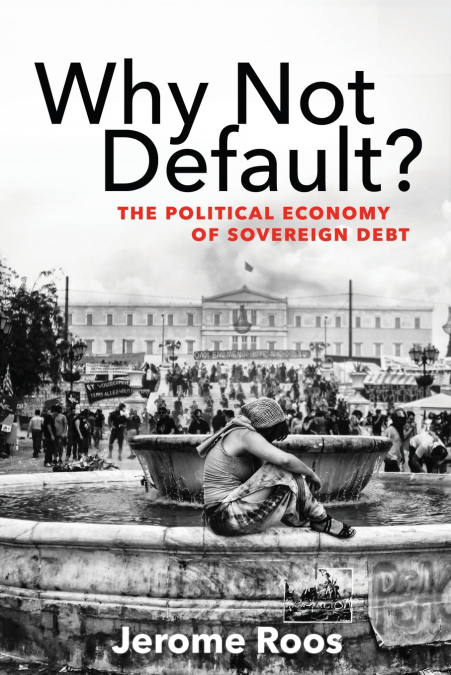
  • Why Not Default?
    Jerome E. Roos
    How creditors came to wield unprecedented power over heavily indebted countries-and the dangers this poses to democracyThe European debt crisis has rekindled long-standing debates about the power of finance and the fraught relationship between capitalism and democracy in a globalized world. Why Not Default? unravels a striking puzzle at the heart of these debates-why, despite f...
    Disponible

    39,81 €

  • Political Economy for Public Policy
    Ethan Bueno de Mesquita
    The ideal introductory textbook to the politics of the policymaking processThis textbook uses modern political economy to introduce students of political science, government, economics, and public policy to the politics of the policymaking process. The book’s distinct political economy approach has two virtues. By developing general principles for thinking about policymaking, i...
  • What Do We Know and What Should We Do About Tax Justice?
    Alex Cobham
    ...
  • Decoding Tomorrow’s Currency
    Randy Woodrum
    'Decoding Tomorrow’s Currency: An In-Depth Exploration of the Future of Cryptocurrency' is an illuminating journey into the multifaceted world of digital currencies and blockchain technologies. This comprehensive exploration examines the origins and evolution of cryptocurrency, unraveling its intricate technological underpinnings and tracing the emergence of groundbreaking conc...
    Disponible

    14,27 €